

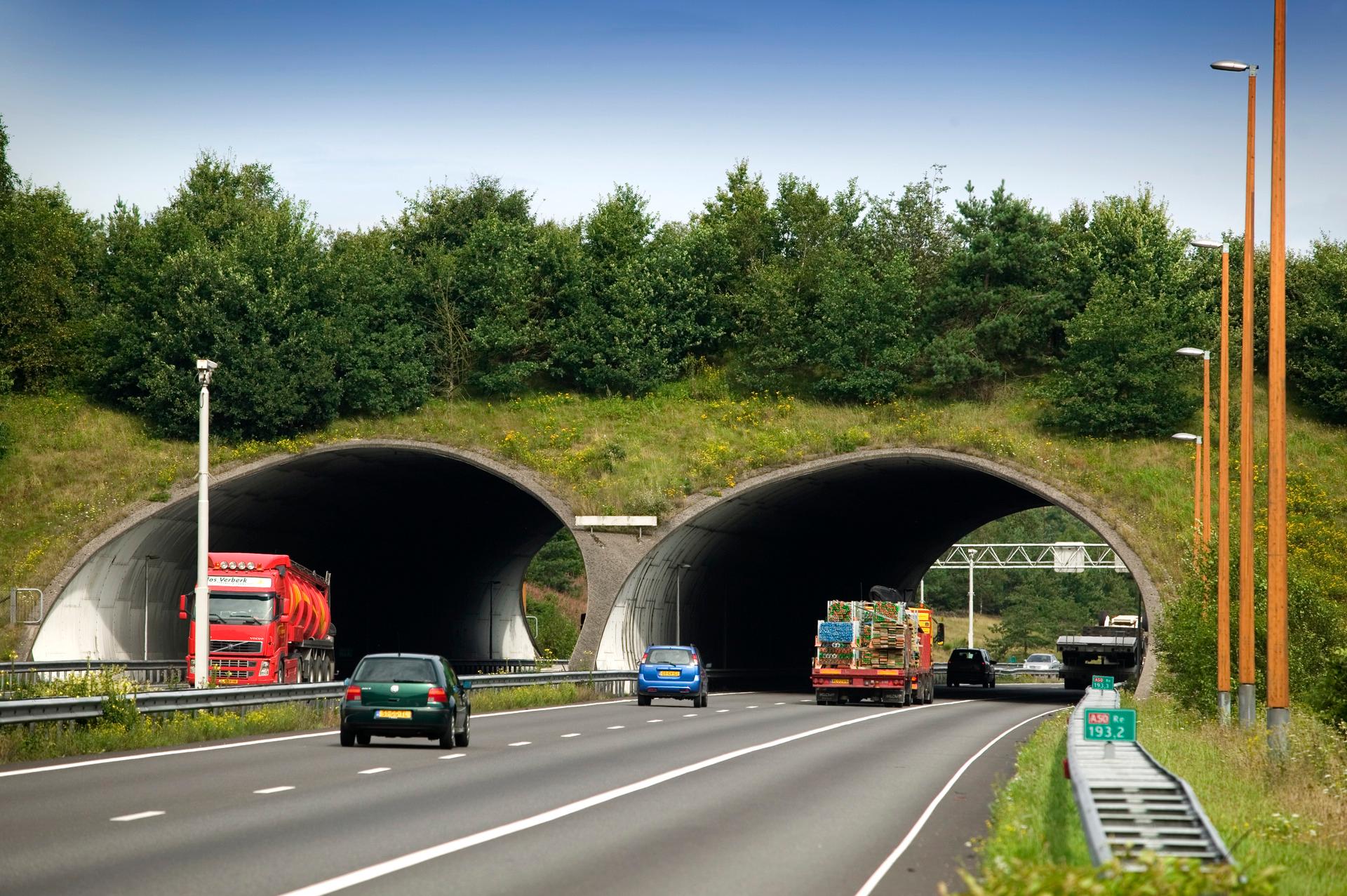
Ecoduct Woeste Hoeve
The Woeste Hoeve ecoduct is located on the A50 motorway between Arnhem and Apeldoorn and is one of the first two ecoducts in the Netherlands. The ecoduct is a nature bridge, initially intended primarily to allow red deer to cross the road safely. Now, the Woeste Hoeve serves as a connection between two nature reserves.
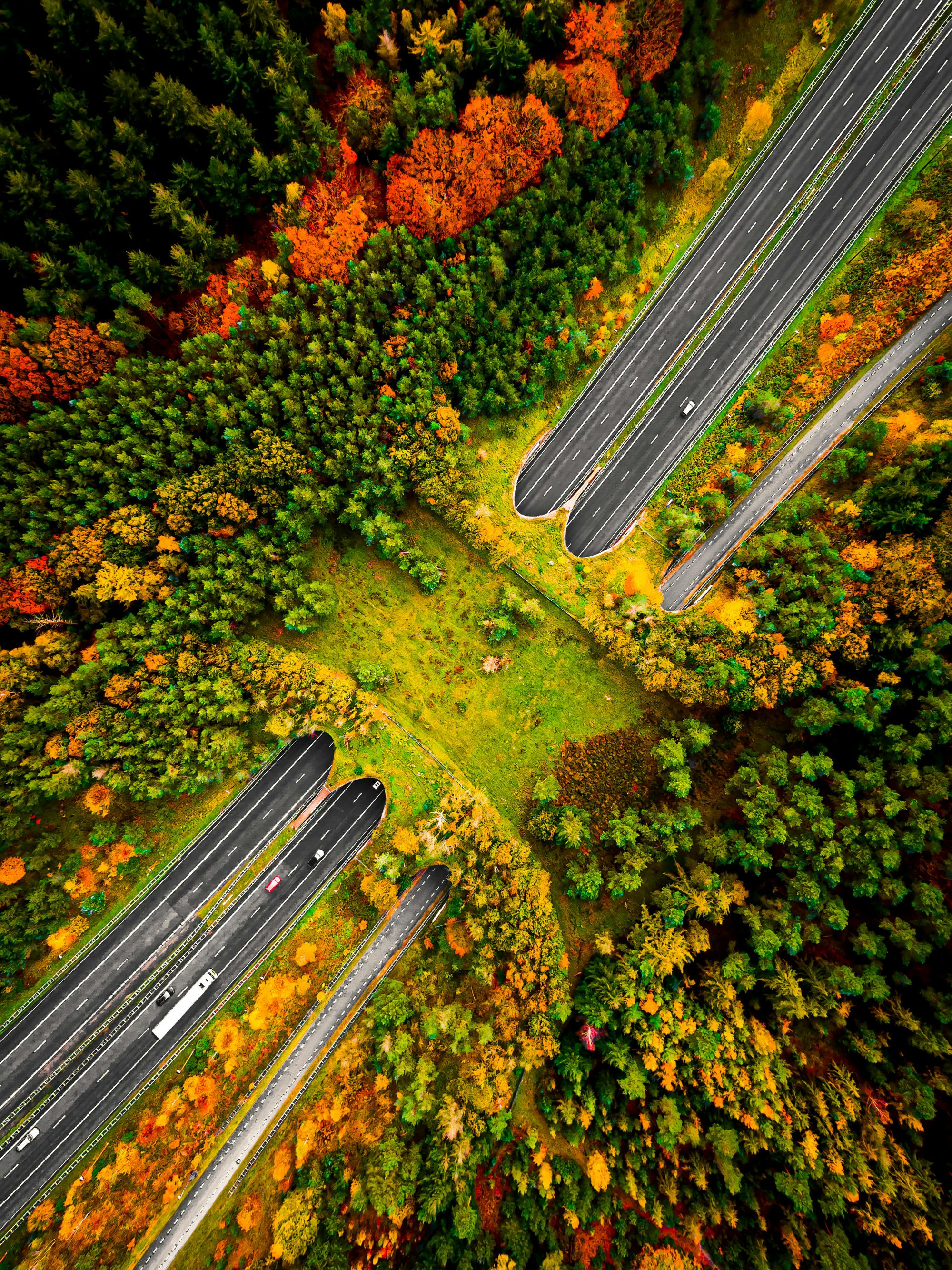
Railways, canals and motorways cut through nature reserves and reduce their size. Animals that live in areas that are too small often cannot find enough food and suffer from inbreeding. To reach other areas, they run the risk of being run over. Genetic exchange and migration are important for healthy animal and plant populations. In a state of natural balance, different animal species move freely between different habitats, such as forests, heathland, grasslands and waterways.
An important pillar in this regard was the creation of an Ecological Main Structure (EHS), now known as the Netherlands National Nature Network, which was first published in 1990. The aim was to combat the loss of nature and biodiversity. Nature areas had to be better connected and, where possible, expanded. Ecoducts (or wildlife bridges) have proven effective in connecting nature areas across roads. From 2004 to 2018, many new ecoducts were constructed as part of the Multiyear Habitat Defragmentation Programme by Rijkswaterstaat, ProRail and the provinces.
We are connecting two nature reserves with the ecoduct.
Fifty-metre-wide span
The Woeste Hoeve Ecoduct was opened in that year.
The ecoduct looks like a tunnel but is basically a viaduct. Wild animals cross from one side to the other on top of the ecoduct, where they arrive at a fifty-metre-wide span with a funnel-shaped grid on both sides.
Shrubs and trees have been planted on the edges of the viaduct to keep light and noise away from the animals. A two- to three-metre-thick layer of soil has been laid on the span to reduce noise penetration and allow trees and shrubs to grow there.
By creating slopes leading up to the complex and constructing the tunnel tubes at the same gradient, motorists appear to be diving into the ground, but in fact they are encountering a dug-through earth wall. We installed three passages consisting of corrugated sheets, supported by a concrete base. The two for the motorway are approximately 16 metres wide and 8 metres high, with a parallel passage for a local road being 12 by 6.5 metres.

Research into nature-friendly structures
In the Netherlands, there are now around 80 nature-friendly structures such as ecoducts. We mainly manage the viaduct. The local nature conservation authority is usually responsible for managing the greenery on the ecoduct. Because nature sometimes needs several years to develop, it is important to consult with nature conservation authorities to determine whether improvements are needed. That is why we are working with international networks and knowledge institutes to investigate which passages and crossings work for which species. Research shows that ecoducts are (or can be) suitable for many species. However, they are also expensive to construct. Therefore, for each bottleneck between nature and roads, the best solution must be weighed carefully to prevent conflicts and collisions.