
Rijkswaterstaat launches practical winter tests on heavy-duty electric trucks
When temperatures fall, batteries behave differently. Understanding how charging infrastructure performs under winter conditions is therefore essential. On 26 January 2026, Rijkswaterstaat launched a week of practical tests to examine how heavy electric trucks and charging infrastructure perform in cold weather.
The tests focused on charging speed, energy consumption and the impact on the electricity grid, among other factors. The results will be used to further strengthen the charging infrastructure for heavy-duty transport.
These tests form part of the Living Lab Heavy-Duty Charging Hubs , knowledge programme, in which we work with market parties to explore how the Netherlands can transition to a charging infrastructure for heavy-duty transport that is reliable, affordable and scalable.
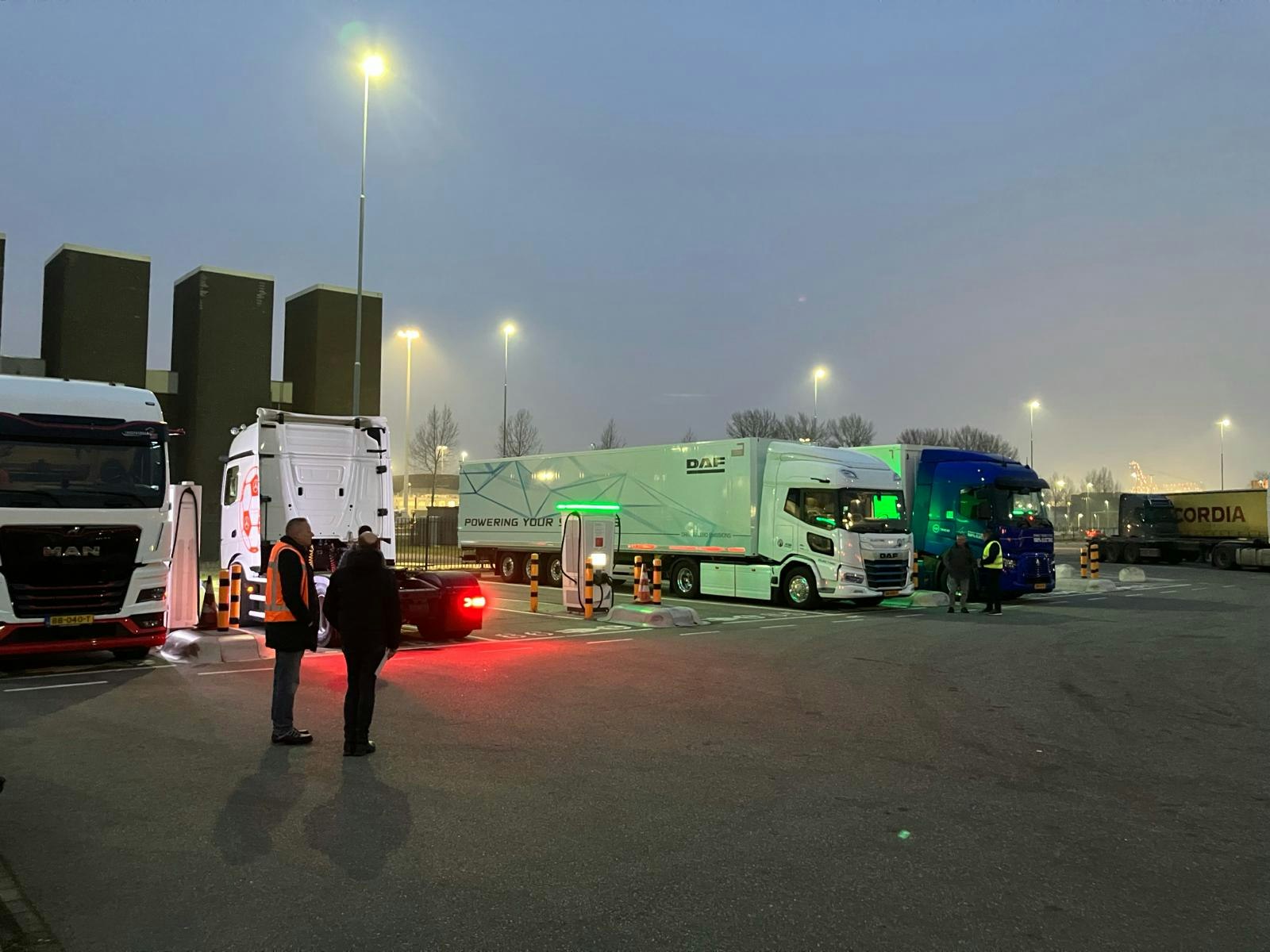
A previous week of tests carried out in the summer had already provided valuable insights into charging speed, site usage and operations during simultaneous charging. This new week of testing built on these findings and provided further insight into the effects of low temperatures on the charging process.
Practical tests at different charging hubs
Five heavy electric vehicles from DAF, Daimler, Renault, Volvo and MAN were tested at a range of locations. These included public charging hubs such as Shell Eindhoven Acht and Circle K Sevenum, as well as semi-public sites such as WattHub in Geldermalsen, Truckparking Rotterdam in Milence and Brabants Afval Team in Tilburg.
The tests often started with a low battery state of charge, allowing researchers to clearly observe how vehicles and charging stations respond when high charging power is requested.
What we examined
To gain a full understanding of how vehicles and charging hubs perform in winter conditions, the following aspects were examined:
- changes in charging speed at lower temperatures
- energy consumption when the battery is at a low state of charge
- the effect on the charging station when several vehicles charge at high power in succession
- the interaction between vehicles and charging stations, including overnight charging and simultaneous charging of multiple vehicles
- the operation of reservation systems and ad hoc payment options
Together, these findings provide a comprehensive picture of the factors that determine whether charging remains smooth and predictable in winter. They also contribute to the development of a reliable charging infrastructure for heavy-duty transport and provide fleet operators with insights into seasonal effects relevant to day-to-day operations.
International relevance
An increasing number of countries are testing and developing electric heavy-duty vehicles (HDVs), with practical trials playing a key role in improving performance and reliability. At the same time, the availability of suitable charging infrastructure remains a crucial condition for large-scale deployment worldwide.
This momentum is also evident across Europe. According to the November 2025 update of the European Alternative Fuels Observatory, there are now 937 publicly accessible charging sites for heavy-duty vehicles. Of these, 313 offer a charging power of 350 kW or more and are compliant with the Alternative Fuels Infrastructure Regulation (AFIR), while 624 provide lower power levels.
AFIR requires EU Member States to ensure minimum coverage along major transport corridors and in urban nodes. Although the 2030 targets are ambitious, there is growing international confidence that these combined developments will enable a cleaner and more sustainable logistics sector.
Collaboration with market partners
The trial week was organised in collaboration with Rijkswaterstaat, TNO, ElaadNL, vehicle manufacturers and charging-station operators. This cooperation is essential, as data from vehicles, charging hubs and the electricity grid only provide a complete and reliable picture of system performance when analysed together.
By also testing in colder conditions, we are gaining valuable insight into how vehicles and charging hubs behave when the system is under greater strain. These insights help us further improve the reliability and predictability of electric charging and support the growth of electric road transport.
Why these tests matter
The number of electric trucks is growing, along with the need for a robust network of charging hubs. Previous research carried out within the Living Lab has shown that factors such as charging speed, site layout and grid capacity are critical to the reliable operation of heavy-duty charging infrastructure.
By conducting these tests under winter conditions, we are gaining a better understanding of the factors that determine whether charging remains smooth and predictable throughout the year.