
Reinforcement of the Afsluitdijk completed: pumping station and new drainage sluices officially commissioned
On 1 October 2026, Vincent Karremans, Minister for Infrastructure and Water Management, officially commissioned the new pumping station and drainage sluices at Den Oever. This marks the completion of the large-scale reinforcement and renewal of the Afsluitdijk. The Netherlands is now better protected against high sea levels, while the capacity to discharge water from the IJsselmeer to the Wadden Sea has increased.
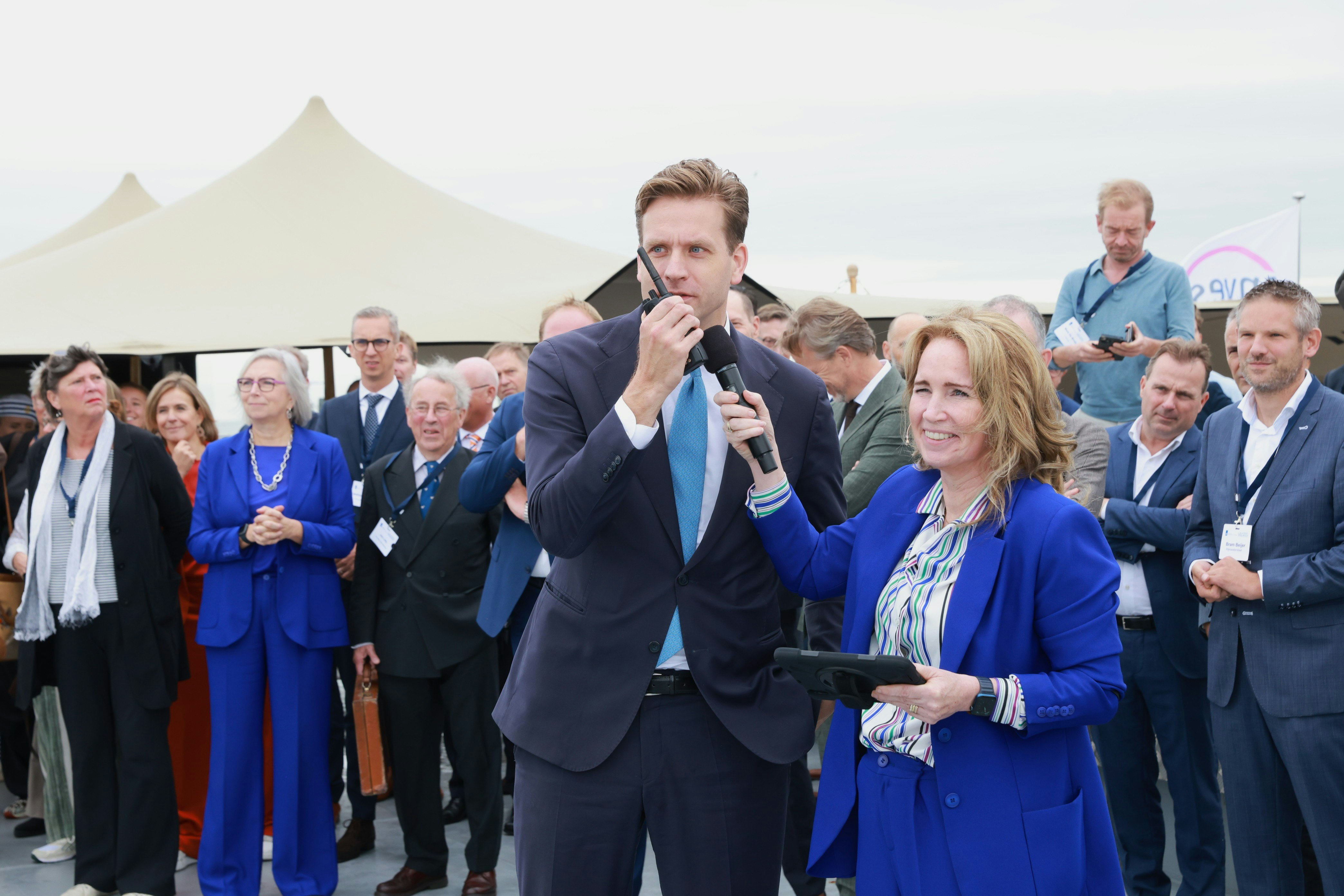
The commissioning of the pumping station and drainage sluices marks the culmination of one of the largest hydraulic engineering projects in the Netherlands in recent years. Commissioned by Rijkswaterstaat, the Levvel Construction Consortium - comprising Van Oord, BAM and Rebel - reinforced the Afsluitdijk along its entire length of 32 km.
In addition to building the pumping station and new drainage sluices, the flood defence has been raised and reinforced to keep the Netherlands safe in a changing climate. New flood-control sluices have also been built at Den Oever and Kornwerderzand to close off the passages through the dyke during extremely high water levels. Finally, an opening has been constructed in the dyke at Kornwerderzand for fish migration.
The major work is now complete. At the same time, Rijkswaterstaat and its partners continue to work on other projects on and around the dyke, including the renovation of the Vlieter Monument, the replacement of the bridges at Den Oever and Kornwerderzand, and maintenance to extend the service life of the historic drainage sluices dating from 1932.
Drain by gravity where possible, pump where necessary
The new pumping station is equipped with six powerful pumps with a combined capacity of 275 m³/s. Together with the new drainage sluices, the Afsluitdijk now has 45% more capacity to discharge water from the IJsselmeer to the Wadden Sea.
Water is preferably drained by gravity. When the water level on the Wadden Sea side is lower, water flows from the IJsselmeer to the Wadden Sea under gravity. As sea levels rise, the periods during which gravity drainage is possible are becoming shorter, reducing the amount of water that can be discharged.
When gravity drainage is not possible, the pumps ensure that excess water can still be discharged. This keeps the water level in the IJsselmeer manageable and helps prevent waterlogging across large parts of the Netherlands. Hence the motto: drain by gravity where possible, pump where necessary. The commissioning of the pumping station coincides with the start of the storm season, when large volumes of water traditionally must be managed.
Hundreds of skilled professionals worked on the reinforcement and renewal
Over the past few years, hundreds of engineers, technicians, hydraulic engineers and site managers have worked on the reinforcement and renewal of the Afsluitdijk. Their expertise in flood protection and water infrastructure proved vital.
Future of the Afsluitdijk
Due to rising sea levels, even greater capacity will be needed from 2045 onwards to discharge water from the IJsselmeer to the Wadden Sea. The drainage sluices at Kornwerderzand and Den Oever, which date from 1932, have also reached the end of their technical service life.
Research shows that expanding gravity drainage capacity is the best first step. In the longer term, additional pumping capacity will increasingly be needed to discharge water. This approach provides flexibility to respond to future developments, including climate change and decisions taken within the Delta Programme.
1 October: start of the storm and high-water season
With the start of the storm and high-water season on 1 October 2026, Rijkswaterstaat is once again on high alert for high water levels and storms. Thanks to the new drainage sluices and pumps at the Afsluitdijk, there is now greater capacity to discharge water from the IJsselmeer and manage water levels more effectively.
The Water Management Centre the Netherlands (WMCN) and the National Coordination Centre for Flooding (LCO) monitor water-level developments 24/7. They ensure that water authorities have timely access to the latest water-level forecasts, enabling them to anticipate developments and take appropriate measures.