
How can the Netherlands stay safe as sea levels rise?
Climate change is causing sea levels to rise, including along the Dutch coast. But what does this mean for the Netherlands’ ability to protect itself against flooding and maintain a sufficient supply of freshwater? 6 years of research under the Sea Level Rise Knowledge Programme show that the current approach remains viable even with a substantial rise in sea levels.
However, this will require measures involving far-reaching choices about land use and society. Saskia van Gool (Rijkswaterstaat) and Marit Zethof (HKV) reflect on the key findings and the challenges of working together on such a complex project.
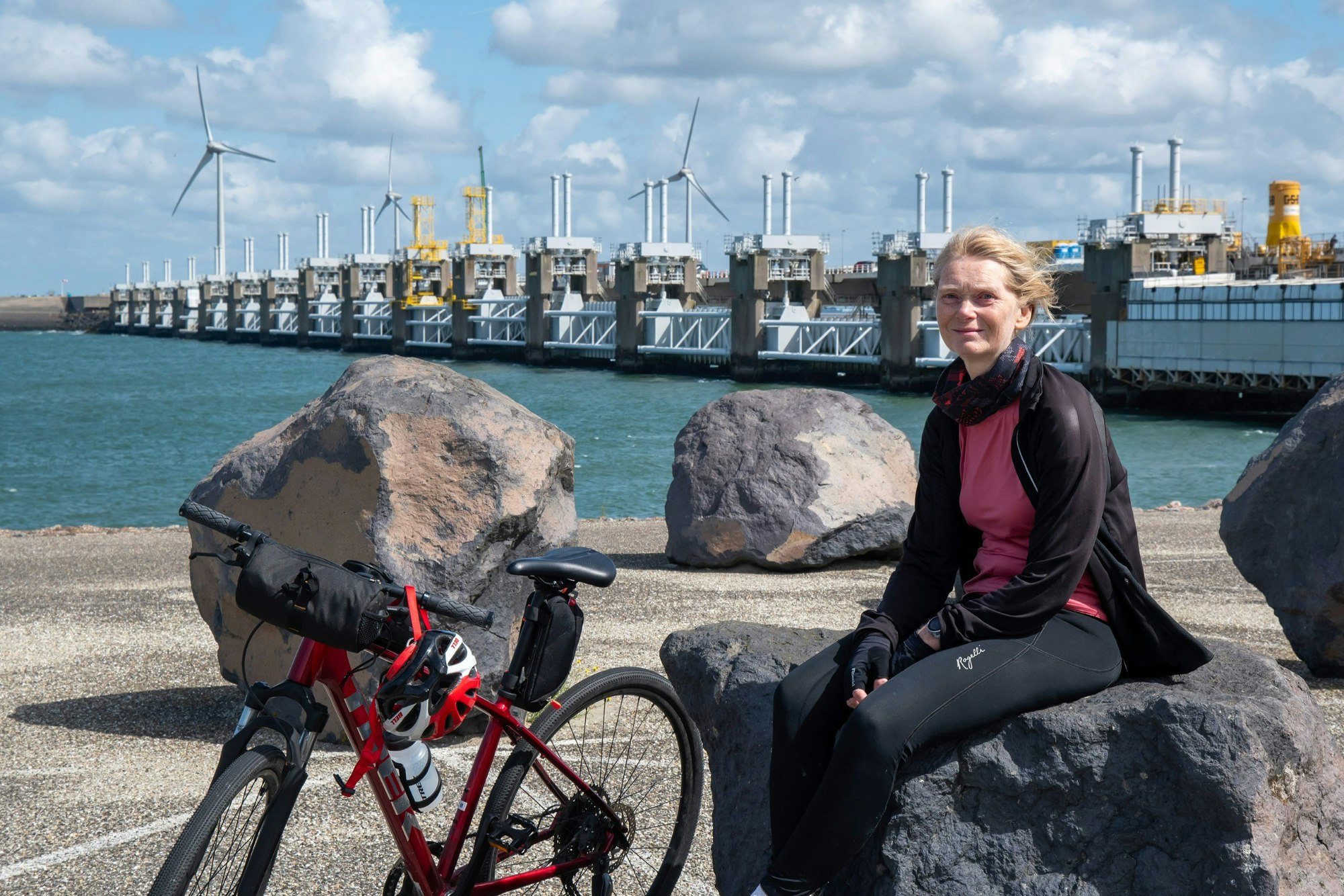
The Sea Level Rise Knowledge Programme (KP ZSS) was launched in 2020. Saskia van Gool joined from Rijkswaterstaat as programme manager at the outset and has held the position ever since.
‘At the time, several scientific articles suggested that sea levels could rise faster than previously thought. This prompted the then Minister of Infrastructure and Water Management and the Delta Programme Commissioner to launch the KP ZSS. Government bodies, businesses, research institutions and civil society organisations worked together to investigate the potential consequences of sea-level rise for flood protection and freshwater supply in the Netherlands. We also explored possible measures to prepare us for those consequences.’
A challenge requiring collaboration
One of the main questions from the outset was how much sea-level rise the Dutch water system could accommodate under the current approach. ‘We called this the “system analysis”,’ Van Gool explains. The Ministry commissioned Rijkswaterstaat to carry out the analysis.
‘It soon became clear that we couldn’t do this on our own. Although we have considerable expertise in-house, we needed additional capacity. Ultimately, many of the sub-studies were awarded to a consortium consisting of HKV, Witteveen+Bos and IV-Infra, which specialises in civil engineering structures.’
Other companies and consortia also carried out sub-studies for the system analysis. A further 8 to 10 companies contributed to other parts of the programme, including projections of sea-level rise and the exploration of long-term scenarios.
Marit Zethof is a flood protection consultant at HKV and was project leader for the flood protection system analysis. ‘We carried out the study with Witteveen+Bos and IV-Infra, giving us the capacity we needed. 10 colleagues worked on the project in total. Working together also enabled us to share knowledge and gave younger colleagues an opportunity to gain experience.’
Involving the market at an early stage
Considerable thought went into awarding the contract. Van Gool explains that this was a unique project. ‘The study involved extensive calculations, but there were no existing models for the specific problem we were investigating. The contractor would have to develop these models, which involved risks. That’s why we wanted to engage with the market at an early stage.’
‘We held 2 market consultations to explain what we needed and ask potential contractors what they could deliver and how much time they would need. We also wanted to understand what risks they saw in the tender. This helped us develop the contract specifications and ultimately achieve the results we were looking for.’
Zethof agrees that market consultations can be valuable. ‘They give you a better understanding of what the client wants and an opportunity to clarify the tender requirements. You can also see which other companies are interested and explore potential partnerships.’
‘A market consultation is more interactive than a Request for Information. You can ask follow-up questions and challenge aspects of the proposed contract, such as its scale, scope and associated risks. For example, we discussed how to address the lack of models for a 5-metre sea-level rise. With a Request for Information, there’s generally only one round of questions, so there’s much less opportunity for discussion.’
Finding the right balance
The system analyses required close collaboration between Rijkswaterstaat and HKV. Zethof explains how they organised the work. ‘We established a process in which we first checked our own calculations, after which Rijkswaterstaat reviewed the report. Transparency is particularly important when you’re carrying out a new type of study. Sometimes you get a result you can’t explain. Rather than spending too long trying to work it out on your own, it’s better to discuss it openly.’
‘We constantly had to strike a balance between examining the details and keeping sight of the bigger picture,’ Van Gool adds. ‘The aim wasn’t to calculate every consequence of sea-level rise to the last decimal place. We wanted to establish whether the Netherlands could meet the challenge of rising sea levels. Is it manageable? Can we do what’s needed?’
This sometimes created tension between technical specialists and those looking at the broader picture. ‘That happened in both organisations,’ says Zethof. ‘We had to weigh up different options and make decisions. When should you investigate a result further, and when is it sufficiently reliable? This occasionally led to friction, but it also kept everyone on their toes.’
Good collaboration is the foundation for success
For Van Gool and Zethof, collaboration was one of the programme’s greatest strengths. ‘Of course, we had formal meetings, but HKV specialists also regularly came to work at our offices,’ says Van Gool. ‘The informal conversations and opportunities to coordinate our work were incredibly valuable. It was particularly helpful to get to know one another in this way at the start of the project. I’d recommend it to anyone.’
According to Zethof, this also requires trust in one another and in your colleagues. ‘Our specialists often coordinated directly with their counterparts at Rijkswaterstaat. As programme manager and project leader, we didn’t need to be involved in every discussion.’
Calculations show that the Netherlands should be able to continue protecting itself against flooding with a sea-level rise of at least 5 metres
The key findings
‘In short, the system analysis shows that the Netherlands should be able to continue protecting itself against flooding with a sea-level rise of at least 5 metres, provided we maintain our current approach,’ Van Gool explains. ‘But that means continuing to invest in flood protection, with increasingly extensive sand nourishment, dyke reinforcement, modifications to storm surge barriers and greater pumping capacity. These measures will place considerable demands on society because they require enormous amounts of space and money.’
For example, with a sea-level rise of 3 metres, dykes in many locations would need to be raised by 3 to 6 metres above their currently required height. They would also need to be widened by 10 to 90 metres. There simply isn't enough space everywhere. Difficult choices will therefore have to be made, with significant consequences for society.
Looking to the future
The Sea Level Rise Knowledge Programme has provided valuable insights into the options available to water authorities for responding to rising sea levels. However, deciding which approach is best also depends on other spatial, economic and social priorities and developments. Ultimately, these are political choices.
‘The Ministry of Infrastructure and Water Management is incorporating the findings into the National Water Programme, among other things,’ says Van Gool. ‘We're also sharing our knowledge and data with partners. For example, several water authorities are currently using information from our reports to assess the consequences of sea-level rise for their regional water systems.’
According to Zethof, the programme's findings are also essential for exploring longer-term scenarios. ‘Studies often look no further than 2100, but when you’re making major decisions about the water system, you need to look much further ahead. The knowledge and data generated by the programme are extremely valuable for this.’
Above all, Van Gool and Zethof hope that the findings will now be put to practical use. ‘Anyone working on flood protection or freshwater supply needs to take into account the findings of the Sea Level Rise Knowledge Programme. Sea levels will continue to rise. Thanks to the programme, we have a much clearer picture of the choices the Netherlands will face in the future. Now we need to translate that knowledge into policy, decisions and projects.’