
The power of connectivity: why Natura 2000 sites are indispensable for migratory birds
Natura 2000 sites are vital for birds in Europe. They provide a safe habitat not only for birds that remain in the same place all year round, but also for migratory birds.
Some birds breed in Natura 2000 sites before migrating elsewhere, while others breed elsewhere and spend the winter in these protected areas. This makes it important for nature reserves to be well connected. This connectivity ensures that birds can find enough suitable places to rest, feed and survive along their migration routes.
Stepping stones across Europe
Together, Natura 2000 sites form a network of protected nature reserves stretching across Europe. For migratory birds, this network acts as a chain of ‘stepping stones’: places where they can rest, feed and regain their strength during long journeys.
These protected sites also allow birds to build up the reserves they need for breeding and migration.
‘Many migratory birds cover enormous distances every year - sometimes more than 10,000 km one way - between their breeding grounds in the north and their wintering grounds in the south, often in Africa. Without sufficient suitable stopover sites, this migration would be virtually impossible,’ explains Ruben Fijn, an ecologist at Waardenburg Ecology. ‘The Natura 2000 network therefore significantly increases the chances of survival for migratory birds.’
Important for breeding birds too
Natura 2000 sites are also vital for many breeding birds. To breed successfully, birds need to be in excellent condition, with sufficient food and undisturbed places to rest and breed.
Many species that breed in the Netherlands, such as the black-tailed godwit and common tern, spend the winter in the south before returning to Dutch Natura 2000 sites in spring to breed. They often arrive from April onwards and remain until summer or early autumn. Conversely, birds that breed in the far north, such as Bewick’s swan and the red knot, spend the winter in Dutch Natura 2000 sites.
Designating resting areas
Areas are not simply designated as resting areas. Designation is based on established criteria and clear qualitative and quantitative targets, including bird numbers, food availability and sensitivity to disturbance.
‘This is precisely the strength of the Natura 2000 network: different areas fulfil different functions in the life cycle of both migratory and breeding birds,’ explains Fijn.
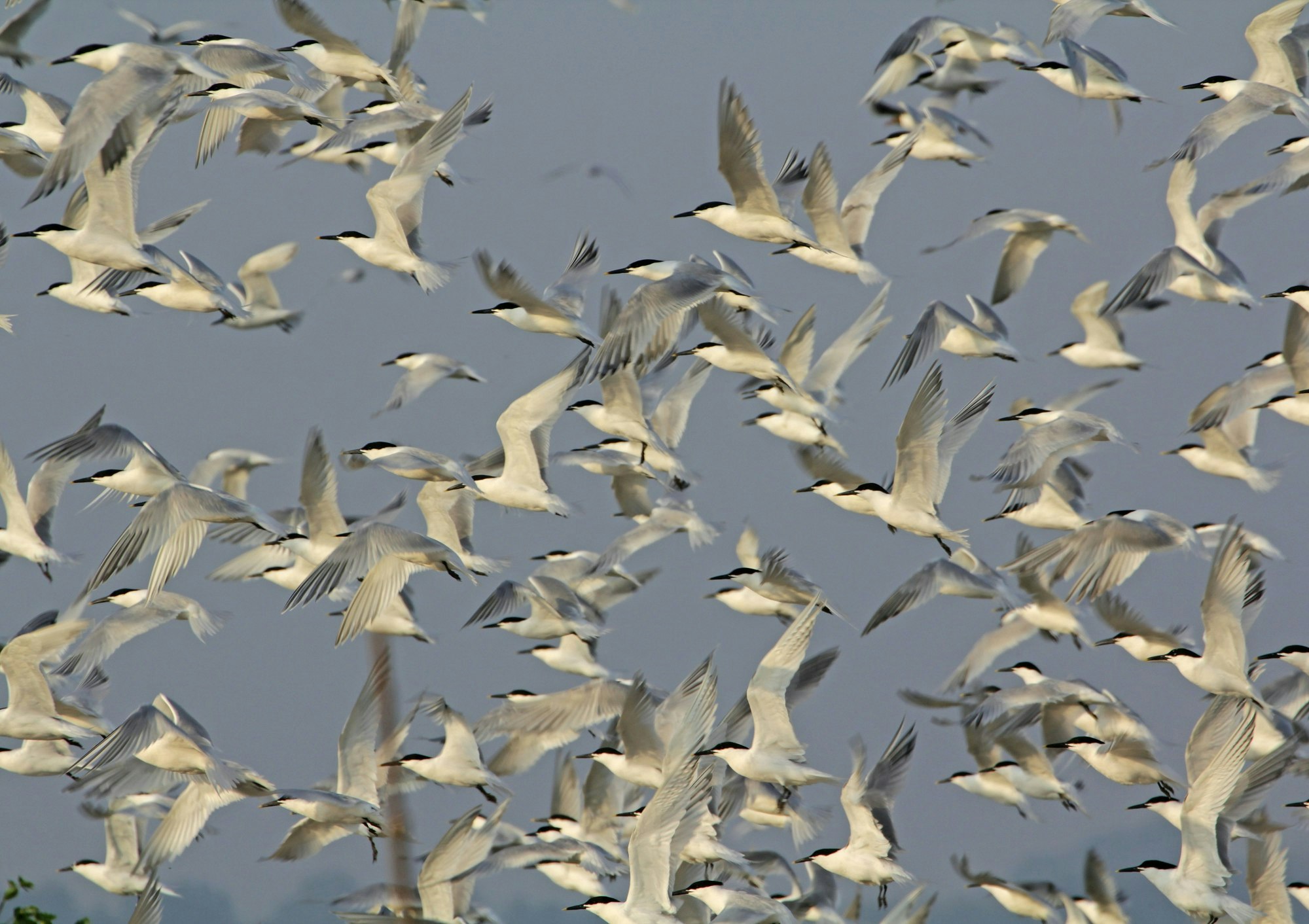
The sandwich tern is a good example. It breeds in the Netherlands in the Delta waters and on the Wadden Islands, but depends on several Natura 2000 sites to complete its breeding cycle. Sandwich terns breed in the Haringvliet Natura 2000 site, for example, while catching prey for their chicks in the Voordelta Natura 2000 site.
Even after the young have fledged, their parents continue to care for them and teach them to fish. They do this in Dutch Natura 2000 sites such as the North Sea Coastal Zone and the Frisian Front, and subsequently in protected sites in the German and Danish Wadden Sea. In early autumn, the parents take their young on the migration to Africa, sometimes stopping at Natura 2000 sites in France and on the Iberian Peninsula.
It’s not about a single site, but a chain of sites - a network that fulfils various functions for different species.
Tracking individual birds
Large numbers of birds spend time in Natura 2000 sites. To better understand how they use these areas, researchers track individual birds. This provides insights into their flight paths, their use of resting and foraging areas, and how they respond to changes in their environment.
At Waardenburg Ecology, various seabird species, including common terns and lesser black-backed gulls, are tracked using GPS transmitters. These small, solar-powered devices transmit location data virtually in real time via 4G.
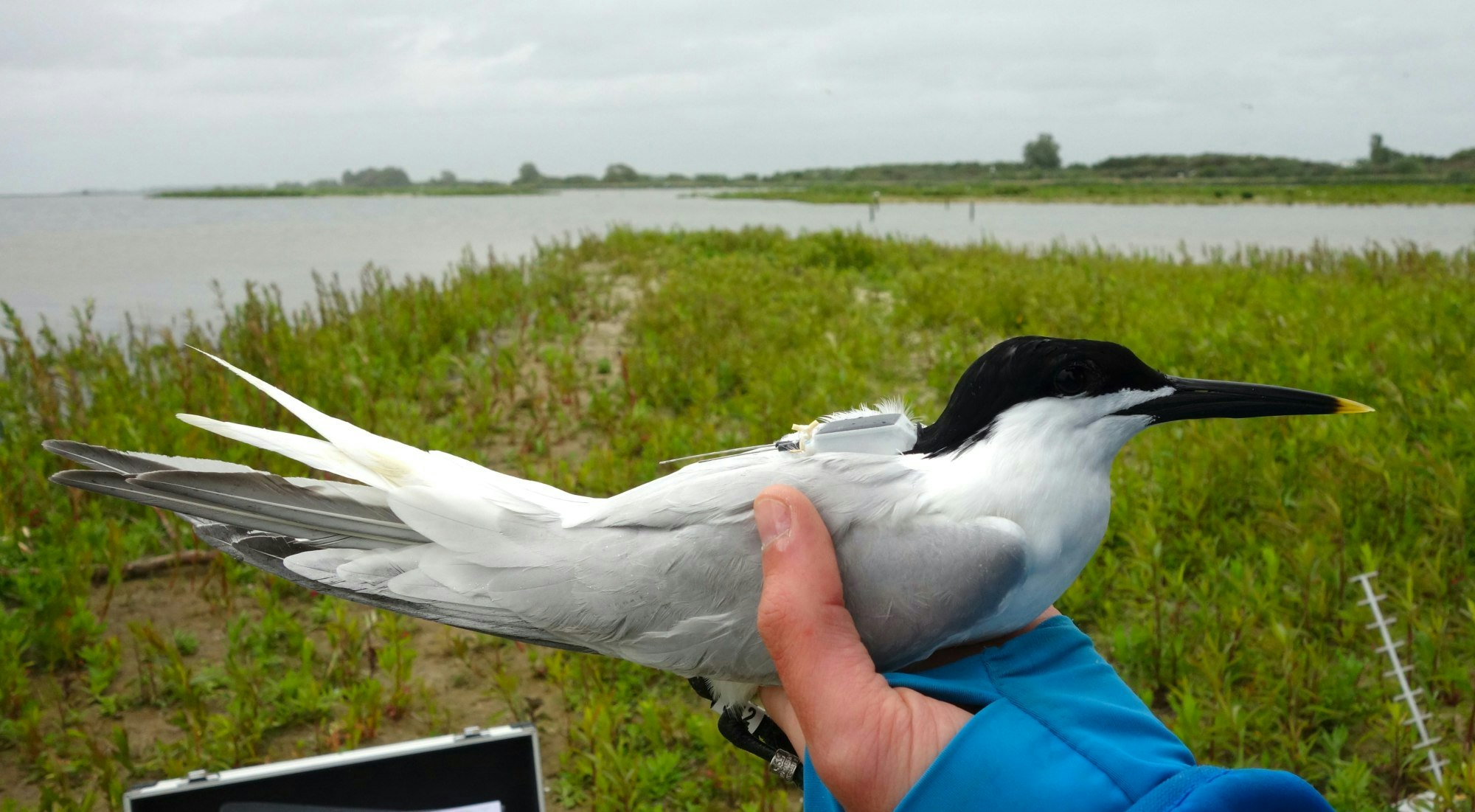
This method provides valuable insights into which areas birds use most intensively and where potential conflicts with human activities may arise. This information can inform spatial planning decisions, such as where to locate a wind farm.
‘If you know where the birds forage and roost at sea, you can choose to adjust the location of a wind farm accordingly,’ says Fijn. ‘We’re also learning more and more about bird behaviour: sandwich terns, for example, easily cover more than 80 km daily during their foraging flights.’
A network with a future
The Natura 2000 network shows that effective nature conservation does not stop at the boundaries of a single area or country. It is the connectivity between sites that makes it possible to support birds - as well as other plants and animals - throughout the different stages of their life cycle. Natura 2000 therefore plays an essential role in conserving biodiversity, both now and in the future.