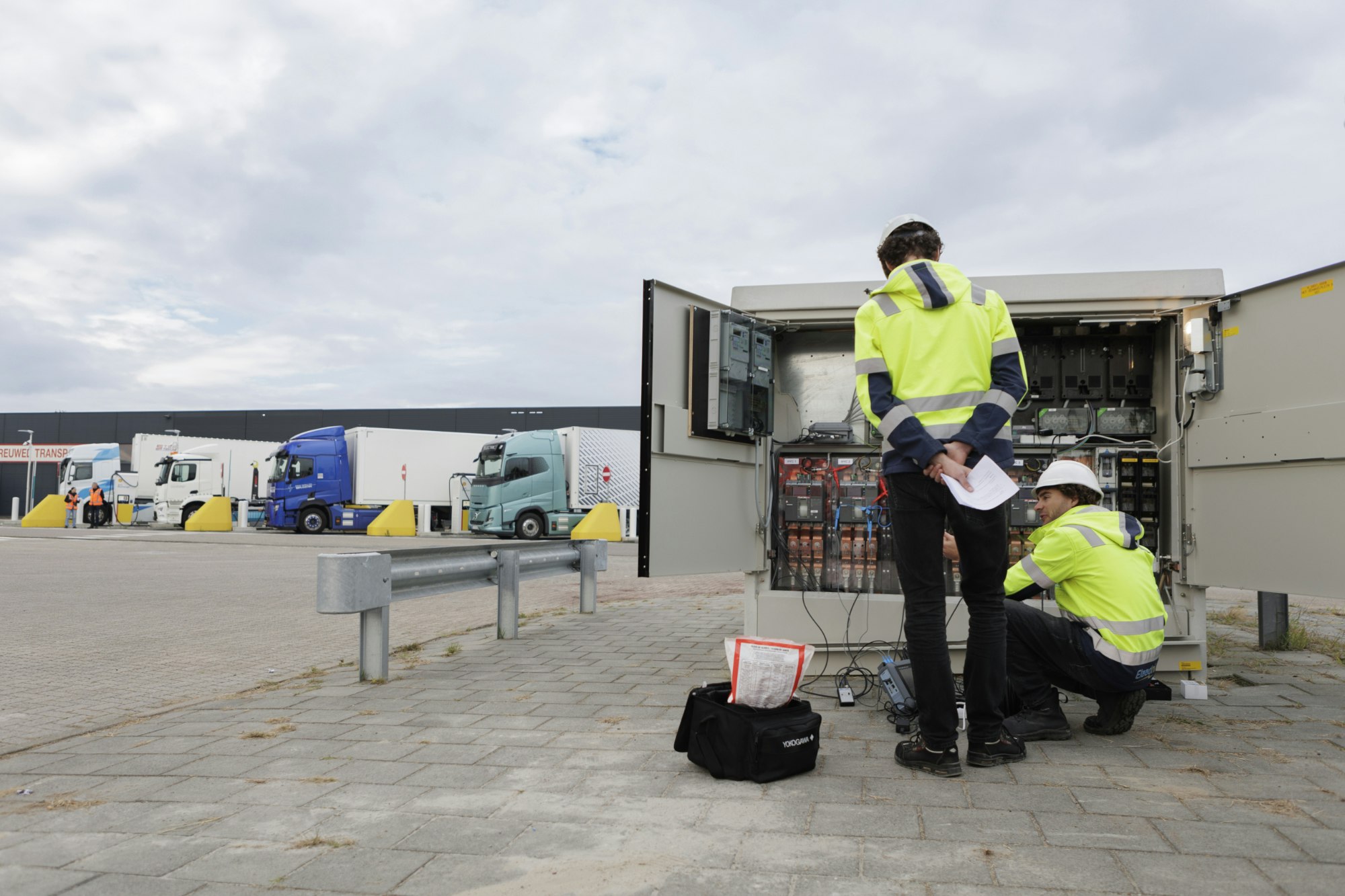
How cyber-secure is the digital infrastructure of a heavy-duty charging hub?
Charging hubs for heavy-duty vehicles are becoming an increasingly important part of the energy system. But how resilient are they to cyber threats?
A charging hub brings together a wide range of digital systems, including charging stations, energy management systems, booking platforms and interfaces with grid operators. These systems are closely interconnected, making it important to understand how they perform as a whole in the event of a disruption or cyberattack.
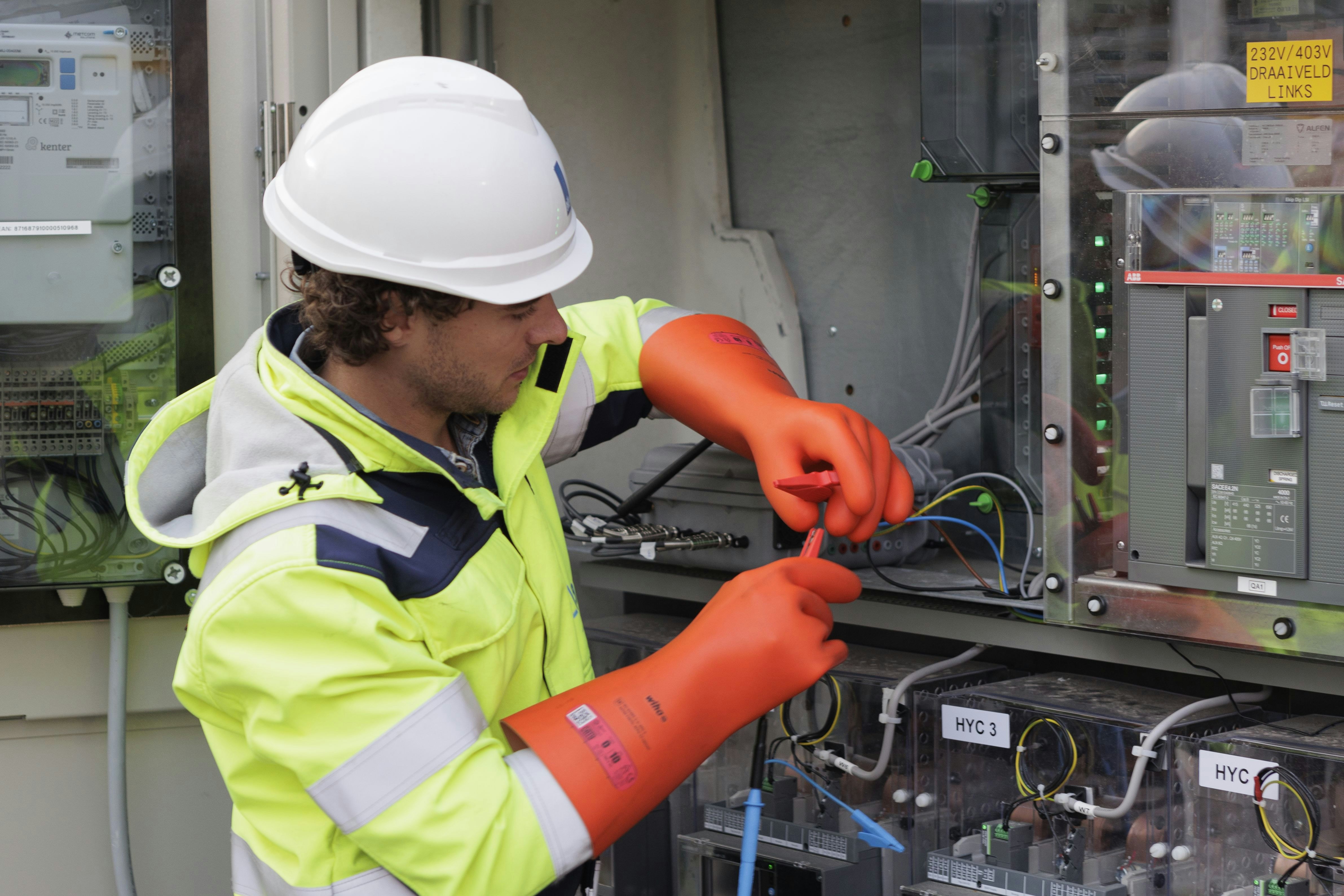
Living Lab Heavy-Duty Charging Hubs research
As part of the Living Lab Heavy-Duty Charging Hubs, Rijkswaterstaat is carrying out practical research into the digital resilience of charging hubs. Working together with the NAL Cybersecurity Working Group (NAL: the Dutch National Charging Infrastructure Agenda) and Veritas, realistic scenarios are being tested at operational charging hubs.
How do the different systems communicate with one another? Where do dependencies arise? And what happens if one of them fails? The research is not intended to assess individual organisations. Instead, the aim is to help the sector as a whole learn and prepare for the continued roll-out of charging infrastructure for heavy-duty vehicles.
Focus on digital resilience
The research examines how the different systems within a charging hub interact in practice, from charging stations and energy management systems to booking platforms and interfaces with grid operators. Through interactive workshops and targeted analyses, including threat modelling, the project explores questions such as:
- How do the different systems exchange data?
- What happens if a disruption occurs or a component fails?
- How do different systems interact during day-to-day operations?
Why does this matter?
The research provides valuable insights into the digital resilience of charging hubs, helping market participants prepare for the continued expansion of charging infrastructure for heavy-duty vehicles.
The findings will also help inform:
- the design of new charging hubs
- the organisation of management and operations
- future procurement processes
- investment decisions
The results of the cybersecurity research are expected by the end of 2026 and will contribute to further knowledge development within the Living Lab Heavy-Duty Charging Hubs.