
The 1926 Flood Disaster: devastation by water
Towards the end of 1925, disaster struck the Netherlands. Floodwaters, driven by exceptionally high river levels, inundated large parts of the country.
Exactly 100 years later, we are commemorating this catastrophe, which affected the lives of thousands of people and permanently changed the way the Netherlands approaches water management.
The dyke breaks
It is 7 AM on New Year's Eve, 1925. In the Nijmegen area, church bells ring to call people to mass. Many residents are inside when the news arrives. Panic spreads, and the congregation rushes out of the church. The priest watches in confusion until someone shouts: ‘The dyke has broken!’
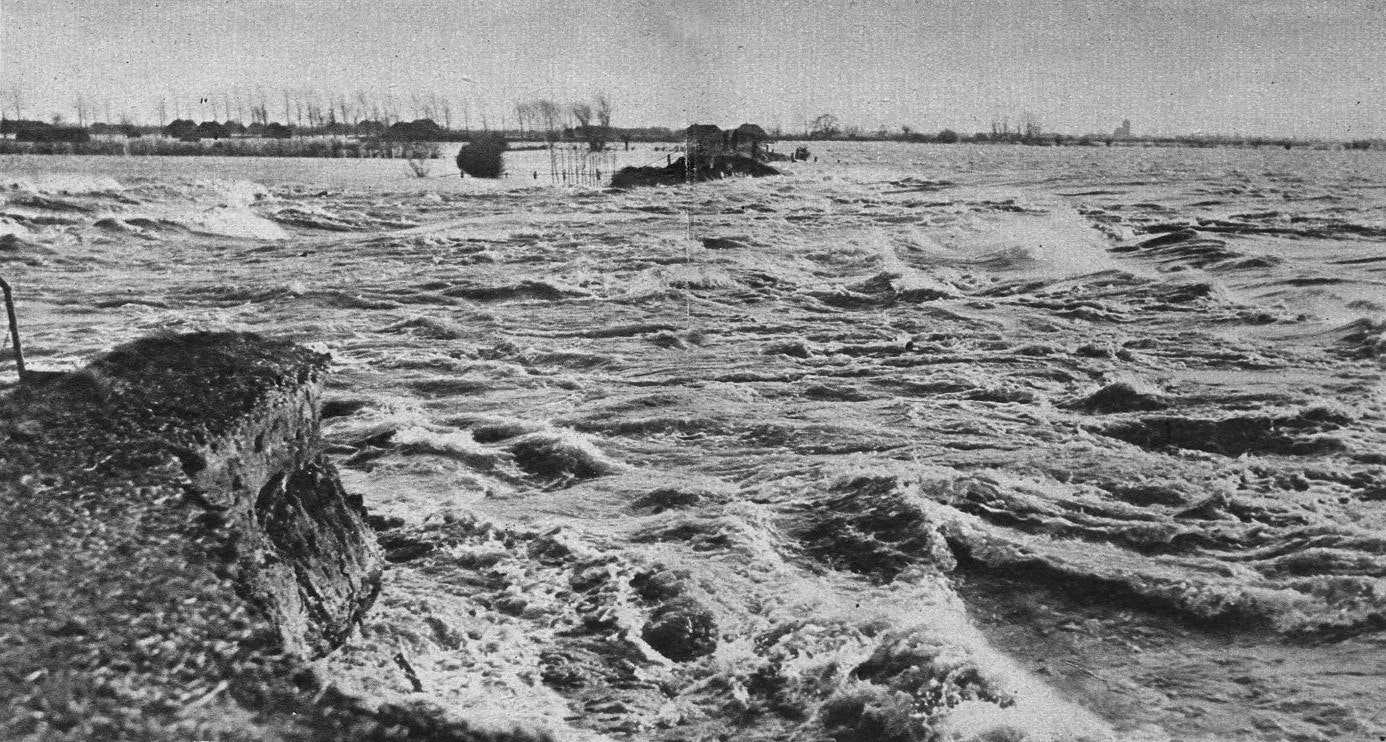
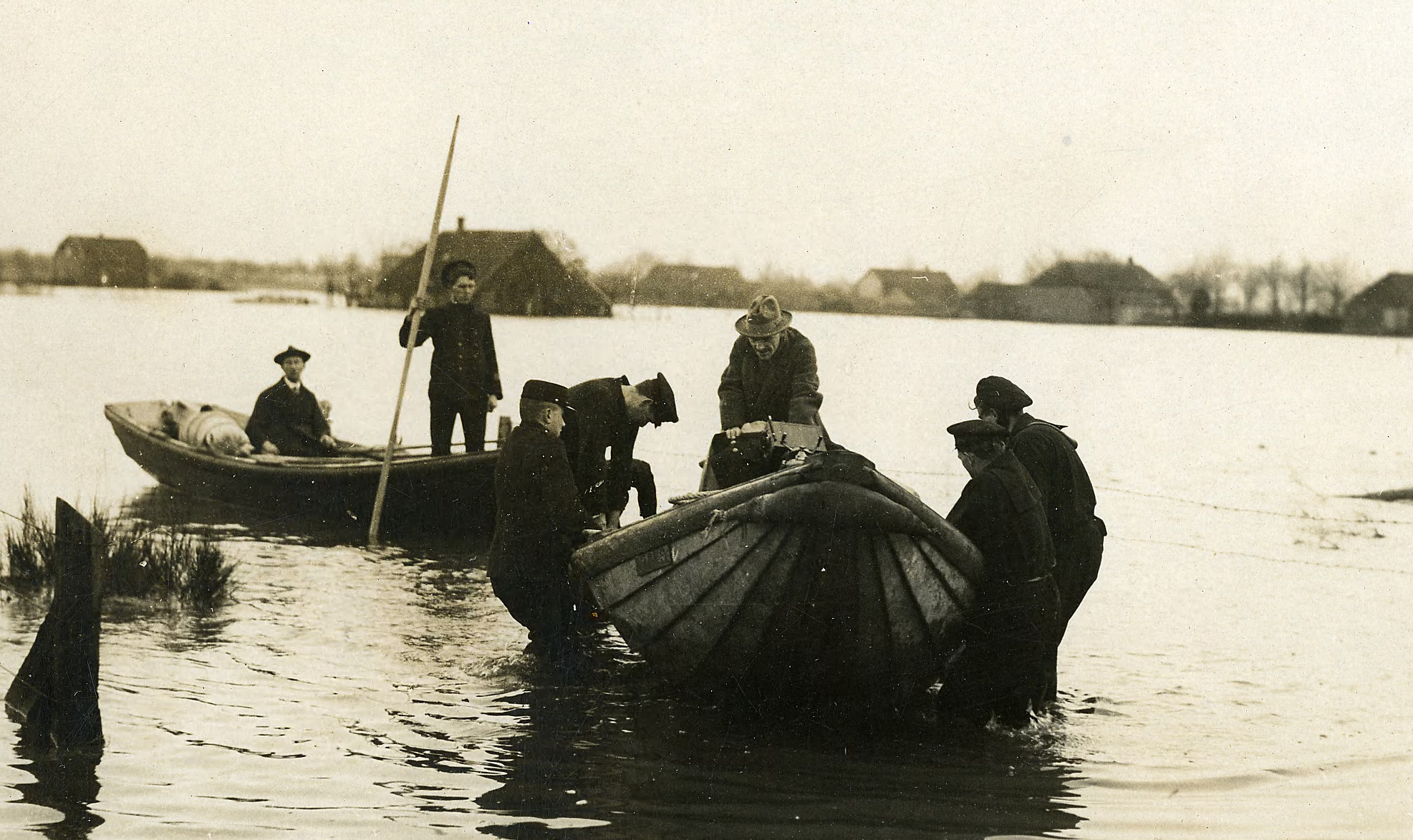
Chaos ensues. People race home to rescue their children, animals and valuables. Some flee the area altogether, while others retreat to their attics, hoping to stay ahead of the rising water. Although the breach was not entirely unexpected: the extreme conditions made it almost inevitable.
The lead-up to the disaster
The weather in late 1925 is exceptionally harsh. From mid-November onwards, snowfall is frequent and the frost severe. On December 5th, temperatures plunge to –17 °C. The dykes lie frozen solid in a stark winter landscape.
Then the weather changes abruptly. Temperatures rise, heavy rain sets in and meltwater pours into the rivers. The Rhine and Meuse swell to record levels. By the end of December, the water is already pressing against the tops of the dykes.
The water takes over the land
On the morning of New Year’s Eve, a powerful south-westerly wind batters an already weakened dyke. With a thunderous roar, the water tears a 100 m wide gap in the embankment. Within hours, the area between Nijmegen, Mook and Ravenstein, stretching towards the Meuse, is transformed into a vast inland sea.
And the disaster does not stop there: along the Meuse, no fewer than 39 dykes give way.
A disaster without official recognition
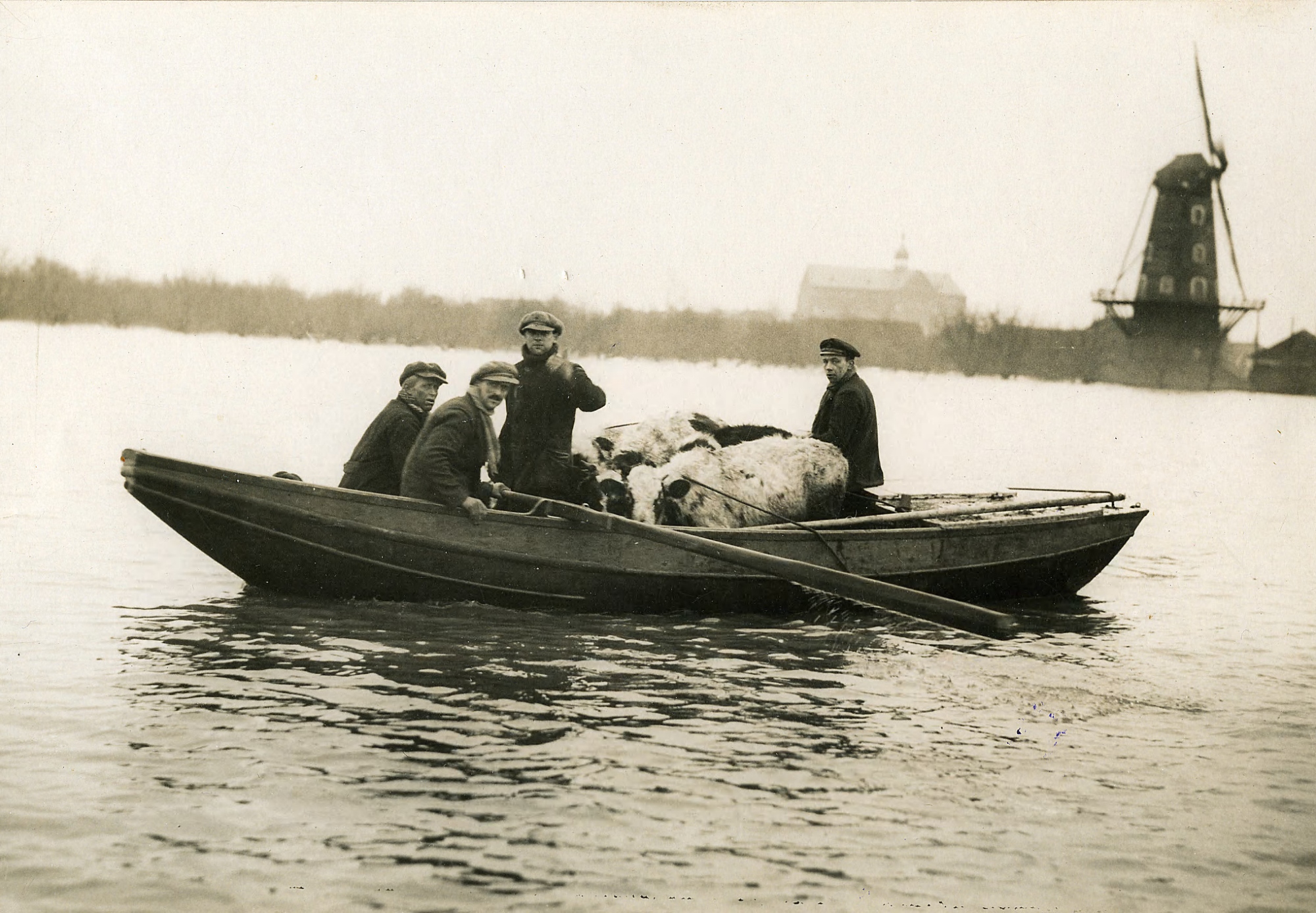
Remarkably, there are no immediate fatalities, but the material damage is immense. Around 3.000 houses are damaged, crops are destroyed and large numbers of livestock drown. Prime Minister Colijn refuses to recognise the flooding as a national disaster.
In his view, there were no casualties, and flooding in the Maas and Waal region is a recurring phenomenon. However, a newspaper report in De Limburger on January 5th reveals that there was, in fact, one fatal victim.
From smoked sausages to shelter for livestock
As the government does not officially acknowledge the disaster, no state aid is provided. Victims must rely on others for help. Queen Wilhelmina and the Pope donate funds, and people across the Netherlands organise collections on a massive scale.
Spontaneous campaigns spring up everywhere. Money, clothing, furniture, kitchen utensils and food are gathered – everything from flour to smoked sausages. Every contribution, large or small, makes a difference.
In one example, the staff of a florist in Aalsmeer worked an extra hour for three consecutive days and donated their additional wages to the flood victims. In the end, millions of guilders are raised to support those affected.
The canalisation of the Meuse
Although the flood is not officially recognised as a national disaster, it ultimately prompts the Dutch government to act. Engineer Cornelis Lely is commissioned to draw up a plan for the canalisation of the Meuse.
In his report on improving the Meuse for large discharges, he proposes shortening and widening the river downstream of Grave. Allowing excess water to flow away more quickly will significantly reduce the risk of future flooding.
A key element of Lely’s plan involves cutting off several bends in the river between Grave and the Blauwe Sluis. Straightening these meanders shortens the river’s course by no less than 19 km.
This intervention has far-reaching consequences, not only for the landscape but also for daily life. The village of Keent, for example, which had previously belonged to Balgoij in the province of Gelderland, suddenly finds itself on the opposite bank of the Meuse, in North Brabant.
Dykes for the future
The 1926 Flood Disaster affected far more than just the Maas and Waal region, the Nijmegen area and Limburg. Parts of the Boven-Merwede region, the area around Dordrecht, the north and west of Brabant, and sections of Overijssel were also impacted. Ultimately, the total damage was estimated at around 10 million guilders.
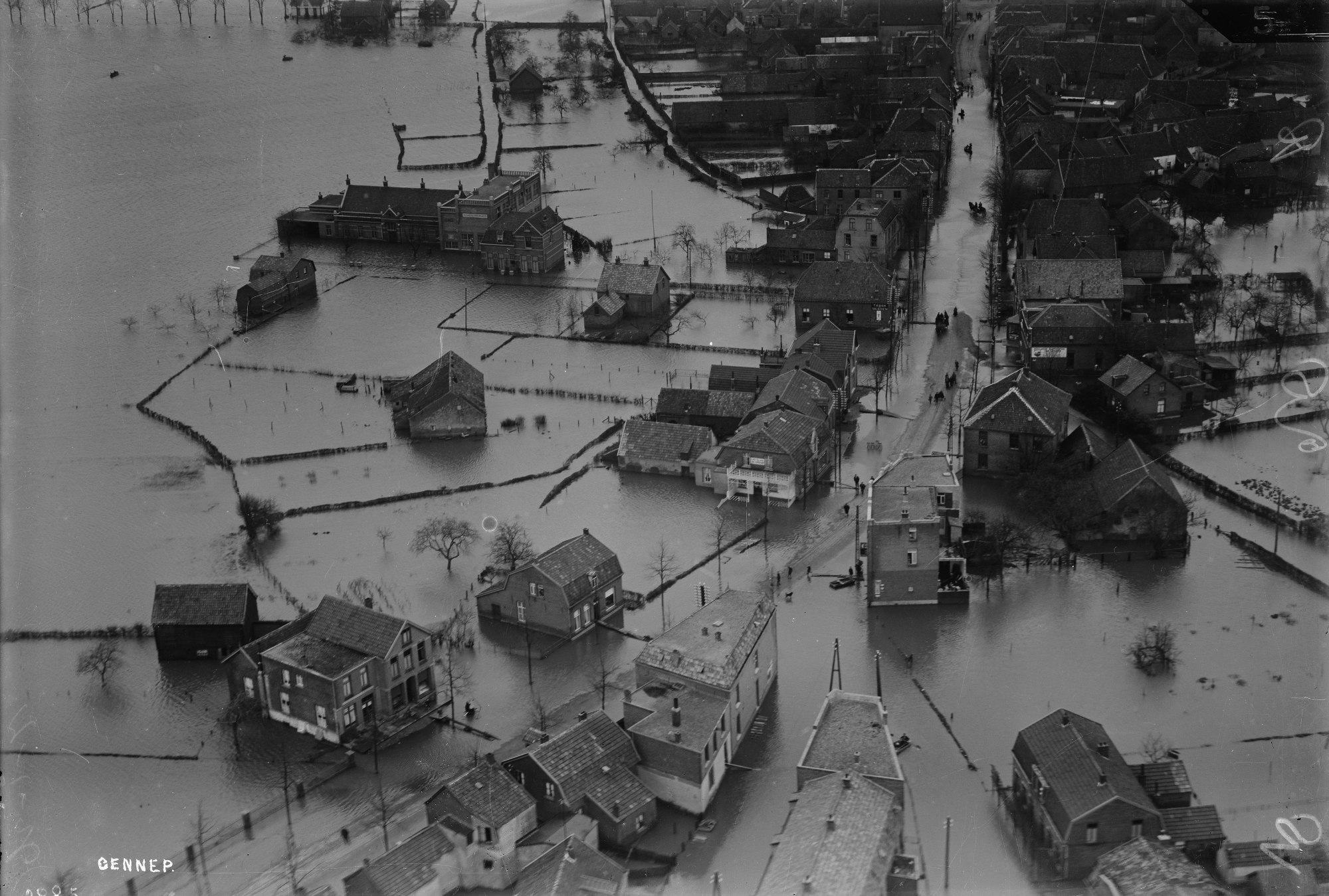
In 1926, many of the flooded areas were still sparsely populated. This was one of the reasons there were few casualties. Today, however, the river area is home to far more people, meaning that the consequences of a flood on this scale would be vastly greater.
Using historical sources, we modelled the 1926 disaster as if it were to occur today. We applied the same water models currently used to assess flood risks, visualise potential impacts and determine the required strength of dykes.
If a similar disaster were to happen now, it would cause an estimated 14,5 billion euros in damage, affect around 200.000 people and result in an estimated 130 fatalities.
Today, the river area is much better protected against flooding. Dykes are considerably stronger than they were a century ago, and far stricter safety standards are in place. These improvements are the result of sustained investment by the water authorities and Rijkswaterstaat, supported by the Flood Protection Programme (HWBP, in Dutch).
If the same volumes of water were to flow through the Netherlands today as in 1926, the dykes would most likely hold. By 2050, all primary flood defences in the Netherlands must meet the new safety standards, ensuring that the river system can safely handle much larger discharges than it could a hundred years ago.