
Lessons learned and continuing the biodiversity partnership
The conclusion of the All4Biodiversity LIFE IP programme marks the end of a successful six-year period (2020–2026) of collaboration, innovation and knowledge development in Dutch nature conservation, with Rijkswaterstaat as one of the partners. Our ecologist Kimberley Stekelenburg-Hagemans outlines how the legacy of this programme will be carried forward.
‘The end of the programme is not the end of the work – it’s the beginning of sustainable biodiversity restoration in the Netherlands,’ Kimberley explains. ‘The knowledge, practical experience and tools we’ve developed will be carried forward within the All4Biodiversity partner network and the Biodiversity Toolbox.’
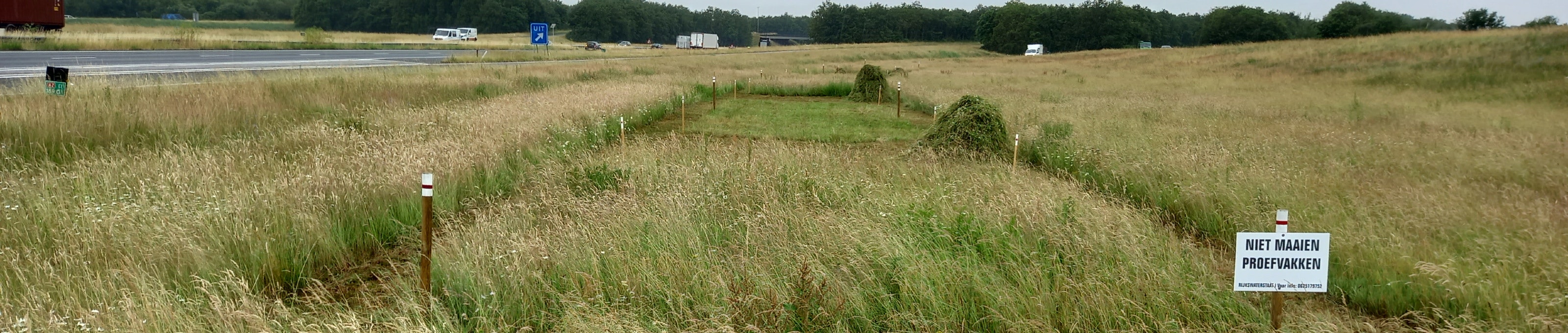
Biodiversity in motorway roadside verges
‘Wageningen University conducted research for us as part of the All4Biodiversity programme. This ultimately resulted in a dissertation that was defended on Thursday, 19 March,’ says Kimberley. ‘It shows that biodiversity in Rijkswaterstaat’s roadside verges has declined since 2004 due to climate change and nitrogen.’
The research also offers practical tools that leading scientists praised for their applicability during the defence. By adapting mowing management, the downward trend can be reversed. Moreover, a biodiverse roadside can contribute to road safety. ‘We’re currently working with our experts to determine how we can incorporate this knowledge into our frameworks. It also forms the basis for new research, such as the ABM project.’
Lessons learned from the All4Biodiversity programme
‘The key message from the LIFE IP All4Biodiversity programme is that effective collaboration doesn’t happen automatically,’ Kimberley continues. ‘If we once again approach biodiversity as a shared regional responsibility, the continuation of All4Biodiversity can truly contribute to long-term nature restoration.’
Broad partnership
Between 2020 and 2026, the programme brought together a wide range of partners, including BoerenNatuur; the Ministry of Agriculture, Fisheries, Food Security and Nature; Naturalis Biodiversity Center; Natuurmonumenten; the provinces of North Brabant, Friesland, Gelderland, Limburg and South Holland; Rijkswaterstaat; Staatsbosbeheer; the Delta Plan for Biodiversity Recovery in the Netherlands; and Vogelbescherming Nederland. All4Biodiversity was funded by the European Union.
Building on the original principles of the National Ecological Network (EHS), now applied at a regional scale, this partnership lays the groundwork for the next phase of nature restoration in the Netherlands – one with greater impact and long-term impact. In this way, the legacy of All4Biodiversity remains tangible beyond the programme itself. It strengthens collaboration, promotes learning and adaptive management, and contributes to a more robust and resilient natural environment.