
Charging hubs for electric trucks prove their potential, but scaling-up demands collaboration
After over a year of practical research, Rijkswaterstaat, in partnership with TNO, is publishing the first Living Lab Heavy-Duty Charging Hubs interim report. This is the first time such a wide-ranging review has been conducted of all aspects of public charging hubs for heavy-duty transportation: ranging from technology to business case.
The results offer companies, transport companies and policy-makers concrete insights into how public charging of Heavy duty vehicles (HDVs) works in real life. The study shows that energy is crucial and accounts for up to 50% of the business case costs, both in terms of cost of connecting to the grid and procurement of energy.
At the same time, grid congestion slows the scaling-up process because operators have no certainty about their grid connection, although charging hubs also offer opportunities to reduce grid congestion. The report offers practical advice for a successful roll-out of charging infrastructure.
Findings
Over fourteen months, the Living Lab has compiled detailed data on six operational charging hubs (WattHub, Shell, Milence, Truckparking Rotterdam, BAT and CircleK). This data has now been analysed and interpreted. The findings show the importance of energy management, but also provide insights into charging time.
Heavy duty vehicles currently use only a limited portion of their battery capacity, so they can usually charge sufficiently to complete their route on electrical power within thirty to forty-five minutes. The complete study focuses on five core themes: spatial planning, technology, logistics, energy and business case.
'Measurement is the key to knowledge, but analysis is even more important,' says project leader Rob de Groot (Rijkswaterstaat). 'Together with market parties and research institutes TNO and ElaadNL, we've converted practical data into real guidelines that promote upscaling of charging infrastructure for heavy duty transportation.'
Stress test
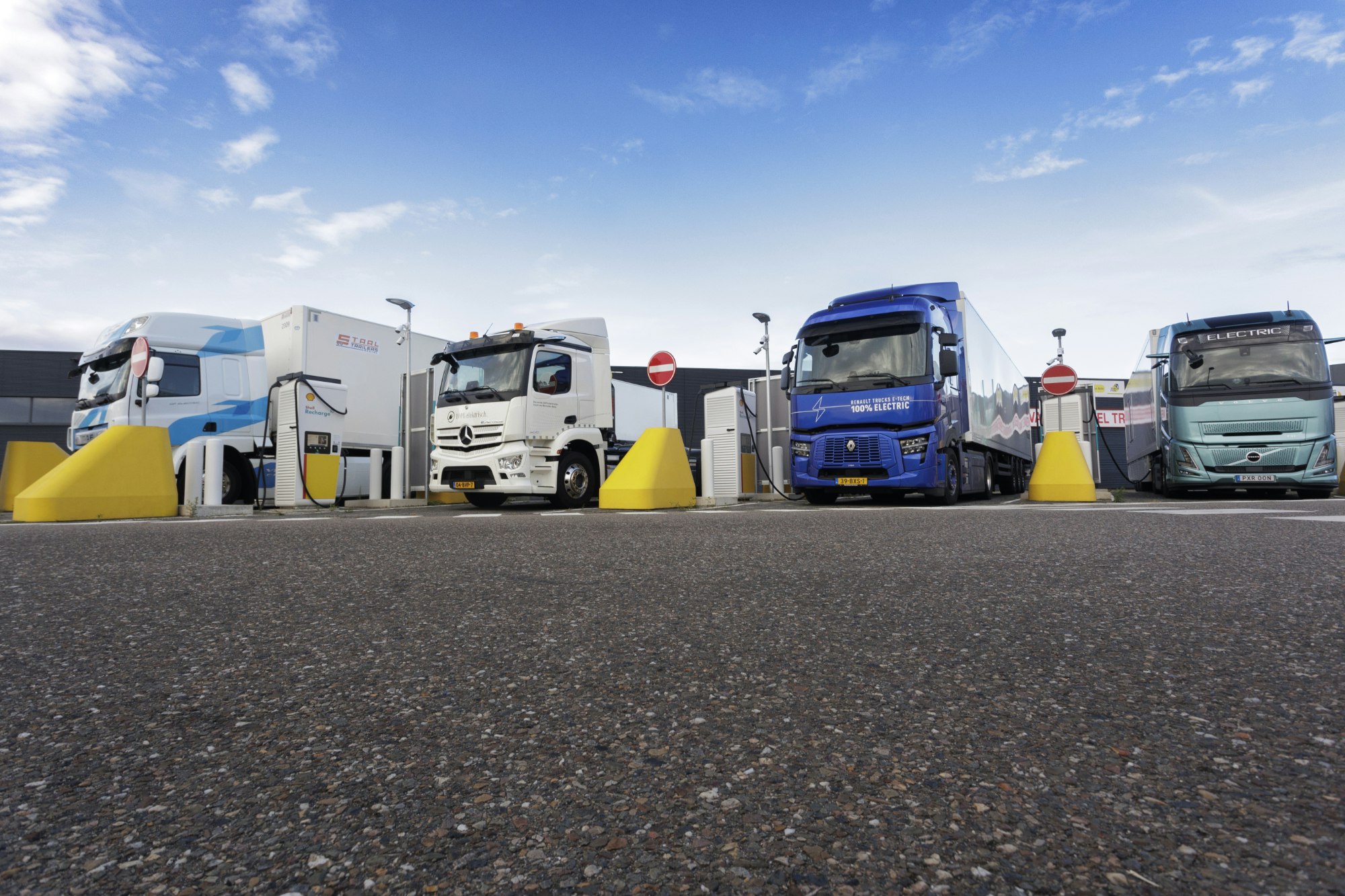
One of the highlights of the study was a test week involving various makes of electric trucks (DAF, Mercedes, Volvo, Renault). This stress test proves that charging hubs can cope with intensive use: seventy charging sessions in forty-five hours. Which represents 3.000 km in journeys. 'We now know how we, as a municipality, can link smart charging infrastructure to policy and practice. And how you can take control of the situation in the energy transition,' says Aard van Weezel (Brabants Afval Team, Tilburg).
Follow-up research
The interim report marks the half-way point of the Living Lab Heavy Duty Charging Hub research programme. Monitoring will continue throughout 2026, before the final report will appear in early 2027. For the participating parties, the project emphasises the value of collaboration.
'We greatly value being part of Living Lab and being able to share knowledge with others,' believes Gerben van den Berg (WattHub). 'It gives us a benchmark for where we stand in a market that is on the cusp of growth. We are currently exploring how to shape the industry: from infrastructure and signage to reservation software. That is the power of the collective.'
The English executive summary and stakeholder-specific recommendations from the interim report are available on our online publication platform.