
Improved water safety and greater biodiversity in the Noordwaard
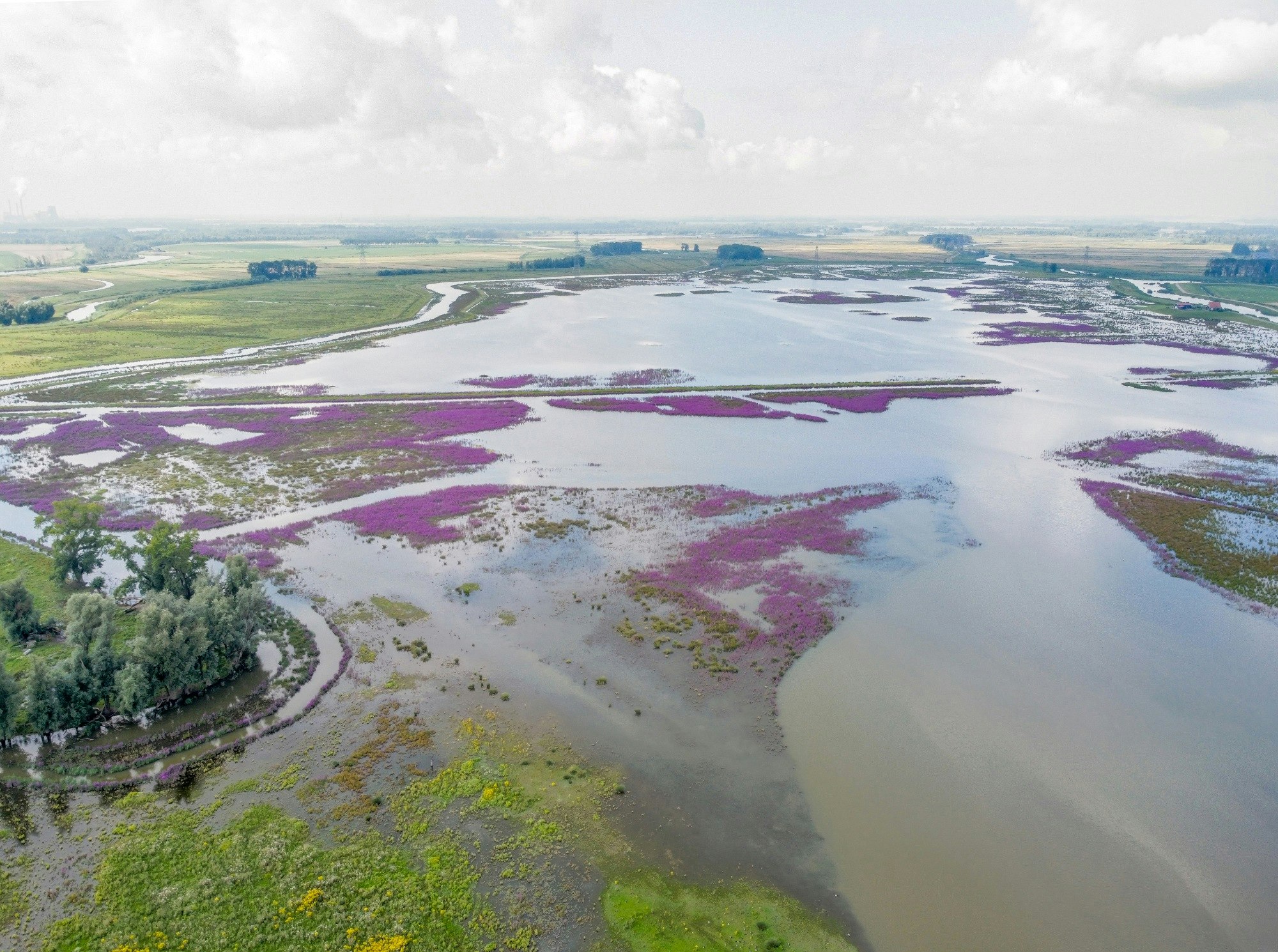
Ten years ago, the Noordwaard was transformed into a flood conveyance area for periods of high water, creating new space for nature. Since then, this former polder has developed into a unique tidal landscape that combines improved water safety with growing biodiversity.
Area redesigned
Between 2012 and 2015, the Noordwaard underwent a complete redesign as part of the national Room for the River programme. Harm Blom, a forester at Staatsbosbeheer, describes the transformation of this area in the Biesbosch: ‘From sugar beet to water reed. It used to be a polder where farmers grew sugar beet and potatoes.’
As part of Room for the River, the Noordwaard was designated as a flood conveyance area. This means that when water levels rise above a certain threshold, excess water is deliberately allowed to flow into the area. By giving the river more room, the risk of flooding in the surrounding region is reduced.
‘At 2 m above sea level, the water flows over these lowered sections of dyke – the ‘threshold’ – into the Noordwaard and eventually towards the sea,’ explains Arno Slager, asset manager for Banks & Floodplains at Rijkswaterstaat. ‘That level is exceptionally high, but in 2023 we experienced it twice, due to a combination of spring tides, strong westerly winds and high river discharges.’
The modifications were also intended to restore the ecological dynamics of the water system. Former creek courses were carefully re-excavated, guided by historical maps.
Room for the River
The Netherlands is under constant threat from flooding. To address this, the Dutch government launched the Room for the River programme. Its aim is to reduce flood risk by giving rivers controlled space to overflow during periods of high water. Read more about Room for the River.
Water safety and nature
This is how the Noordwaard became an area with a dual function: water safety and nature development. How do these two objectives work together in practice? We own most of the 1.500 ha area and is responsible for water safety, while Staatsbosbeheer manages the nature.
‘An idea like this naturally requires a broader way of thinking,’ says Slager. ‘If you only consider water safety, a smooth grass surface would be enough. However, the design of such a flood conveyance area can serve multiple purposes simultaneously. Water safety and nature can reinforce each other very well.’
Unique nature reserve
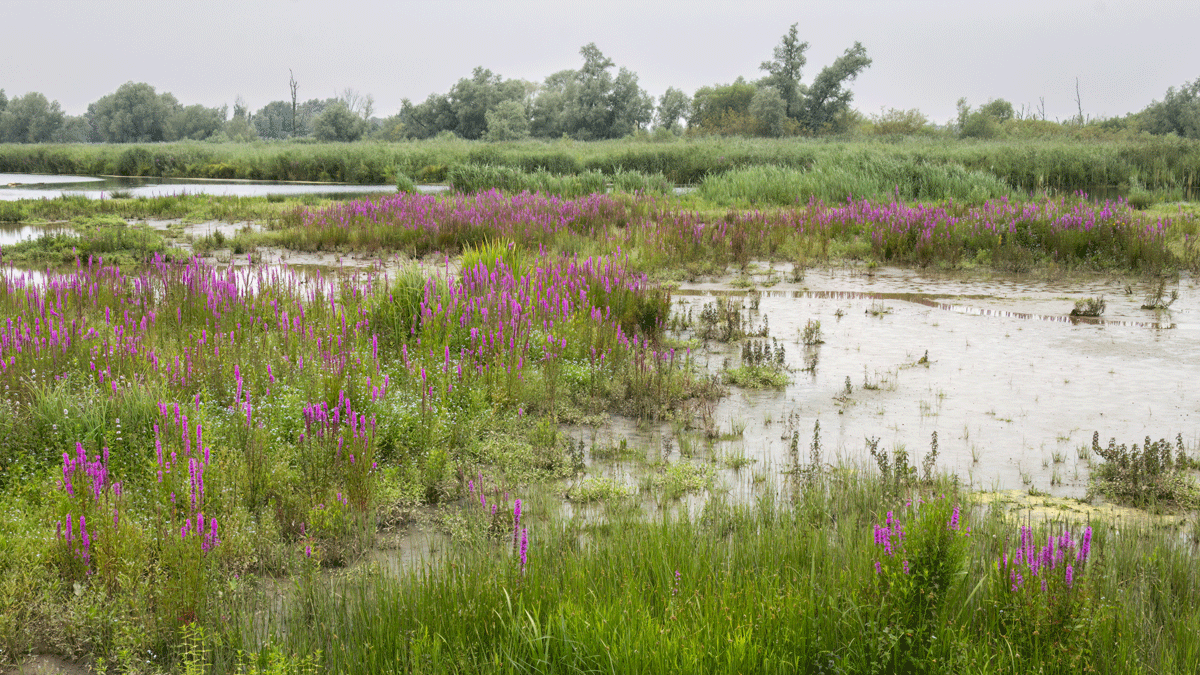
Ten years after its completion, we can conclude that nature in the Noordwaard is thriving. ‘It is a unique area of muddy riverbanks, creeks and shallow, flowing tidal habitats,’ says Blom.
‘Together with the surrounding areas, it is the only freshwater delta in Europe that is still influenced by the tide. You could compare it to the Wadden Sea, but with fresh water. Water flows in and out every day, creating conditions for a remarkably high level of biodiversity.’
The Noordwaard is an important connecting zone within the wider Biesbosch, a designated Natura 2000 area. ‘It’s the heart of the Biesbosch,’ says Blom.
Ecological management
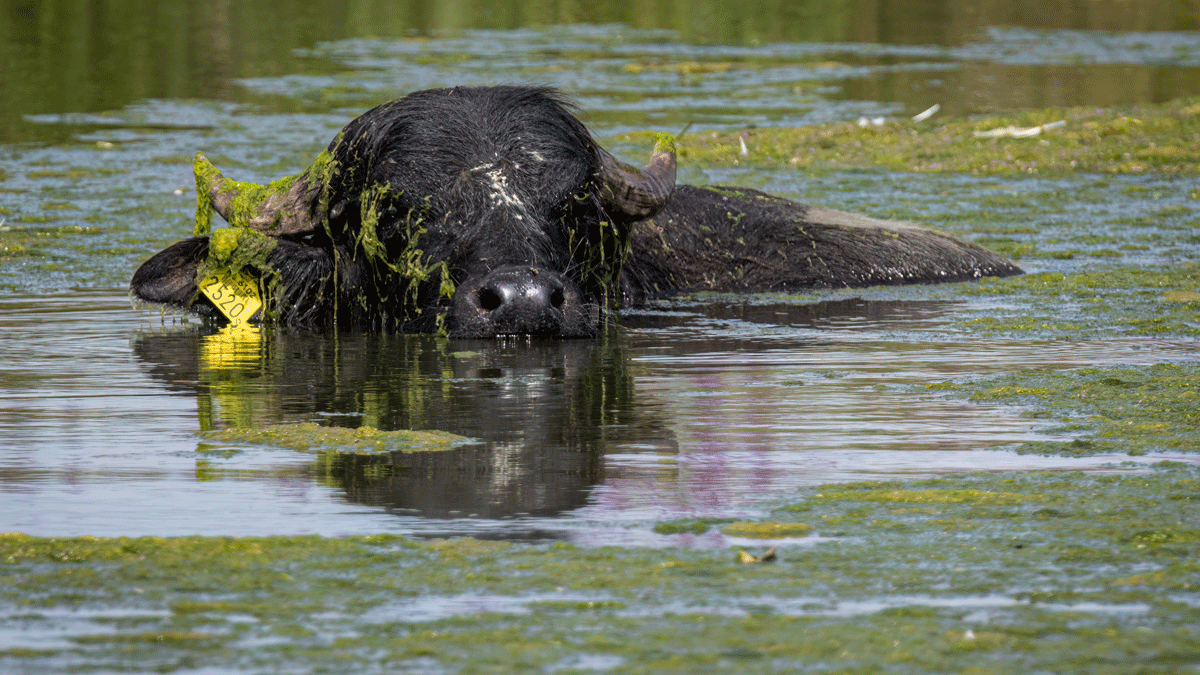
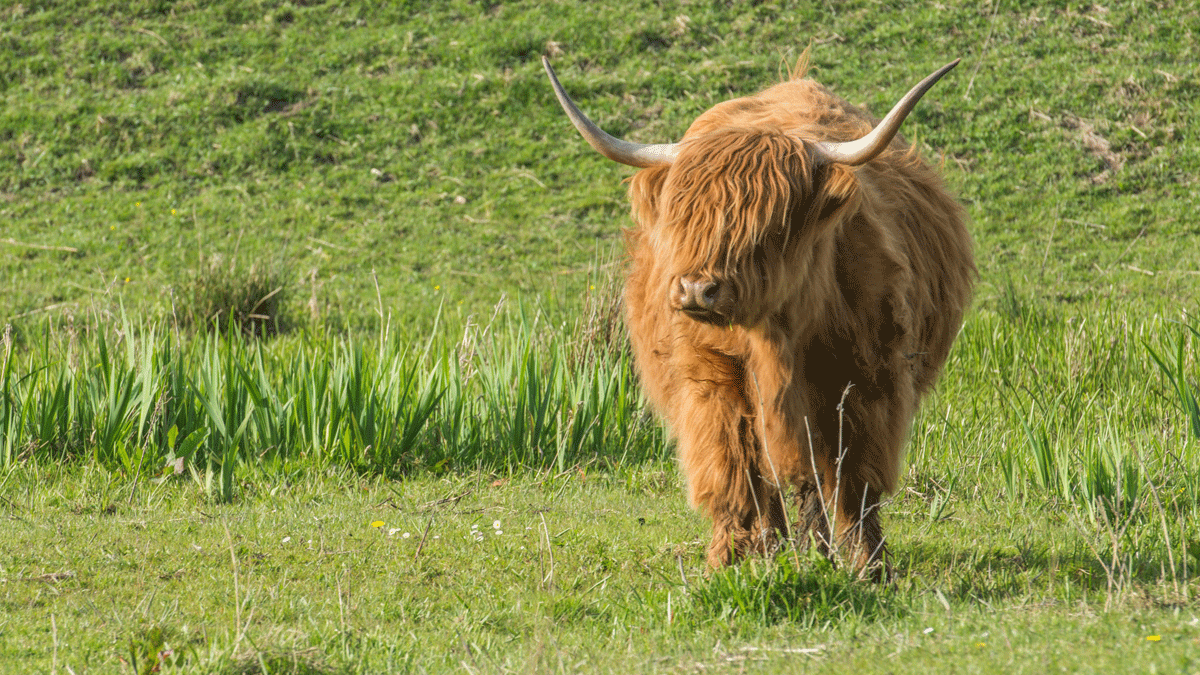
Ecological management by Staatsbosbeheer also contributes directly to water safety. ‘Large grazers such as water buffalo, Konik horses and Scottish Highland cattle keep the vegetation short,’ Blom explains. ‘Water buffalo graze in wetter areas, while Highland cattle and Konik horses feed on willows on higher, drier ground.’
At the same time, water safety measures are carefully designed with nature in mind. ‘From time to time, we need to dredge the creeks to improve water flow,’ says Slager. ‘An ecologist from Rijkswaterstaat always accompanies us to ensure that any mud loaches that are accidentally caught are returned safely to the water.’
Enthusiasm for the future
Both Blom and Slager are enthusiastic about the collaboration and the dual ambition of the Noordwaard project. They see it as a model for the future, especially in a densely populated country like the Netherlands, where space is scarce and climate change is expected to bring more extreme rainfall.
‘The nature here looks and feels wild,’ Slager says. ‘But, as everywhere in the Netherlands, it is a regulated form of wildness.’ Blom agrees. ‘The Noordwaard demonstrates the value of giving space back to water. If you dare to do that, high-quality nature follows almost automatically.’