
New technology makes underwater inspections safer
Underwater structure inspections are traditionally carried out by divers. Although this approach is effective, it also involves safety risks. During the Farmsum Challenge Week in 2025, Rijkswaterstaat, TNO and industry partners explored how new technologies could make it possible to carry out underwater inspections without always having to rely on divers.
The final report was published in July 2026. We look back on the challenge with some of those involved.
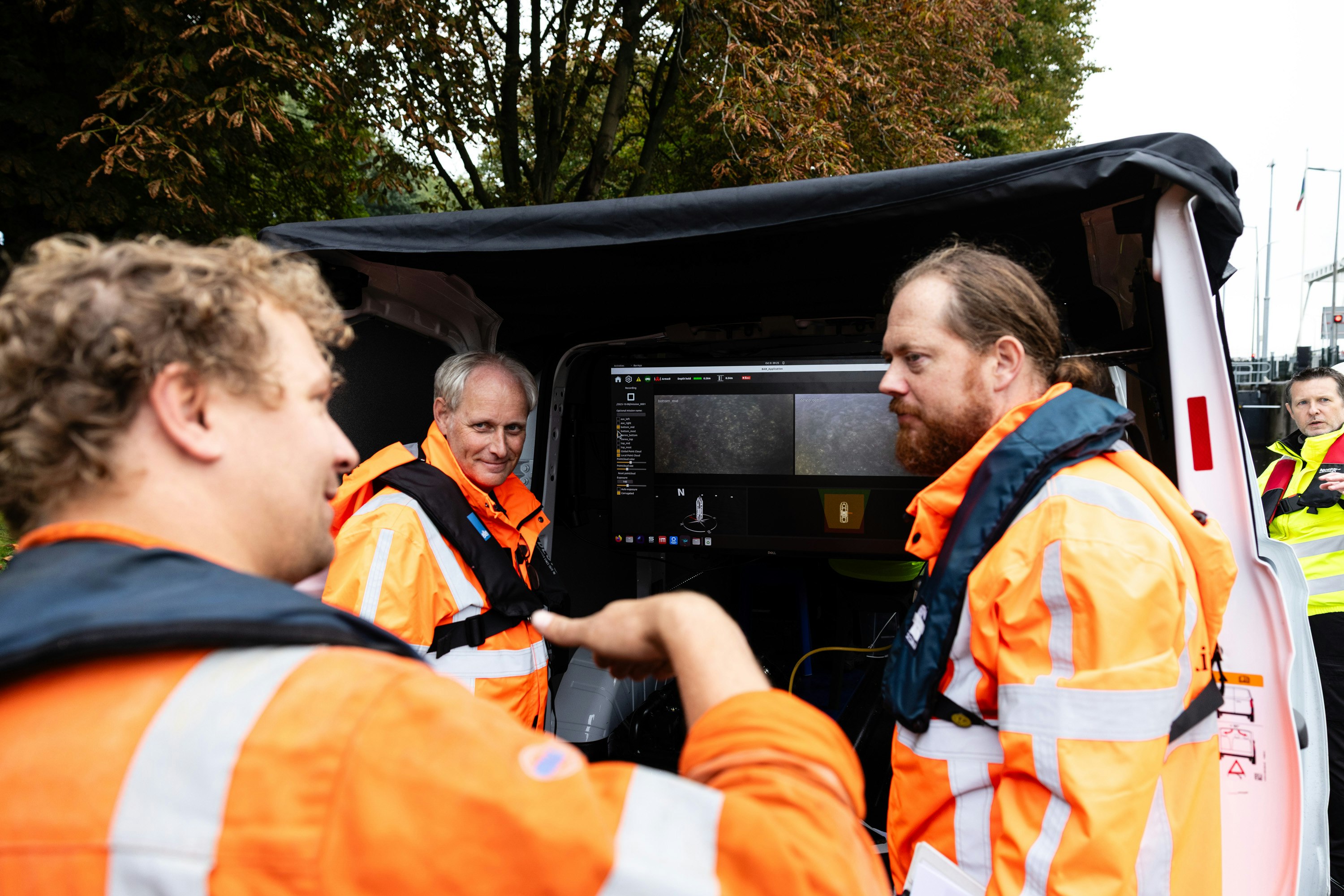
‘Our structures don’t stop at the waterline,’ Marcel Vos, project leader at Rijkswaterstaat, begins. ‘We also need to inspect what lies beneath the surface. We usually rely on divers for this, working under strict safety regulations. But every time someone enters the water, something could go wrong. That’s why we’ve been working on underwater inspection technology since 2019.’
‘And with technology advancing so quickly, we wanted to take another look at what’s possible. What can technology tell us without having to send divers into the water? To find out, we needed industry partners with specialist expertise. That led us to organise the Farmsum Challenge Week.’
Choosing the right technology for the job
We also need to inspect what lies beneath the surface. We usually rely on divers for this, working under strict safety regulations. But every time someone enters the water, there is a risk that something could go wrong. That’s why we’ve been working on underwater inspection technology since 2019.
And with technology advancing so quickly, we wanted to take another look at what’s possible. What can technology tell us without having to send divers into the water? To find out, we needed industry partners with specialist expertise. That led us to organise the Farmsum Challenge Week.’
Choosing the right technology for the job
During the challenge week, Rijkswaterstaat, TNO and technology companies came together to test advanced inspection technologies. Participants included oQuay, AquaSmart XL, Subdron, Blue Atlas Robotics, H2O Drones, Van Oord and a survey vessel operated by RWS Mobiel Meten.
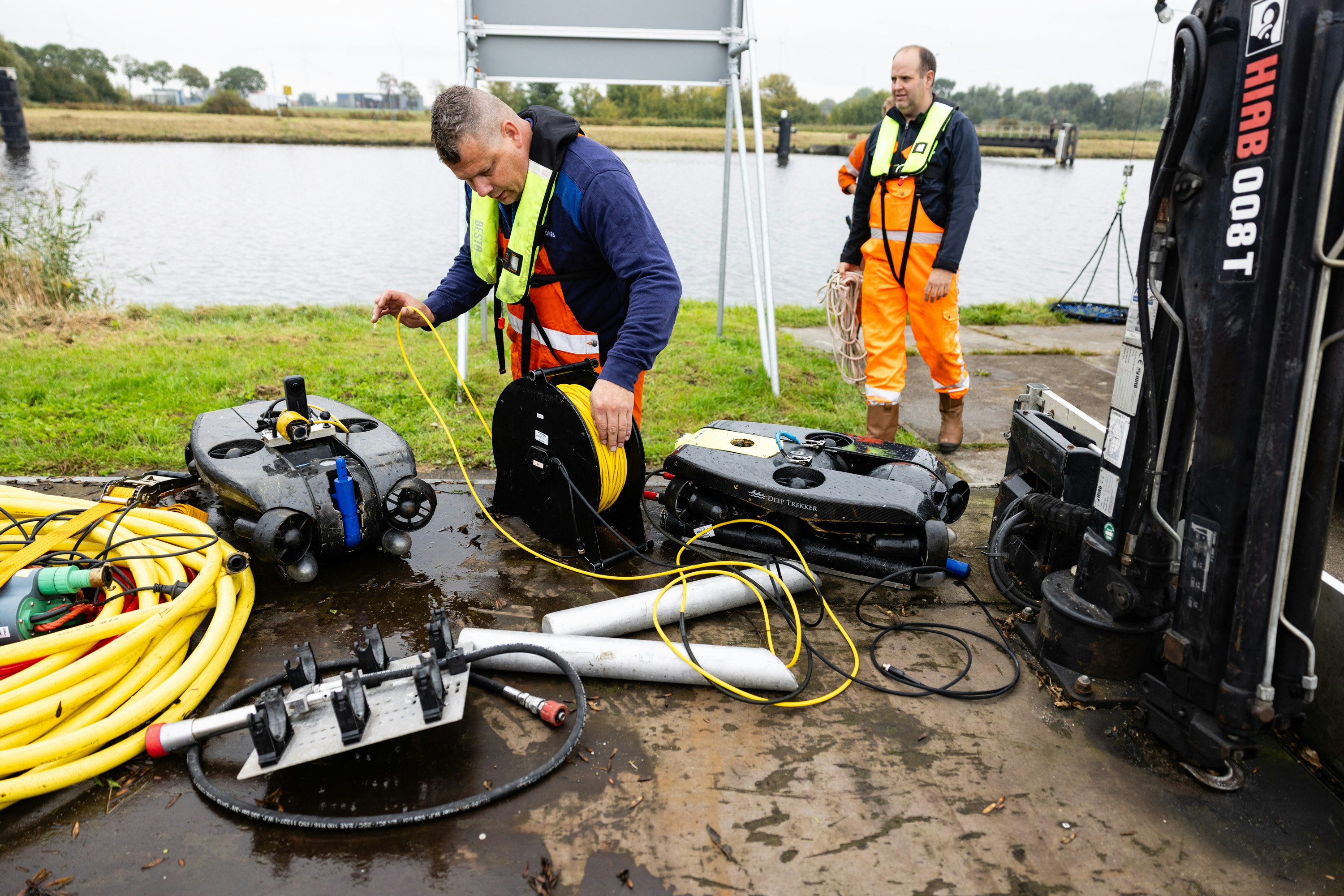
‘During the week, the participating organisations surveyed parts of the lock at Farmsum, including sheet piling and mooring posts,’ Vos explains. ‘They used a range of technologies, including underwater drones, remotely operated vehicles and uncrewed surface vehicles, equipped with different measurement systems. By surveying the same area with different methods, we could compare their performance.’
‘We also discovered how the technologies can complement one another. One might provide a good overview of the surroundings, while another reveals much more detail. So you learn not only what you can see, but also which technology is best suited to a particular inspection.’
‘You learn not only what you can see, but also which technology is best suited to a particular inspection’
Specialist skills in its own right
Ideally, a specialist familiar with the structure works alongside the underwater drone operator during an inspection. ‘You need to know what to expect and what you’re looking for,’ Vos explains. ‘This became clear at Farmsum when we inspected the mooring posts, which have concrete bases. Someone familiar with the structure knows this, but a drone operator might not. If you don’t know that the concrete base is part of the structure, you may not recognise what you’re seeing.’
The drone operator’s expertise is equally important, as Vos discovered during the challenge week. ‘Operating an underwater drone is actually quite difficult. It takes considerable experience, particularly because you have to deal with currents. It’s a specialist skill in its own right. That’s why combining the two areas of expertise is so important.’
Supporting divers during inspections
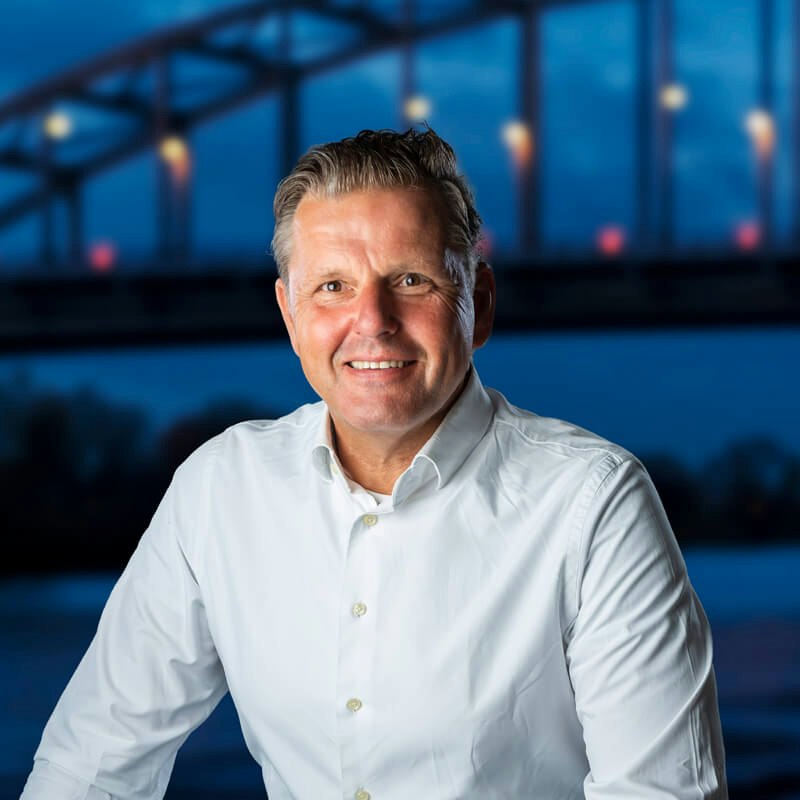
Karst Beens, director of H2O Drones, explains why his company participated in the Farmsum Challenge Week. ‘Above all, we want to help advance underwater inspection technology. We’re keen to share our knowledge and learn from other organisations. We initially introduced technology into underwater inspections to improve diver safety.’
‘We’ve now reached a point where technical equipment lets us carry out more thorough inspections than divers can on their own because it gives us greater control. But that certainly doesn’t mean technology is replacing divers. Underwater drones can also support them during inspections. For example, a specialist onshore can watch live footage of the diver underwater and immediately assess whether all the necessary images have been captured.’
Prerequisites and limitations
Divers will always be needed, Vos agrees. ‘Imagine that drone footage shows a mooring post completely covered in seaweed or mussels. You can’t assess the condition of the post itself from those images. You need a diver for that. Ideally, you would first carry out a visual inspection using an underwater drone and only send in a diver if more information is needed.’
He sees a similar approach being used for above-water inspections. ‘You could first inspect a structure with a drone and only bring in a cherry picker if necessary.’ Beens emphasises that equipment quality is essential. ‘Anyone can buy a drone for a few hundred euros, but that doesn’t mean it’s suitable for inspections. If the camera is poor, you won’t be able to see anything.’
‘Anyone can order a drone for a few hundred euros, but that doesn’t mean it’s suitable for inspections’
Results of the Farmsum Challenge Week
For Vos, the main outcome of the challenge week is a clearer understanding of what the different technologies can achieve. ‘Which technology delivers which results? That’s the key question when deciding what equipment to use.’
‘First, you need to establish what you want to inspect and where. Then you can determine which technology is best suited to the task. We’ve compiled an overview of the different technologies and their potential applications. That information is now also available to RWS Mobiel Meten. Using what we learned during the challenge week, we can advise other departments within Rijkswaterstaat so they don’t have to reinvent the wheel.’
Opportunities for the future
Beens sees considerable potential for using underwater drones to prevent problems before they occur. ‘Because underwater drones are generally easier to deploy than divers, inspections can be carried out more frequently. The data they collect helps you make informed decisions. For example, rubbish lying at the bottom of a lock can eventually become trapped between the lock gates and cause a malfunction. Our underwater drones can remove that rubbish before it causes problems.’
‘Because underwater drones are generally easier to deploy than divers, inspections can be carried out more frequently’
According to Beens, Rijkswaterstaat has an important role to play in developing and encouraging the use of underwater inspection technologies. ‘Rijkswaterstaat is a real frontrunner in this field. For example, clear protocols have been established for measuring riverbed depths. It would be good to introduce similar protocols for underwater inspections so the reliability of the results can be verified. Rijkswaterstaat is leading the way here. If it introduces such standards, others will follow.’
Further developments
There is still work to be done, but developments are ongoing. ‘We’re currently testing Pulsed Eddy Current (PEC) technology,’ Vos says. ‘This electromagnetic measurement technique can detect corrosion and measure the thickness of sheet piling without damaging the material.’
‘At present, we have to clean sheet piling before inspecting it, which is very time-consuming. With PEC measurements, that may no longer be necessary. We’re investigating whether the technique can produce accurate results through layers of dirt and how closely those results match measurements obtained using existing methods. This could save us a great deal of time and money. These new technologies also play an important role in enabling us to inspect our underwater structures safely.’