
‘Ultimately, we have to solve this together’
Water distribution in Europe in times of drought and water scarcity.
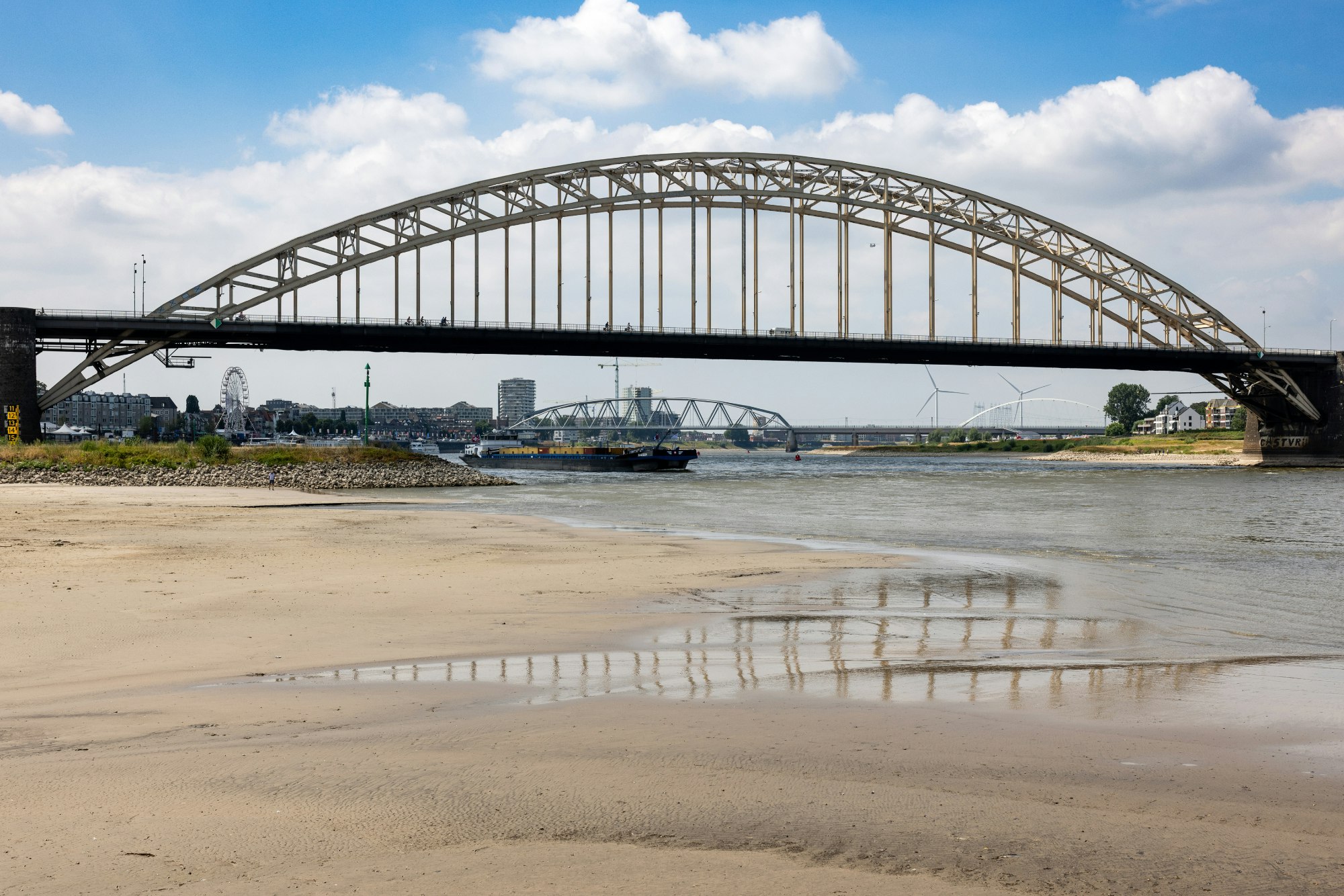
Water levels in the Rhine and Meuse were historically low this summer, causing problems for shipping, agriculture and nature, as well as efforts to combat salinisation, to name a few. And the Netherlands is by no means alone in facing these challenges. How can European countries better prepare for periods of drought and water scarcity?
We spoke to Norbert Cremers (Water and Land Use), who participates in the EU Working Group on Water Scarcity & Droughts as part of his policy advisory work. He explains why the focus needs to be on the entire river basin rather than national borders.
Drought or water scarcity: what exactly is the difference?
Drought and water scarcity are often mentioned in the same breath, but they are not the same thing. ‘A drought can be seen as a climatic phenomenon. Like we’re experiencing now, with a dry summer. Climate change is altering weather patterns such as precipitation and evaporation, and this can lead to more climatic droughts, resulting in low river flows and falling groundwater levels.'
'This, in turn, can lead to water scarcity. You then look at the supply of and demand for fresh water. How much water is available? And how much water do sectors such as shipping, agriculture and drinking water treatment require? And nature, too – something that is often forgotten – needs water to maintain sufficient quality.’
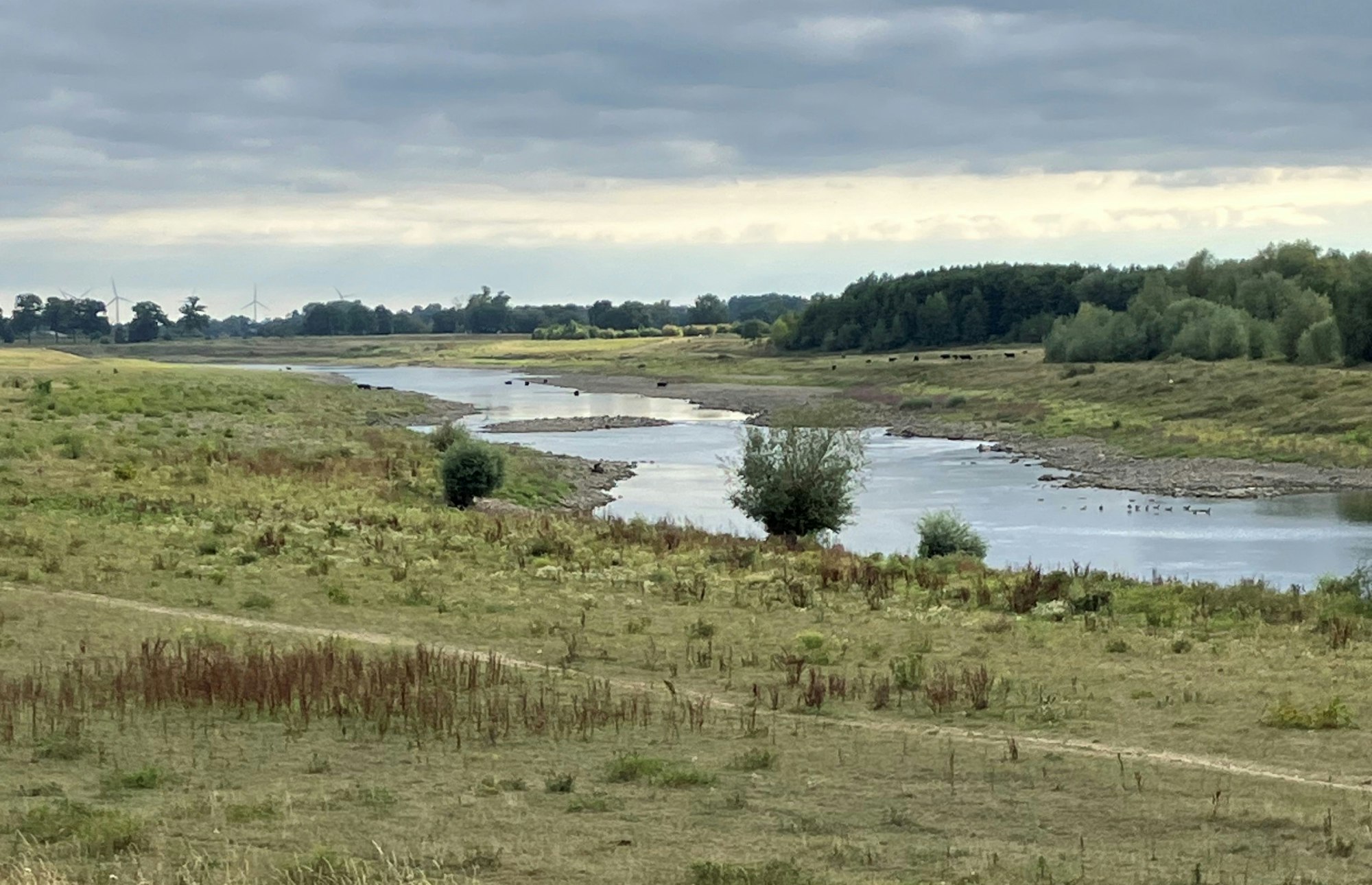
For Norbert, the implications are clear. ‘The whole of north-western Europe is currently facing drought. And you can see that reflected in the low water flows of the Rhine and Meuse at Lobith and Eijsden. But water does not respect national borders. The logical boundary for water management is the river basin. That’s why issues relating to water scarcity should be tackled at the river basin level.’
So who gets the water when it becomes scarce?
There are currently no general agreements between countries on how much water each can abstract or use. Instead, countries cooperate through international river basin commissions, carrying out joint monitoring and exchanging information and knowledge. Nor is there an international hierarchy determining which uses take precedence when water is scarce.
The Meuse provides a concrete example. Agreements under the Meuse Water Discharge Treaty govern the distribution of water between the Netherlands and Flanders while also ensuring that sufficient water remains in the Common Meuse for nature.
‘In the summer of 1976, the Common Meuse ran completely dry. The water was diverted to the canals for economic use, leaving nothing for the river and the surrounding natural environment. The Meuse Water Discharge Treaty stipulates that a minimum of 10 m³/s of water must flow through the Common Meuse.'
'This shows why a balanced assessment is needed. The focus is currently very much on the consequences for shipping and agriculture. Rightly so, but nature is taking just as big a hit.’
And what is the Netherlands’ own position?
Norbert cautions against seeing the Netherlands simply as the downstream country. The Netherlands itself uses a great deal of water. ‘That is, of course, down to our location in a delta. We use a lot of river water to maintain regional water systems and to counteract salinisation.'
'It would therefore be unwise to tell our foreign partners that they need to do more. That doesn’t help cooperation. Instead, you want to look at it together: what’s the problem we’re facing and how can we best solve it at the river basin level?’
This also means looking beyond national borders when deciding where to invest. ‘It might even be the case that a euro invested in the Netherlands to retain or buffer water in the Rhine and Meuse river basins yields a greater return upstream. Ultimately, you want to look at the river basin level to see where measures have the greatest impact.’
What does the Water Scarcity & Droughts working group do?
The EU Working Group on Water Scarcity & Droughts brings together representatives from countries and ministries, water users and research institutions to address the growing problem of drought and water scarcity across Europe. ‘We work together from different angles to produce useful outputs, such as guidelines, drought indicators and forecasts,’ explains Norbert.
The working group has also contributed to the European Water Resilience Strategy and is developing practical tools such as guidelines for drought management plans.
‘What can you do before a drought occurs? And when it does get dry: how do you prioritise water use and involve stakeholders? We’re also working on better indicators to measure and predict droughts and looking at ways to increase water availability – by using water more efficiently, retaining more water, replenishing groundwater or buffering water.’
And what exactly is Rijkswaterstaat’s role?
Norbert participates in the working group on behalf of the Ministry of Infrastructure and Water Management as part of his policy support and advisory work.
‘This means that I represent the Ministry in the European working group, rather than Rijkswaterstaat, and coordinate my input with colleagues at the Ministry. At the same time, I can draw on our Dutch knowledge and experience and look at what we can learn from other countries and from Europe.’
His role at Rijkswaterstaat also allows him to connect policy with practice. ‘It helps that I’m also involved in implementation through Rijkswaterstaat. Because policy that isn’t feasible is of no use whatsoever.’
So, more Europe?
Not necessarily. Greater European cooperation doesn’t mean the Netherlands has to wait for Brussels. It’s about connecting what’s happening at the local, regional, national and international levels. ‘Solutions often start locally, become regional and must ultimately work at the river basin level of the major rivers. The international river basin commissions play a key role in this, and hopefully the EU can strengthen the mandate and effectiveness of these commissions.’
This brings Norbert back to the core of his message: water does not respect national borders. ‘Ultimately, we have to solve this together – as policymakers, water managers and water users, working together at the river basin level, drawing on all available knowledge and expertise.’