
Safe and responsible use of AI in partnership with the market
Artificial intelligence (AI) has become an integral part of our world. It offers significant opportunities for Rijkswaterstaat and the market alike. To harness this potential, Rijkswaterstaat has developed its own AI strategy, centred on responsible use and close collaboration. What does this strategy involve? And how are Rijkswaterstaat and market parties working together to make the most of AI?
For Ron Kolkman, Chief Information Officer (CIO) at Rijkswaterstaat, the answer is clear. The growing impact of AI, driven by ongoing digitalisation, is of major importance to the organisation. ‘Data is our gold. That’s why we want to make the best possible use of modern data and digital technologies. At the same time, the opportunities offered by AI are expanding rapidly. We need to keep pace with that.’
It is therefore no surprise that Rijkswaterstaat has a broad digitalisation vision. ‘This covers all aspects of digitalisation,’ Kolkman explains. ‘From workplace design to data and information management. It also includes how we approach AI through a dedicated strategy.’
Efficient, smart and future-proof
At the heart of the AI strategy is the idea that AI can help organise work more efficiently, smarter and in a more future-proof way. ‘We’re facing ever greater challenges,’ says Kolkman. ‘Efficiency has never been more important. AI helps us carry out our work faster and more effectively. It also enables us to turn data into up-to-date, actionable information for asset management, water management and traffic management.’
At the same time, Kolkman acknowledges that putting this into practice is not straightforward. ‘Innovation is always complex, in my experience. New ideas are often met with enthusiasm. You start experimenting, and if the results are promising, you scale them up and move towards implementation.’
‘That’s often where the real challenges begin. Research from the Massachusetts Institute of Technology shows that as many as 95% of AI developments fail. But that doesn’t deter us. To make progress, you have to keep experimenting.’
A cautious and considered approach
Rijkswaterstaat is taking a cautious and considered approach to AI. ‘Reliability can be a challenge,’ says Kolkman. ‘That’s why we don’t apply it indiscriminately. Our AI strategy makes it clear that human oversight and judgement remain essential, now and in the future.’
Tom Meinders, Chief Data Officer at Rijkswaterstaat, emphasises that AI is always deployed responsibly and within the framework of applicable laws and regulations. ‘We safeguard public values and fundamental rights throughout the development and use of AI systems. We deploy algorithms only in a considered way and only where risks are acceptable. Data use and privacy are always a key focus.’
In this context, Meinders also highlights the importance of digital expertise. ‘By strengthening digital literacy, our staff gain a better understanding of how data and AI are used. This is essential not only for the reliable and secure deployment of these technologies, but also to give people the confidence to work with them, supporting both performance and job satisfaction.’
We cannot do it alone
With these developments gathering pace, collaboration with the market is essential. As Ron Kolkman puts it: ‘We cannot do it alone, and we don’t want to. We rely on the market to take concrete steps and help drive progress. The good news is that the market is already fully engaged.’
Building on that, Rijkswaterstaat aims to make the most of this innovative capacity. ‘We want to tap into that strength and reinforce it,’ Kolkman explains. ‘That’s why we work closely with industry associations and companies. Together, we can take things to the next level.’
A clear example of this collaboration is data-driven asset management. ‘Rijkswaterstaat is working closely with market partners to digitise engineering structures. This allows us to manage assets such as locks far more efficiently, based on data analysis. AI can also help predict faults by analysing large volumes of data.’
Seventy pilots in the Data and AI Lab
Much of this collaboration takes place in Rijkswaterstaat’s Data and AI Lab, launched at the end of 2025 and now home to around 70 pilot projects. ‘The Data and AI Lab brings together the departments within Rijkswaterstaat that focus on digitalisation, data and AI,’ explains Meinders.
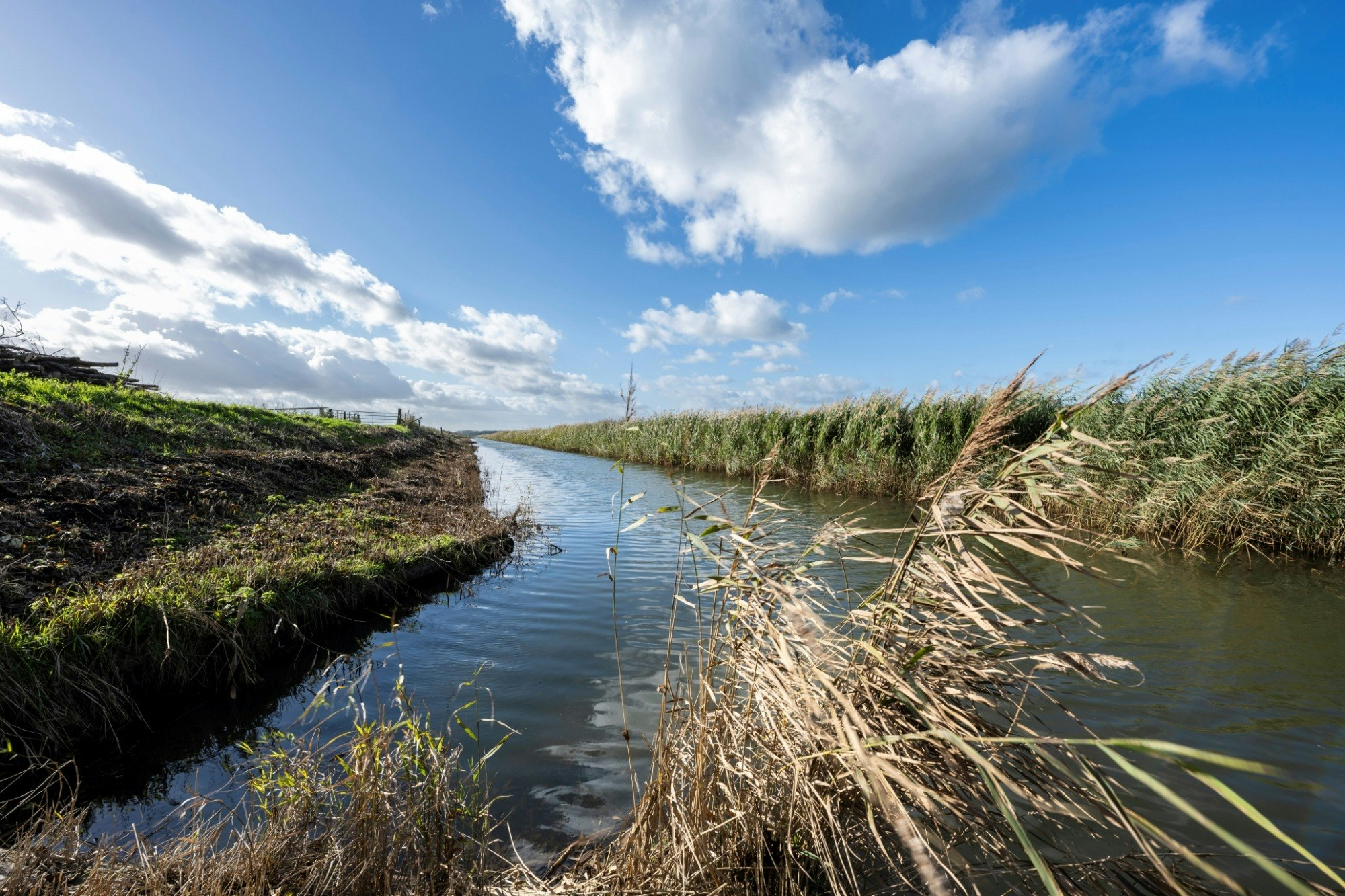
Working closely with market partners, Rijkswaterstaat is currently running around 70 pilots. ‘One example is the vegetation monitor, which uses satellite imagery and AI to identify areas along river and canal banks that require additional maintenance.’
Another area of focus is the thermal expansion of bridges in hot weather. ‘We’re exploring whether sensors and data analysis can help us predict this more accurately. This past winter, the use of data and AI also delivered significant savings in gritting operations. We were able to determine much more precisely where gritting was, and was not, needed.’
Clearing the agenda
Rijkswaterstaat also aims to harness and stimulate the market’s innovative capacity through its High5 Hackathons, which take place two to three times a year.
As Tom Meinders explains, each hackathon focuses on a specific challenge identified by Rijkswaterstaat. ‘For example, we have looked at licensing, supervision and enforcement (LSE), or at improving the performance declaration process.’
To address these challenges, market players are invited to collaborate intensively with Rijkswaterstaat staff. ‘For a week, participants, including the “question owners”, market partners and Rijkswaterstaat employees, set aside their regular work and, under time pressure, focus on developing solutions together, with a strong focus on AI,’ says Meinders. ‘We move from brainstorming to building and testing, and then back to refining ideas, before presenting demos at the end of the week. It’s intense, but very valuable.’

AI as a tool
Mark Koerts, managing consultant for automation, data and AI at IT firm Kyndryl, knows a thing or two about this. He took part in the High5 Hackathon on LSE at the end of 2024. ‘The question was whether AI could reduce the workload involved in reviewing discharge permits,’ he explains. ‘These often involve reports of 400 pages, from which staff have to extract the relevant information. In some cases, it can take weeks to compile a factual account.’
During the hackathon, the issue was explored in small groups. ‘It was a very interesting experience,’ says Koerts. ‘By the end of the week, we had collectively concluded that AI could significantly reduce the workload in LSE.’
A few weeks later, Koerts was informed that Rijkswaterstaat saw the most potential in his solution. Kyndryl was asked to develop a proof of concept.
‘Together with Rijkswaterstaat, we explored whether the solution would work in practice. After a month or two, however, it became clear that the idea was less effective than we had hoped. A standard AI system struggled with the task. It became confused and sometimes even started to hallucinate.’
Building mini-AI systems
The idea was not abandoned, however. ‘We continued to develop it,’ says Koerts. ‘Instead of relying on generic prompt engineering, where employees manually retrieve information using prompts, we started building mini-AI systems for specific parts of the licensing process. These mini-AI systems extract specific information from documents themselves to build a factual account.’
The mini-AI systems retrieve only information that can be substantiated with evidence, and staff must verify that the selected documents are the correct sources. This ensures that only validated information is included in the final account.’
Accurate, repeatable and reliable
The new solution has now been tested in a proof-of-value exercise to assess whether it works in practice and delivers real value. Koerts explains: ‘The results show that the solution is accurate, repeatable and reliable. Determining whether a discharge permit still complies with current regulations, a complex and labour-intensive process, can now be done in a single day instead of taking weeks.’
The next step is to move towards implementation. ‘We’re currently exploring how best to do this,’ says Koerts. ‘Together, we’re looking at the technical, process-related and human aspects. This will undoubtedly bring new challenges, but that’s simply part of innovation.’