
Pigs help tackle Japanese knotweed along the Amsterdam-Rhine Canal
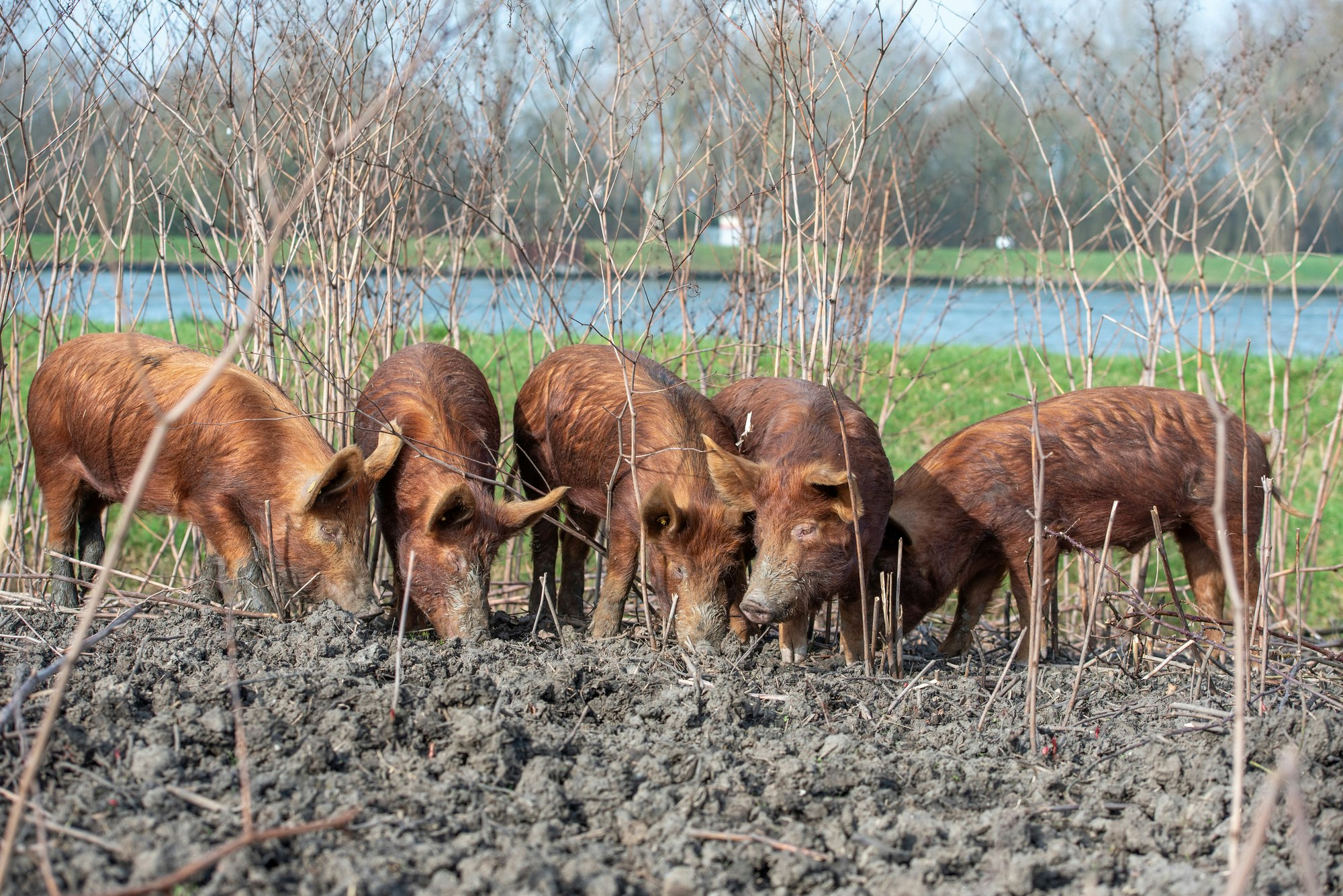
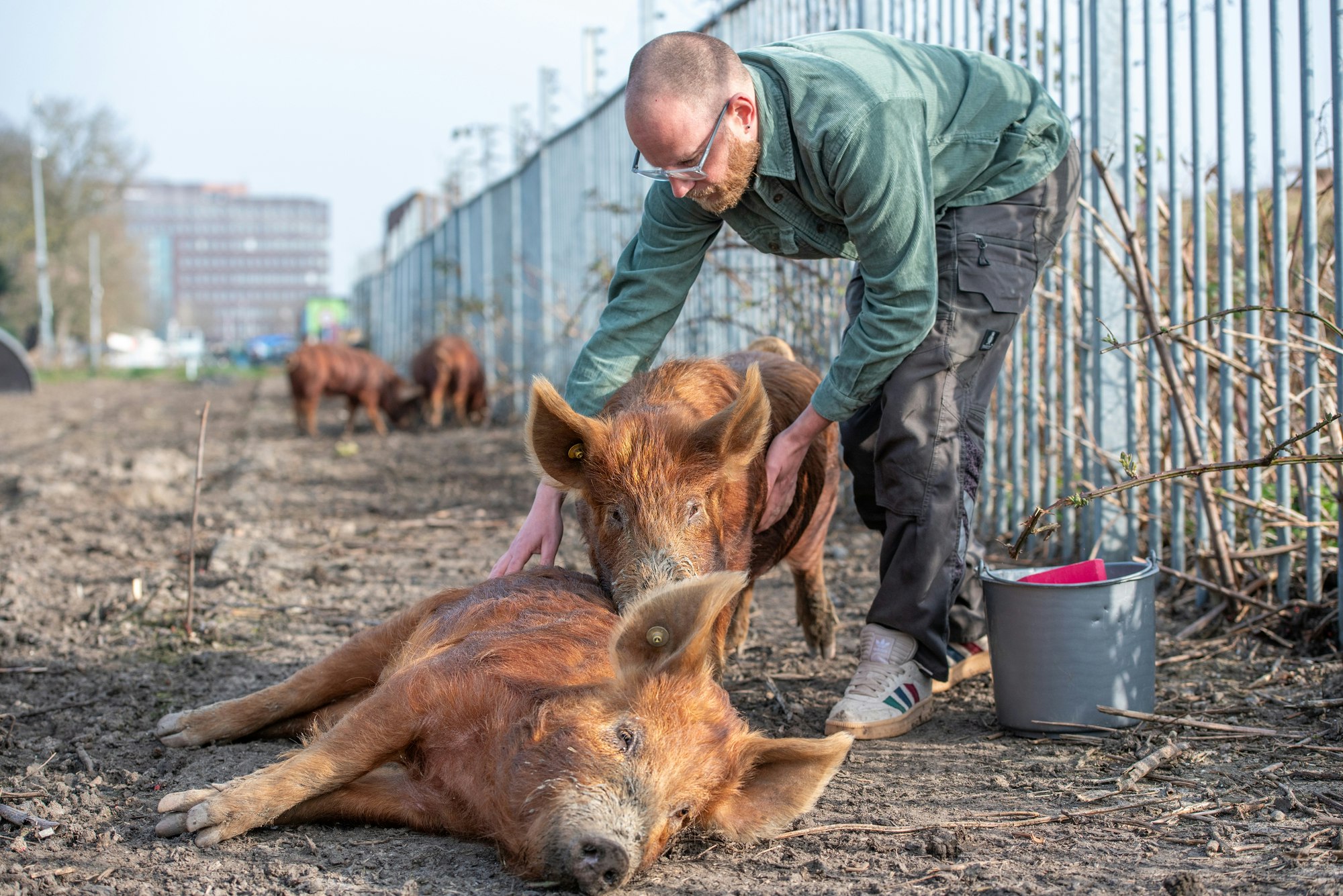
Along the Amsterdam-Rhine Canal, a rather unusual ally is helping to tackle Japanese knotweed. Since January 2025, pigs have been deployed at the Noordersluis in Nieuwegein to reduce the spread of this stubborn, invasive plant.
Through this pilot, Rijkswaterstaat is exploring whether a natural approach can support the management of safe, sustainable green spaces.
A tough opponent
Japanese knotweed is a formidable plant. It grows rapidly, reaching heights of up to three metres, and spreads through strong underground rhizomes that crowd out other species. Traditional methods such as mowing or digging are often difficult and costly.
Even a small piece of root can grow into a new plant. ‘It’s not a species you can simply pull out,’ says Coen van Tuijl, Asset Manager for Ecology and Nature Conservation at Rijkswaterstaat. ‘In fact, disturbing it too much can make the problem worse.’
Japanese knotweed also creates additional maintenance and management challenges. It requires more time, resources and equipment than native vegetation. It also makes riverbank maintenance more difficult, particularly for banks with a flood-control function. In winter, the stems die off. This can leave bare patches in the vegetation. If the exposed soil then washes away or erodes, the bank needs to be restored.
Natural control with 'Oerwroeters'
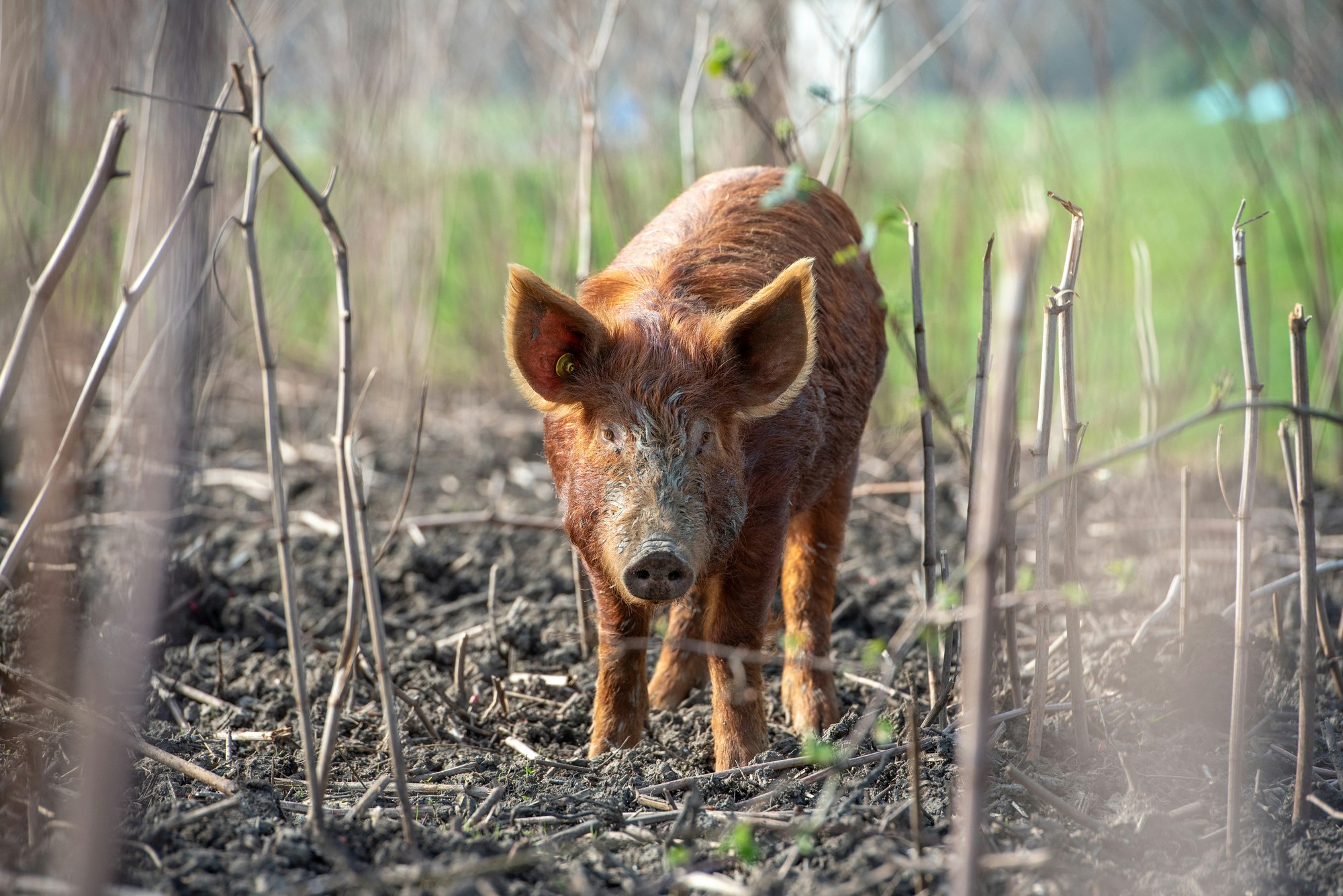
At the Noordersluis, Rijkswaterstaat is taking a different approach. It is working with Coen Landheer, founder of Oerwroeters, a company that uses pigs for nature and land management. Living outdoors, the animals retain their natural rooting behaviour.
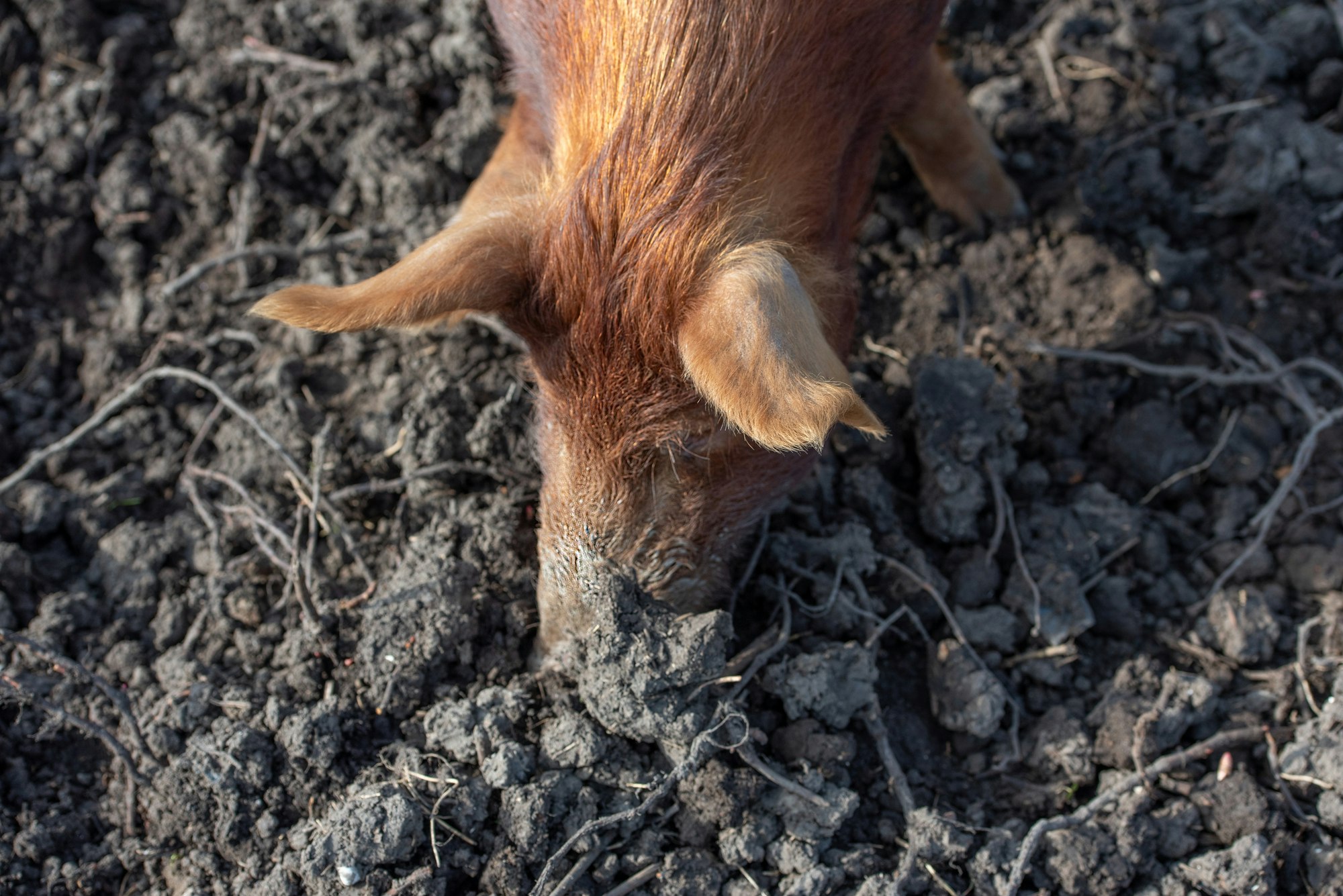
‘Our pigs are selected for their robustness and outdoor lifestyle,’ explains Landheer. ‘They eat the above-ground part of the knotweed, but more importantly, they root through the soil and tackle the roots as well.’ It is precisely this rooting that makes this approach so interesting. While mowing mainly removes what is visible above ground, the pigs expose and reduce the rhizomes in the topsoil, addressing the problem at its source.
Van Tuijl sees this as a valuable addition to existing methods. ‘It’s not a quick fix that makes the plant disappear overnight. But as a first step in long-term management, it can be very effective. The soil is loosened, making follow-up work, such as manually removing remaining shoots, much easier.’
Back to a non-dominant level
The aim is clear: to reduce Japanese knotweed to a non-dominant level. This means that the plant may still be present, but it is no longer overwhelming the landscape or biodiversity. ‘Previously, the site was almost completely overgrown,’ explains Van Tuijl. ‘In such a situation, it’s practically impossible to carry out targeted aftercare.’
By using pigs, space is gradually created for other species to return, an essential step towards restoring a more balanced ecosystem. The initial results are positive. ‘Where there used to be a dense green mass, we now see open patches and exposed roots,’ says Landheer. ‘That’s exactly what we’re aiming for.’
More space for biodiversity
The rooting creates greater dynamism in the soil: the ground is aerated and organic material is mixed in, opening up space for other plants, insects and soil life. 'A site that has been dominated by knotweed for years often has very little variety,' says Van Tuijl.
'Disturbance and recovery allow nature to reassert itself.' A grassland vegetation offers considerably greater ecological value than a monoculture of invasive non-native species.
Safety and animal welfare first
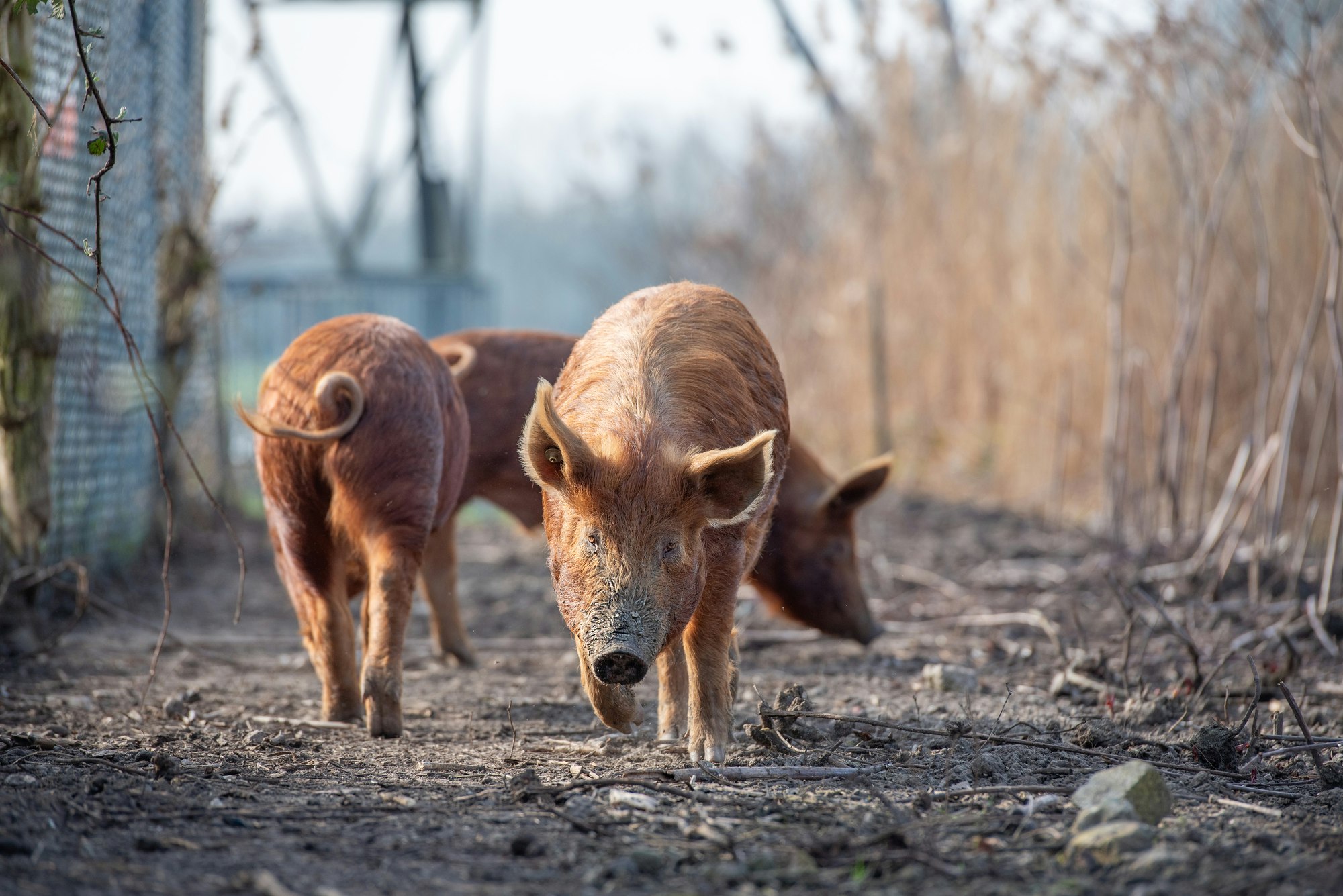
The deployment of the pigs is carefully managed. They are checked daily and receive supplementary feed, and the site is treated in stages using mobile fencing. ‘Safety and welfare always come first,’ Landheer emphasises. ‘If needed, we relocate the animals. We also stay in close contact with Rijkswaterstaat and the local community.’
Innovation in the unseen work
For Rijkswaterstaat, this project goes beyond testing a new technique. It highlights the importance of green space management as part of infrastructure maintenance. ‘Much of this work happens out of sight,’ Van Tuijl concludes. ‘But it directly affects safety, the living environment and biodiversity.
This pilot shows that we remain open to sustainable and innovative solutions.’ Through this collaboration, the site is being restored step by step. Not through force, but with the help of a natural ally that has been doing what it does best for centuries: rooting.