
Dredging in the De Boontjes channel decreases by 95%: ecological recovery under study
In the De Boontjes navigation channel between Harlingen and Kornwerderzand, dredging volumes have dropped by 95% in just one year. In 2025, Rijkswaterstaat removed only around 8,000 m³ of sediment, compared to more than 175,000 m³ the previous year.
This sharp decline follows a reduction in the maintained depth of the channel – from -3.80 to -3.30 m NAP – introduced on 1 January 2025.
The measure aims to reduce disturbance to the natural environment, but it also has implications for shipping. In the coming years, its impact on benthic life will become clearer.
Together with the salt marshes, the North Sea coast, the inhabited islands of Texel, Vlieland, Terschelling, Ameland and Schiermonnikoog, and the uninhabited islands and sandbanks, the Wadden Sea forms a single interconnected ecosystem: the Wadden Sea region. The international Wadden Sea extends beyond the Netherlands into Germany and Denmark.
It is both a UNESCO World Heritage Site and a Natura 2000 area.
A morning aboard the monitoring vessel YE42
To assess these changes, a research team from Wageningen University & Research is conducting field measurements this week aboard the YE42 Anne Elisabeth, a former cockle-fishing vessel now used for ecological monitoring. As the vessel leaves the port of Harlingen, a sudden hailstorm sweeps in, and the winches creak in the wind.
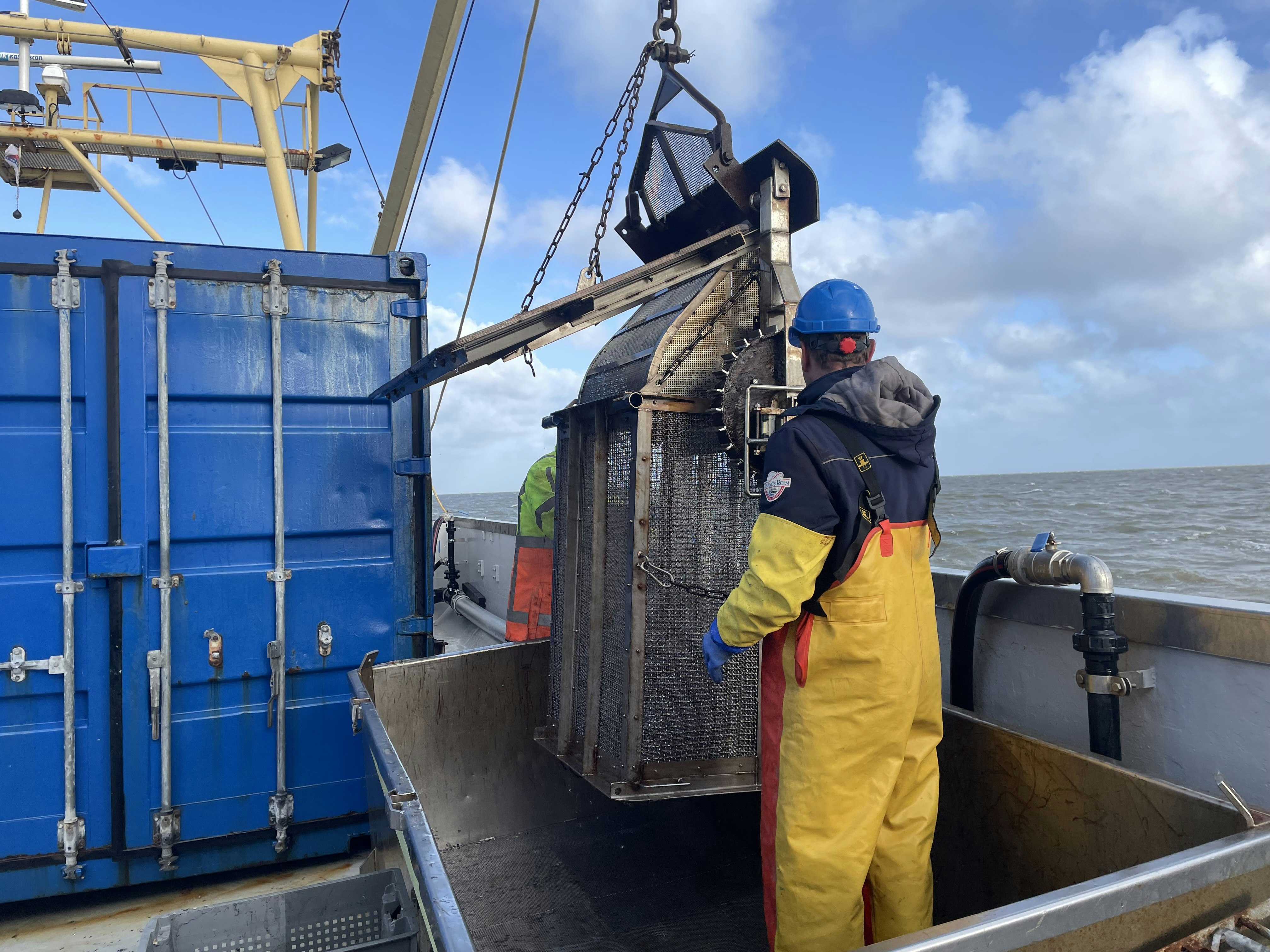
At 20 fixed locations in the Boontjes area, the team deploys a bed leveller, a metal frame that is dragged approximately 100 metres across the seabed. The collected material is brought on deck and carefully sorted.
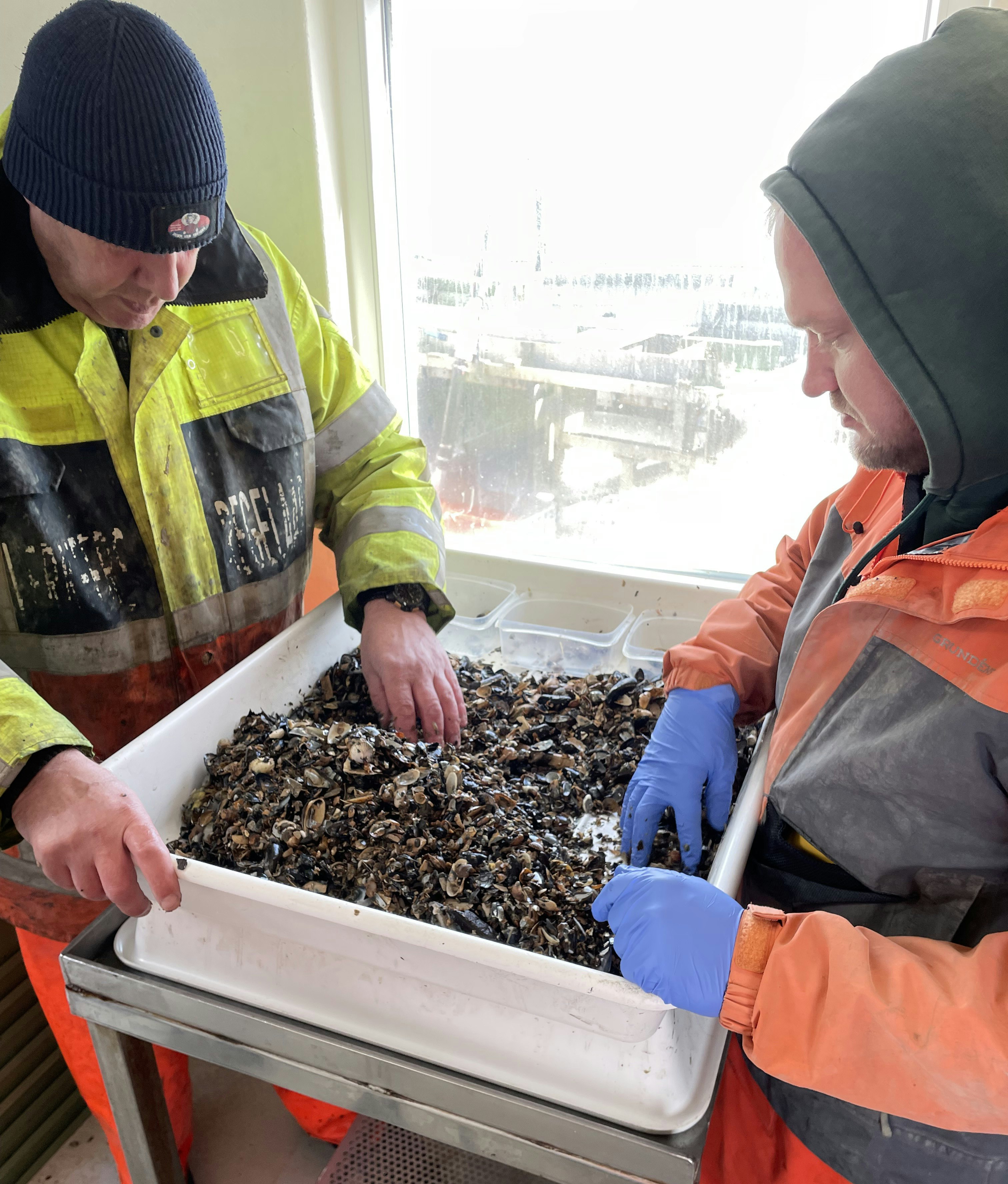
Between the sand and mud, the team mainly finds Baltic tellins, soft-shell clams and small crabs. Occasionally, non-native species such as the American surf clam are also found. Any fish are immediately returned to the water.
‘We take measurements at exactly the same locations every year,’ explains researcher Douwe van den Ende. ‘The Wadden Sea is constantly changing. Only by collecting data over several years can we determine whether the seabed is recovering.’
In addition to the bed leveller measurements, the team uses a box corer at around 45 measurement points, a heavy steel device that takes an intact core sample of the seabed, roughly 30 cm deep. This sample is then sieved. The box corer primarily provides insight into the smaller species living in the seabed, such as worms.
Initial insights from baseline measurements
The 2024 baseline survey shows clear differences between dredged and undisturbed areas. Dredged zones have significantly lower biodiversity and biomass than reference areas where no dredging takes place. In these undisturbed areas, both species richness and the number of individuals per square metre are higher.
At the disposal site in the Kimstergat, where dredged sediment is deposited, the species composition differs again, with relatively high numbers of amphipods.
Impact on shipping
Reducing the maintained depth of the channel also affects maritime traffic. An earlier proposal to narrow the channel was rejected on safety grounds. The current approach, which effectively allows the channel to become slightly shallower, remains safe but requires operational adjustments.
Deep-draft vessels now tend to navigate the Boontjes closer to high tide. At lower water levels, ships must reduce their cargo. In this way, reduced dredging places new demands on shipping logistics.
Cooperation in the Wadden Sea region
This research is part of a broader collaboration between Rijkswaterstaat, the Wadden Association, the Port of Harlingen and the Province of Friesland. Together, they are seeking a balance between accessibility and ecological value in the Wadden Sea region. The findings from 2025 and 2026 will feed into the New Water Programme (NWP 2028–2032).
Back to Harlingen
In the afternoon, the YE42 sets course back to Harlingen. A traditional vessel from the brown fleet passes slowly as the ship heads into port.
On deck, the crew rinses the equipment and prepares it for transport to the laboratory. Meanwhile, they discuss what needs to be restocked at the port for the next day of research. Each day’s samples add another piece to the puzzle. It will take several years to determine whether the Boontjes is truly recovering ecologically, and whether this sharp reduction in dredging can be sustained.