
Living alongside rivers means living with water
In the Netherlands, scenes of collapsing dykes, flooded houses and people hastily gathering their belongings can feel like something from a distant past. Yet less than a century ago, large parts of the country were under water.
The last major dyke breaches along the main rivers occurred in early 1926. Since then, Rijkswaterstaat has been working continuously to reduce the risk of flooding and protect the country against high water.
Ralph Schielen, senior advisor on water management
Ralph Schielen explains how this effort has evolved over the decades. As a senior advisor on water management at Rijkswaterstaat, he has worked on water levels and sediment in Dutch rivers for more than 25 years.
He earned his PhD at Utrecht University and Delft Hydraulics (now Deltares) and combines his advisory role with academic research at Delft University of Technology. ‘I try to connect fundamental research on rivers with the practical work of Rijkswaterstaat,’ he says.

From curbing to controlling
After the 1926 disaster, drastic measures were taken to prevent a recurrence. Along the Meuse in particular, the emphasis was on containment: the water had to be confined. Rivers were straightened, dykes raised and flood spillways were closed off.
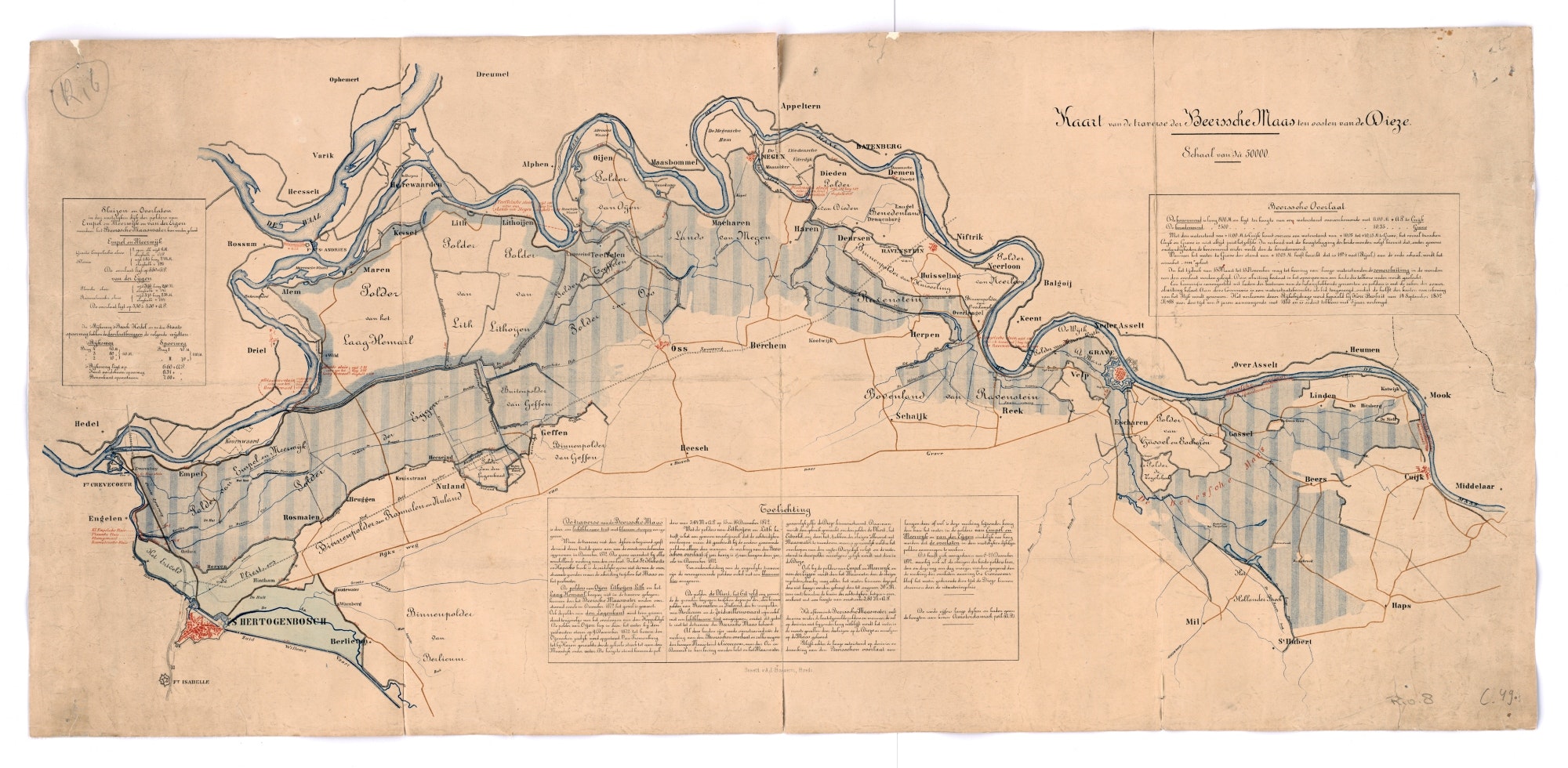
Major projects included the canalisation of the Meuse in the 1920s and 1930s, which normalised the river’s flow, making water levels more manageable. The Beerse Overlaat was also closed. For centuries, this spillway had served as a safety mechanism: during periods of extreme high water, low-lying areas near Beers were deliberately flooded to protect the hinterland.
This practice ended in 1942, when the dyke between Gassel and Linden was raised.
For years, these measures appeared to be effective. Then, in the 1990s, the system was put to the test once again. In 1993 and 1995, water levels in the Rhine and Meuse rose to dangerously high levels.
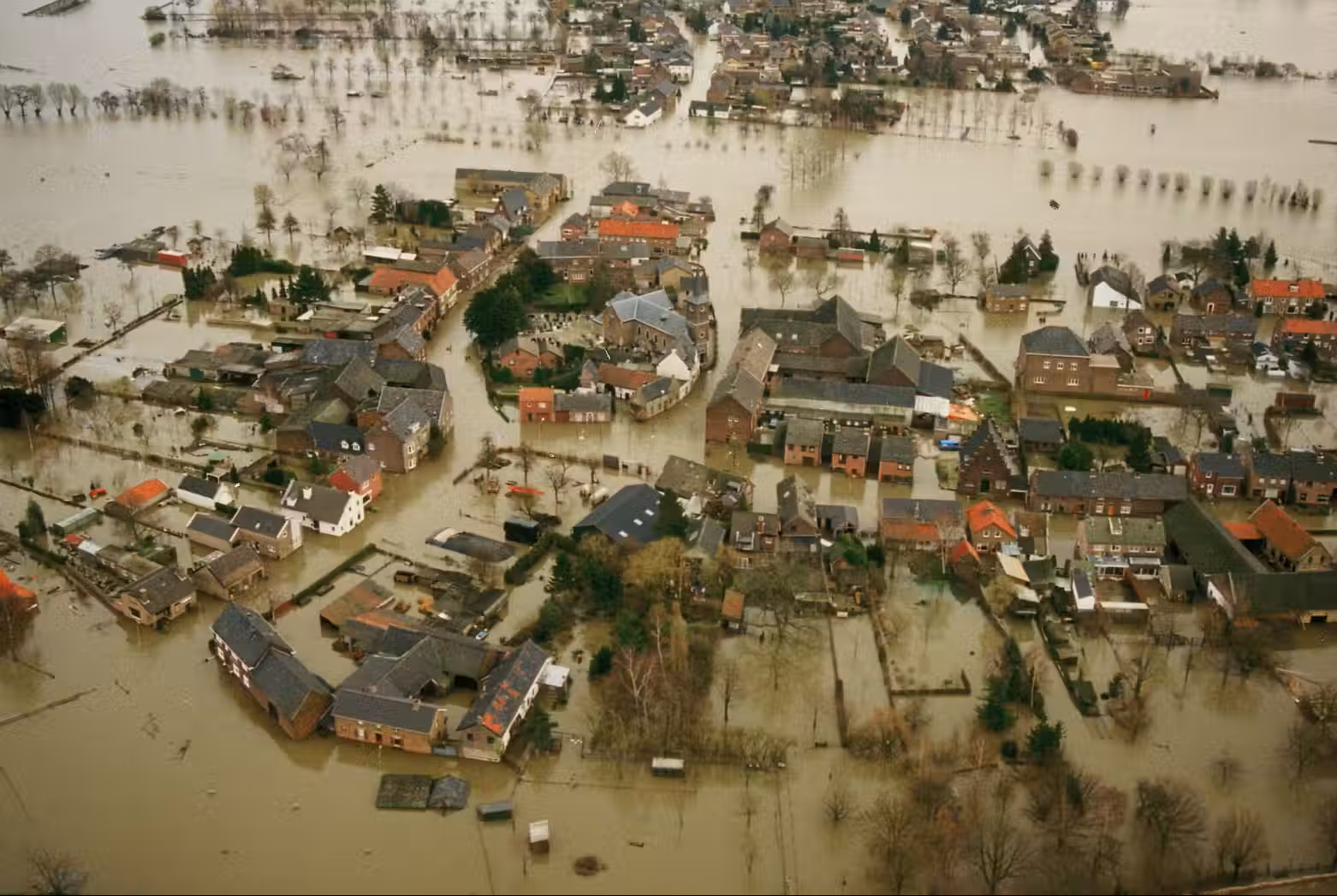
Villages such as Itteren and Borgharen were flooded, and in 1995, some 250.000 people were evacuated in what was an unprecedented operation. No dykes ultimately failed, but the situation was critical. ‘It was touch and go at Ochten,’ Schielen recalls. ‘That realisation was crucial.’
Room for the River
The floods of 1993 and 1995 marked a turning point in Dutch water policy. From then on, the guiding principle became clear: rivers must be given more room. ‘There’s a whole story behind that,’ Schielen says.
‘At the time, we worked with a fixed system for determining how high dykes needed to be. A specific level of protection was agreed upon, based on measured discharges and statistical analyses. But those extreme floods pushed the system to its limits. If we had strictly followed our own methodology, we would have had to raise all the dykes again after 1995. And you can’t keep doing that indefinitely: the higher the dykes, the greater the consequences if they fail.’
A shift in how rivers are managed
This realisation paved the way for a new approach. Instead of continuously raising dykes, water levels were lowered by creating more space for rivers in their floodplains. The first steps were taken along the Meuse in 1997 with the Maaswerken programme.
Several plans were already on the table, but the floods accelerated their implementation. The programme combined multiple objectives: protection against high water, improvements to navigation, gravel extraction and nature development.
The Room for the River programme followed in 2002. In 2005, the government adopted the key planning decision covering the full package of measures, and implementation began in 2007.
In total, a coherent set of 39 measures was carried out at 34 locations along the IJssel, Waal, Nederrijn and Lek rivers. Alongside flood protection, the programme aimed to enhance the spatial quality of the river landscape, making it more attractive to residents and visitors alike.
Schielen still regularly presents these projects to delegations from around the world who want to experience Room for the River first-hand. During these presentations, he often reflects on the last major river flood in 1926.
‘I emphasise that those were truly the last major dyke breaches along the rivers,’ he says. ‘The floods of 1993 and 1995 involved enormous discharges, but they did not result in dyke failures.’
Room for the River 2.0: new challenges
Both Room for the River and Maaswerken focused on increasing flood protection while improving spatial quality, among other goals. According to Schielen, these ambitions were largely achieved. ‘If you walk or cycle along the Rhine’s branches today, you can see the results. The landscape is beautiful, with side channels and a wide variety of plants and animals. This natural design not only enhances the landscape but also increases biodiversity.’
After the flood protection targets of Maaswerken were met in 2017 and Room for the River was completed in 2019, the sense of urgency around river management appeared to ease somewhat.
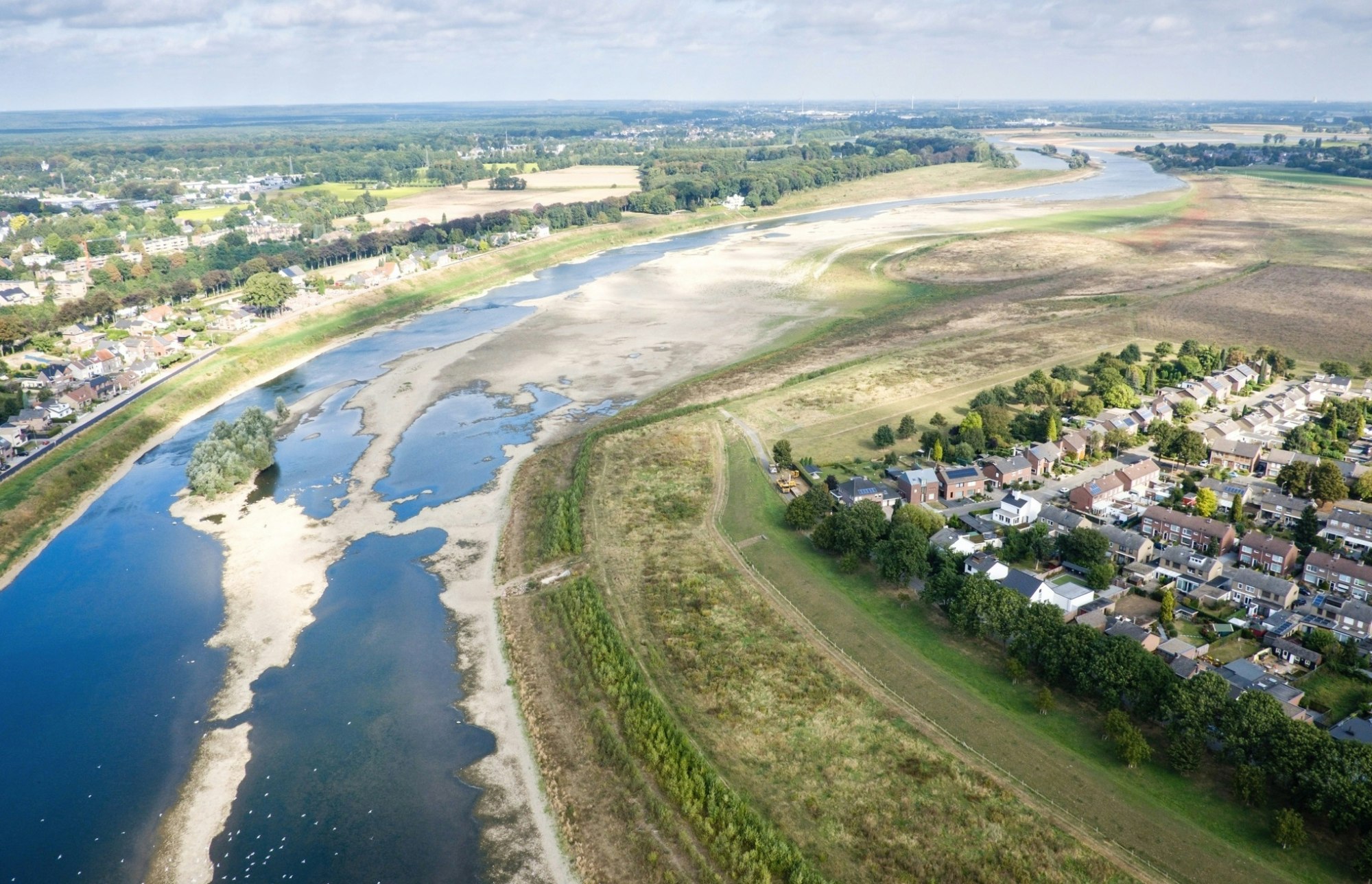
In the meantime, however, new and less visible challenges have emerged. ‘We see that the riverbed continues to sink, a process known as erosion,’ explains Schielen. ‘This erosion has far-reaching consequences. Groundwater levels drop as well, leading to the drying out of floodplains and nature reserves.’
‘Shipping is affected because fixed bed structures, such as the fixed riverbed layer near Nijmegen and those at locks, increasingly protrude above the riverbed. At the same time, the distribution of water across the river branches is becoming unbalanced, with relatively more water flowing into the Waal and less into the IJssel. As a result, during periods of low discharge, the IJsselmeer is less well supplied with water, even though it functions as our national water reservoir.’
Extreme weather is adding further pressure. High water levels in 2021 exceeded those of 1993 and 1995, while prolonged droughts in other years have led to exceptionally low water levels. These developments are the reason for Room for the River 2.0, which was officially launched in April 2025.
Nature as ally
Today, Schielen increasingly works with nature-based solutions. ‘These are approaches that actively involve nature itself,’ he explains. ‘By giving the river more room – or freedom – where possible, the system becomes more resilient, and some of its natural dynamics are restored.’
This nature-based approach proves effective not only during periods of high water but also during drought. Water is given more time to infiltrate the soil. At the same time, the measures are designed to create more room for native plants and animals.
‘Water management in the Netherlands has been part of our society for centuries and requires constant attention,’ Schielen concludes. ‘Thanks to that ongoing maintenance, we can live here safely. Without it, we would not be able to live here. It’s as simple as that.’