The final days of the research mast on the Sand Motor
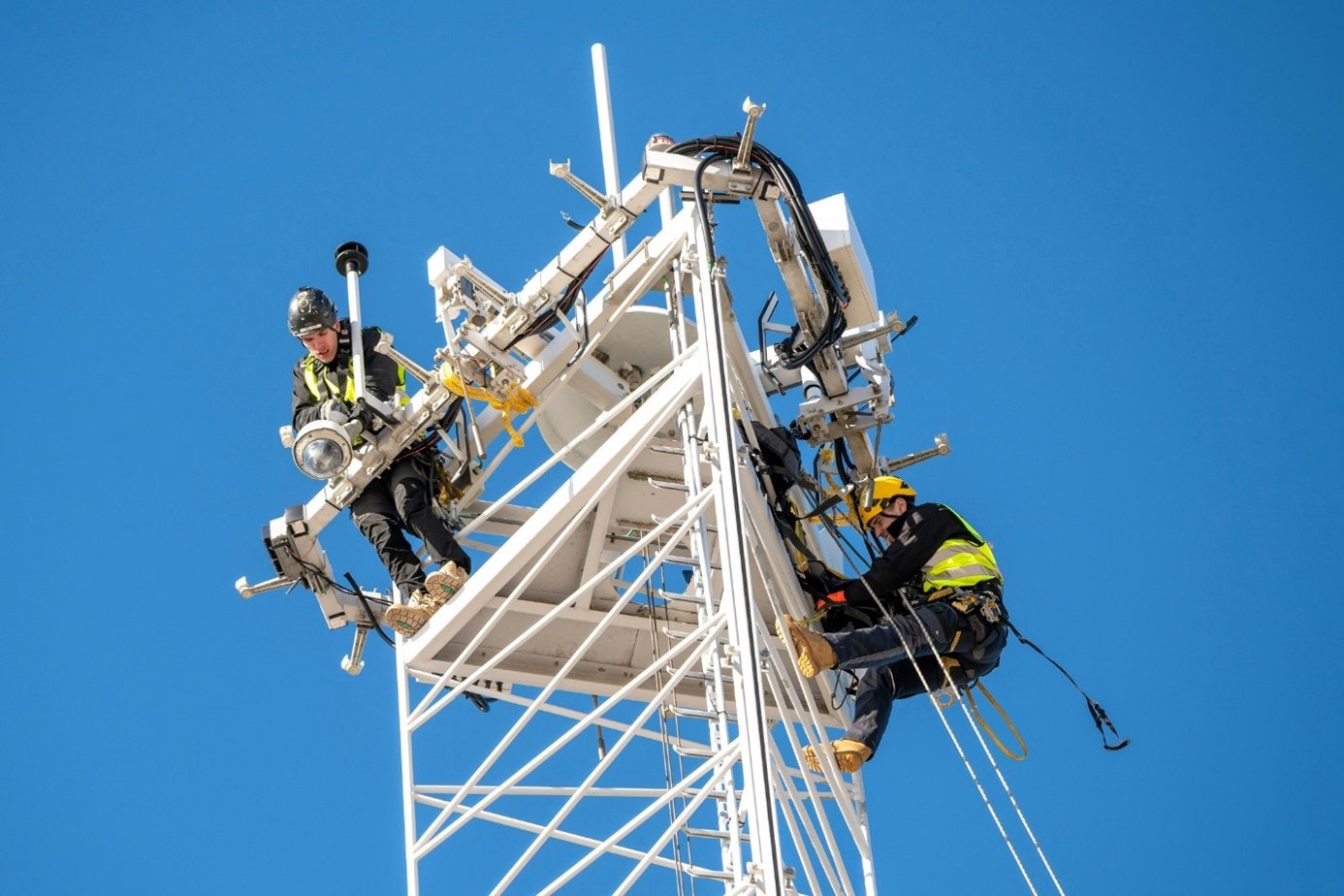
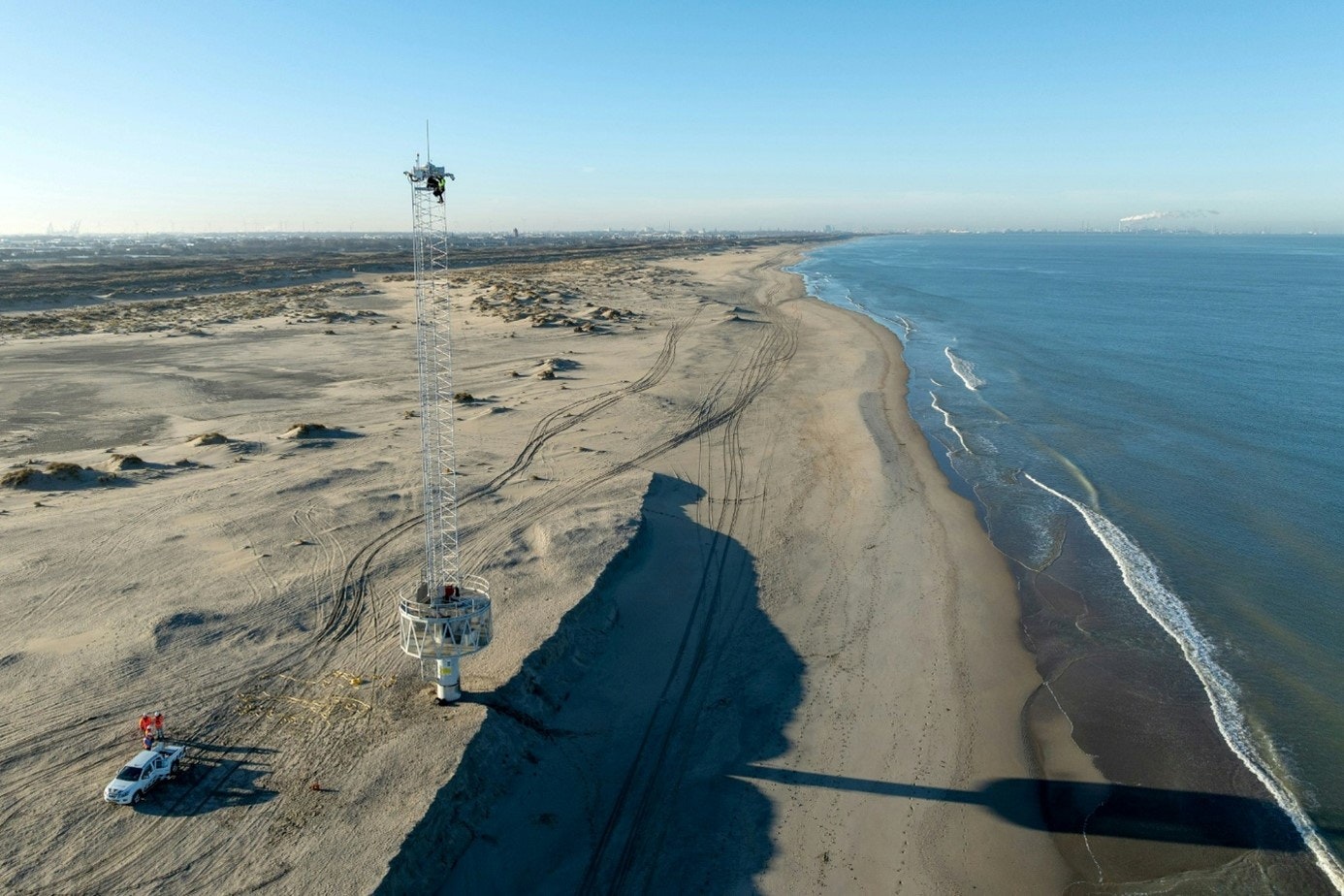
On the Sand motor, an artificial peninsula off the Dutch coast, stood the distinctive Argus mast. This 40 m high mast was equipped with cameras. Located in the centre of the Sand Motor, it has been used since 2012 to continuously monitor changes in the shape of the Sand Motor.
The research that we carried out using the mast was completed several years ago. Since then, it has only been used by researchers from universities and research institutes on request.
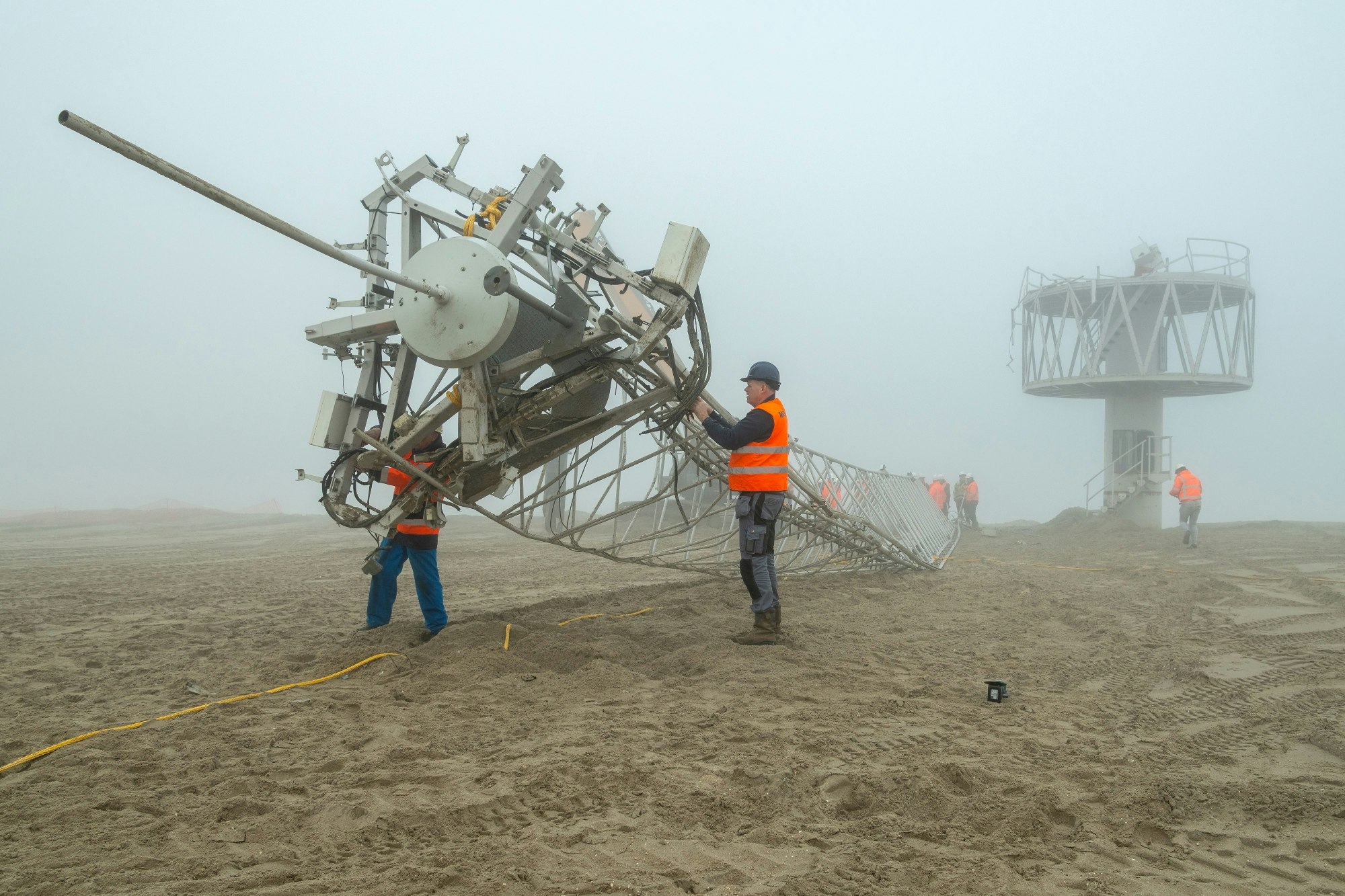
As the coastline gradually shifted, however, the sea began encroaching on the site, meaning the mast would eventually end up in the water. Removing it was therefore necessary to prevent unsafe situations. The dismantling took place over the past few weeks.
It was a major undertaking, given the mast’s location in the middle of a nature reserve and on the edge of a sandy cliff. Carola van Gelder and Sanne Poortman are project leaders of the Sand Motor. Van Gelder reflects on the process.
40 m of vertical steel
‘Removing a mast like that is quite complicated,’ says Van Gelder. ‘It was a massive structure, 40 m above ground and 15 m below. What’s more, the mast was located in an area with young, developing dunes, so minimising environmental damage was a priority.’
‘The breeding season starts in early April, so the work had to be completed by then. As a result, we were working on a tight schedule. The local community was also very closely involved, as we kept everyone in and around the Sand Motor informed. After all, it’s a beautiful area. Altogether, a lot of preparation went into this project.’
Environmental considerations played a central role in the preparations. Heavy machinery was brought onto the beach at Ter Heijde and followed a long route along the shoreline to avoid damaging the dunes.
Some of the power cables running from the mast to the dune area were initially left in place to avoid disturbing hibernating animals. Afterwards, all remaining debris was cleared using a beach cleaner. The work took a total of three weeks.
Research on the Sand Motor
Today, there is no trace of the Argus mast left on Sand Motor beach. However, the monitoring programme continues as usual, and the research has already yielded valuable insights. A few examples from Van Gelder:
- Fish nursery, Van Gelder: ‘When the Sand Motor was constructed in a hook shape in 2011, it included a lagoon. We hoped this would serve as a nursery for fish, but we weren’t sure whether the design would work. We studied this extensively. In the end, tidal forces proved too strong for young fish to grow there. However, we did observe a wide range of new benthic organisms on the North Sea side of the Sand Motor. So while it didn’t become a nursery for fish, it has turned into a buffet for birds.’
- Tidal currents and swimming safety ‘The lagoon is popular with kitesurfers. At the same time, tidal currents around the Sand Motor can be strong. Based on our research, we developed an app for lifeguard teams and the regional safety authority, providing real-time insights into swimming conditions. It has been very well received.’
- Recreation in focus ‘The Argus mast was originally installed to study morphology, changes in the shape of the Sand Motor, as well as dune development. It also allowed us to assess whether the area would attract more recreational visitors.’