Mini Eastern Scheldt Barrier withstands extreme storm tests and offers insights for future maintenance and long-term operation
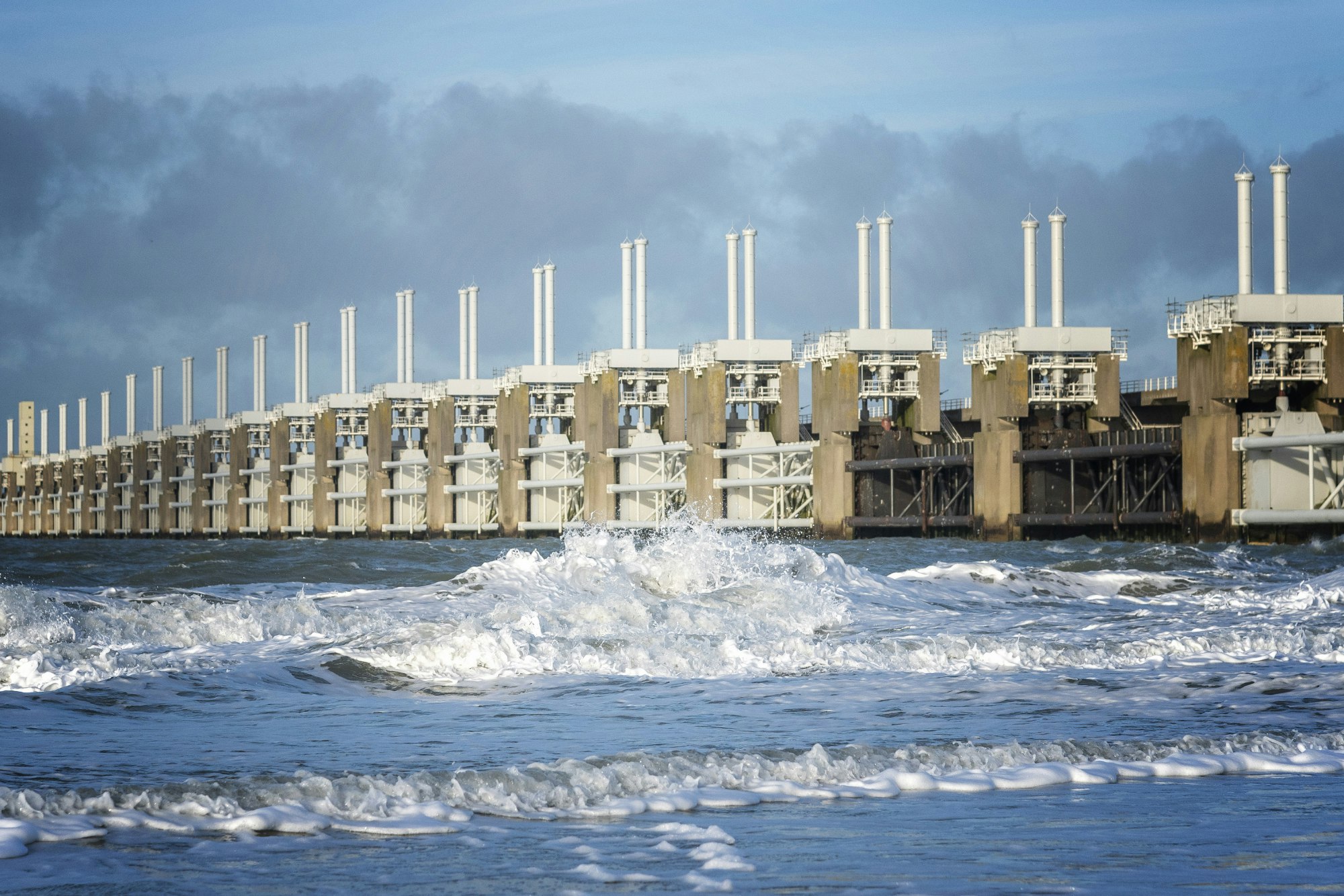
By 2026, the Eastern Scheldt Barrier will have been protecting a large part of Zeeland against high water for 40 years. After decades of use, major renovation and replacement work is now required. On behalf of Rijkswaterstaat, Deltares carried out extensive scale-model tests in 2024 and 2025 to support these preparations.
The results are now available. The hydraulic forces acting on key components of the barrier have been carefully analysed and compared with the original design assumptions.
Why renovation is necessary
Over the coming decades, an increasing number of components of the Eastern Scheldt Barrier will need to be renovated or replaced. These include:
- 124 drive mechanisms, including the cylinders that control the gates
- 124 side stops, the rubber buffers between the gates and the piers
- 62 gates, which will also need to be replaced in due course
These interventions require significant investment but are necessary to ensure the barrier continues to function reliably in the future.
Assessment against current safety requirements
As part of the preparations, we are reassessing whether the original design still meets today’s flood safety standards. This includes taking into account new insights, such as sea-level rise and more extreme weather conditions.
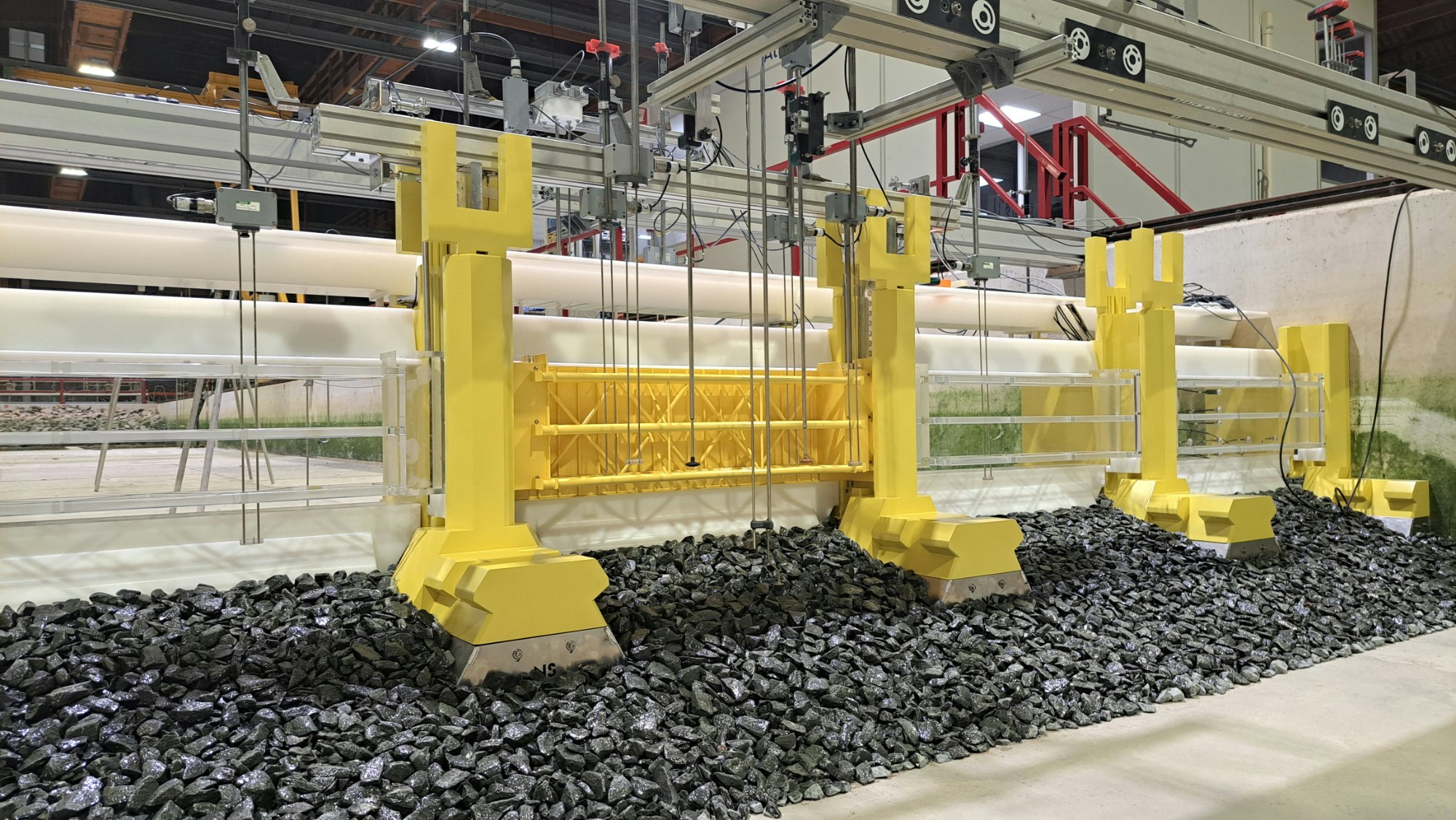
To better understand the forces acting on the structure, Deltares designed and tested a 1:40 scale model. High-precision sensors were integrated into the model without altering the barrier's geometry.
In addition, Advanced wave generators were used to create highly controlled wave conditions directed towards the barrier. This made it possible to obtain accurate and reliable measurements. To illustrate the scale: in reality, a gate is over 40 metres long; in the model, it measures just over one metre.
In the test basins, the effects of hydraulic forces on the most affected components – such as the gates and cylinder rods – were studied under controlled conditions. The new scale model builds on both the methodology and the findings of the original model tests carried out during the barrier’s design phase.
This research not only provides valuable input for the maintenance programme, but also contributes to knowledge transfer and development for a new generation of engineers working on the Eastern Scheldt Barrier.
Key findings
The scale-model tests provide important insights for both current and future maintenance.
More precise assessment of transverse wave forces
The forces exerted by waves acting perpendicular to the gates have now been determined more accurately. This provides valuable data for improving models used to calculate these hydraulic loads.
New insights into longitudinal forces
Wave forces acting along the length of the gates are more difficult to assess than transverse forces. However, the tests indicate that these forces may be lower than previously assumed.
If confirmed through real-world monitoring, this could lead to improved maintenance of the side stops (the buffers at the ends of the gates).
Unlike numerical models, water in a physical scale model has “a mind of its own”. As a result, it can produce outcomes that are not always predictable in advance.
Lower load on cylinder rods
The wave loads on the cylinder rods that operate the gates also appear to be lower than originally assumed. This means the structure can withstand more severe wave conditions within the current design limits. This is an important finding for the renovation and improves the reliability of the flood defences.
Preparing for future extremes
Even under extreme scenarios, such as significant sea-level rise, the tests help identify which conditions must be taken into account in the future. These insights support improved maintenance strategies and help ensure the barrier remains reliable over the long term.
Solid basis for future decisions
The results of the model tests and analyses provide a strong foundation for the safe and efficient design of both the upcoming renovation works and future improvements. This will ensure that the Eastern Scheldt Barrier continues to fulfil its vital role: protecting Zeeland against high water.