
Nature recovers after Roggenplaat elevation
In 2019, Rijkswaterstaat raised the Roggenplaat to preserve it as a feeding ground for waterbirds. Five years of monitoring now show that this intervention has paid off. Birds and benthic fauna have returned to the elevated areas, and the sandbank has developed as intended.
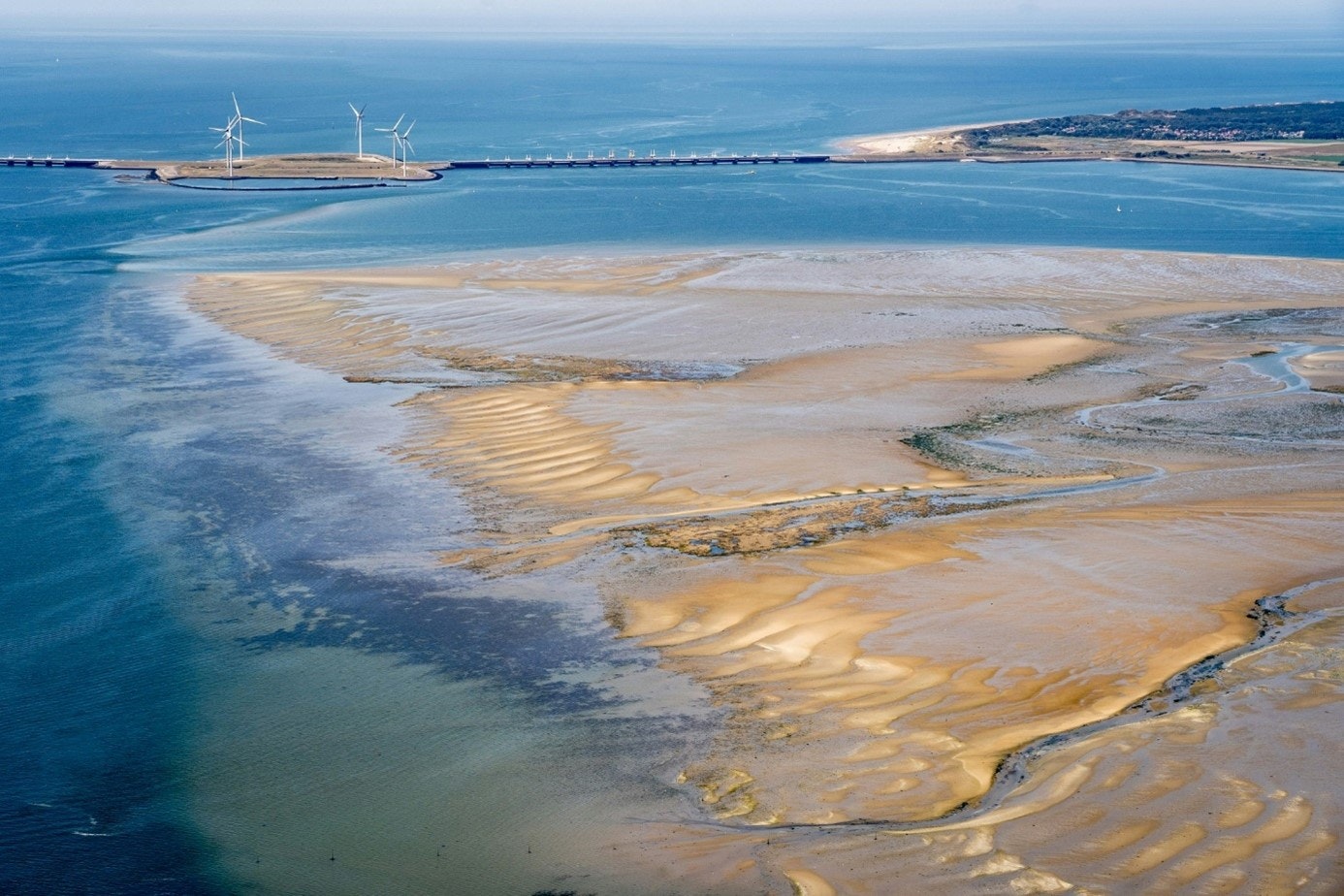
Important feeding and resting area
The Roggenplaat is one of the key feeding and resting areas for birds in the Oosterschelde. At low tide, almost 20.000 birds gather on the sandbank to feed on the abundance of crabs, worms and shellfish living in the sediment. The area is also an important resting place for seals.
Since the construction of the Oosterschelde barrier, tidal dynamics in the estuary have changed, causing the Roggenplaat to become increasingly submerged. To preserve the area as a feeding ground for birds, 1.1 million m3 of sand were used to raise the sand flat five years ago.
The sand was distributed across seven locations to limit environmental disturbance. At the same time, a monitoring programme was launched to track the effects of the sand replenishment. The final report (in Dutch) was published in november 2025.
After five years of monitoring
The monitoring results indicate that the Roggenplaat continues to serve as a feeding area for birds and is expected to do so for the foreseeable future. The total number of birds foraging on the sandbank is comparable to pre-elevation levels.
Birds have also demonstrated a strong capacity to adapt to changing conditions. In the first years after the elevation, they mainly used the non-raised parts of the Roggenplaat. As sediments stabilised and benthic communities recovered, birds gradually returned to the raised areas as well.
Back on the sandbank
After five years, benthic fauna and birds have returned to all elevated areas of the sandbank. Sheltered areas with thinner layers of finer sand showed soil life comparable to the rest of the Roggenplaat within two years. In areas with thicker sand layers and higher erosion rates, recovery has taken longer. However, the benthic fauna is now also returning here.
Most birds, such as dunlins, oystercatchers, bar-tailed godwits, curlews, and grey plovers, are once again using the replenished parts of the sandbank. There are, however, differences between species.
Red knots and bar-tailed godwits, which prefer finer sediment and lower-lying areas, still use the raised areas to a lesser extent. Dunlins, by contrast, appear to be particularly drawn to the newly raised parts of the Roggenplaat.
No longer visible
The sandbank itself has developed largely as planned. After five years, the seven separate replenishments are no longer recognisable as individual interventions and have blended into the Roggenplaat as a whole.
As a result of the sand replenishments, the area of the Roggenplaat that falls dry for more than 50% of the time, an important condition for foraging birds, has increased significantly, from 602 to 726 ha. Erosion of the sandbank is also progressing as expected: after five years, 90% of the added sand volume remains at the original placement area or within 50 m of it.
Lessons for the Galgenplaat
‘We are very pleased with these results. They show that we are getting better and better at replenishing sensitive areas like this,’ said Harry de Looff, project leader at Rijkswaterstaat. ‘By deliberately leaving parts of the sandbank untouched, we gave the bird community the space to adapt, without any loss of species or numbers.’
Next winter, Rijkswaterstaat plans to raise the Galgenplaat, the second most important feeding area in the Oosterschelde. The lessons learned from the Roggenplaat will play an important role in the design and execution of this next project.